
President William Ruto’s address to the 81st United Nations General Assembly placed Africa’s economic transformation at the centre of his message, with the President calling for a shift from exporting raw materials to building industries on the continent.
Ruto used his speech in New York to argue that Africa should make greater use of its mineral wealth, agricultural potential, renewable energy resources and young population to build industries, create jobs and strengthen its position in global trade.
But beyond the broad call for African industrialisation, several issues stood out in the President’s address.
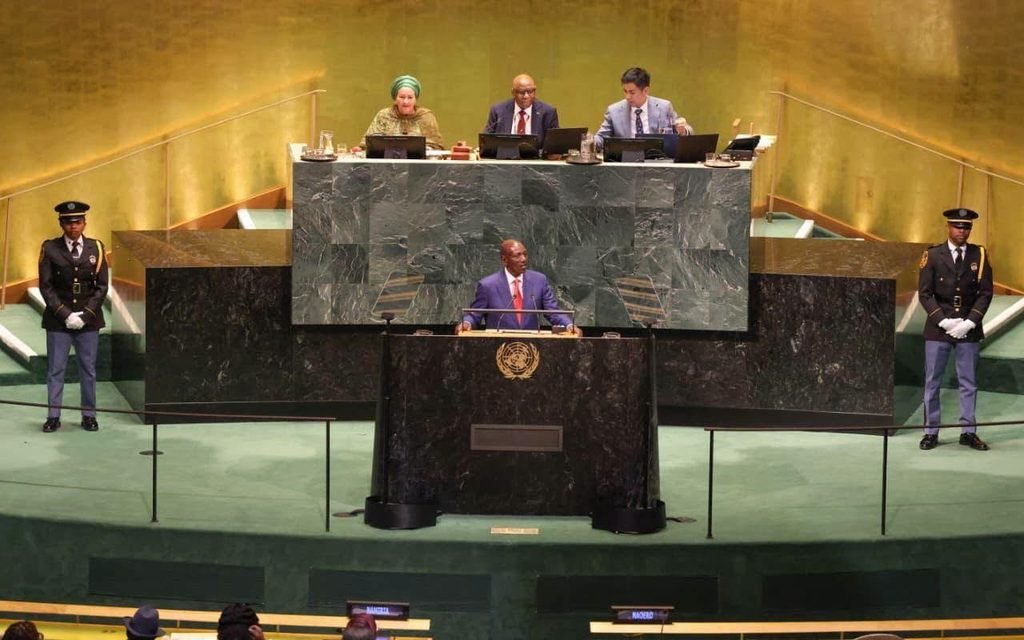
1. Africa should stop exporting raw materials
Perhaps the strongest message from Ruto was his call for Africa to capture more value from the resources it produces.
“Africa’s resources must become the beginning of African industry, not the end of Africa’s contribution to the value chain,” he said.
He argued that extraction had dominated Africa’s economic relationship with the rest of the world for too long and that investment should now support industries that process raw materials locally.
Ruto pointed to cocoa and cotton-producing countries as examples of how African economies can move further up the value chain by producing finished products rather than exporting commodities.
He also linked the idea to the African Continental Free Trade Area, saying the continental market should help African countries manufacture goods they currently import.
“The African Continental Free Trade Area must be more than a market for what Africa already produces; it must become the platform on which Africa makes more of what it now imports,” he said.
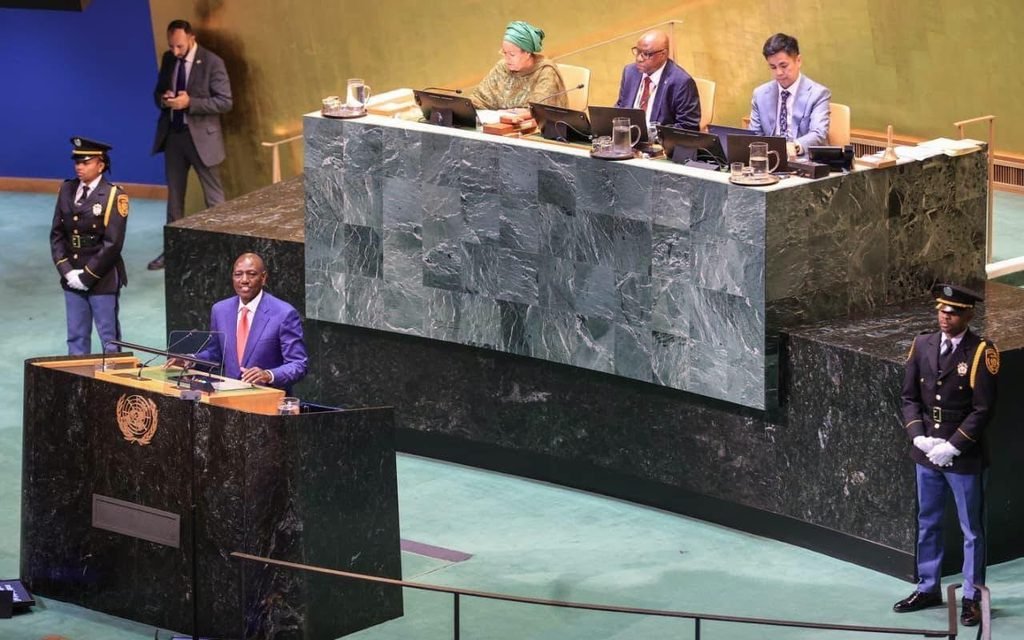
2. Kenya’s $16 billion refinery pitch
One of the most specific announcements in the speech concerned Kenya’s proposed East Africa refinery in Lamu.
Ruto said Kenya intended to break ground on the refinery within a week, describing the project as an example of the industrial Africa he wants to see.
The refinery is expected to have a processing capacity of 700,000 barrels of oil a day, with the investment estimated at about $16 billion.
“Its significance extends beyond one project or one country,” Ruto said.
“It represents the Africa we seek to build: adding value at home, creating jobs for our people, and building industries capable of serving continental and global markets.”
The refinery therefore featured in the President’s wider argument that African countries should process more of their resources locally instead of exporting them in raw form.
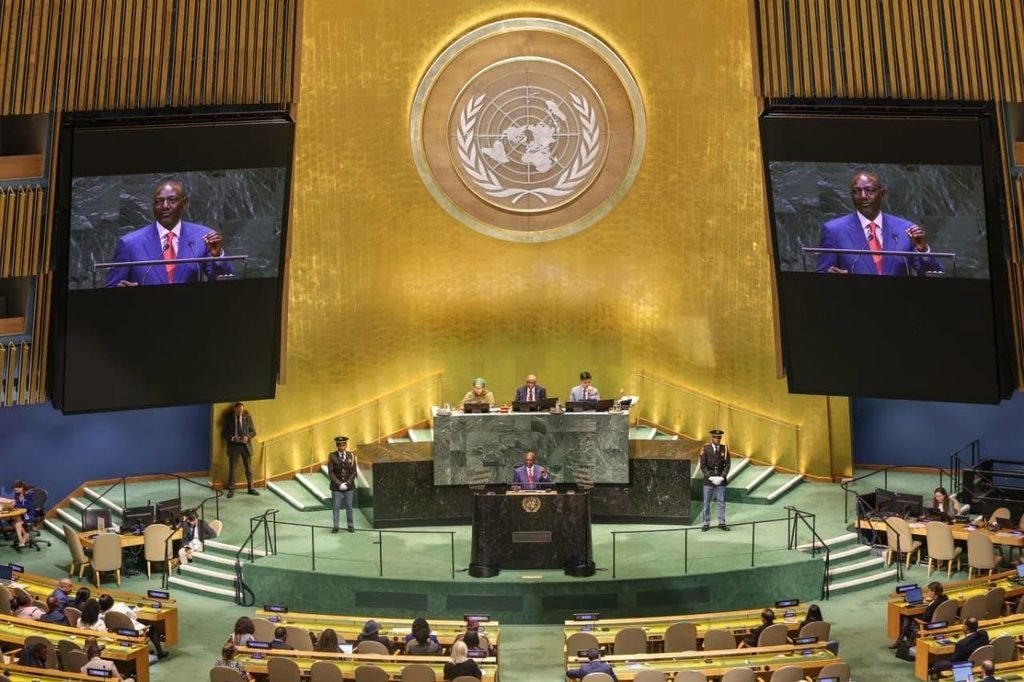
3. Africa has money but needs to mobilise it
Another notable part of Ruto’s speech was his focus on African capital.
The President pointed to more than $4 trillion held in pension funds, insurance assets, sovereign wealth funds, banks and other institutions across Africa.
His argument was that more of this money should be directed towards productive investments such as infrastructure and industry.
“The task is to mobilise more of that capital for productive investment while building the safeguards, credible projects, and financial instruments that long-term investors require,” he said.
The argument reflects a broader position Ruto has advanced on African development: that the continent cannot depend entirely on foreign financing to build the infrastructure and industries it needs.
4. Ruto challenges the global financial system
The President also used the UN platform to call for changes in the way global finance works.
He argued that African countries and other developing economies face high borrowing costs while having limited influence over institutions that shape international financial rules.
“We cannot carry substantial obligations under a system while remaining marginal in shaping its rules,” Ruto said.
He added that Africa should have a greater role in decisions affecting the global economy, arguing that the continent’s growing population and economic potential should be reflected in its representation.
Ruto framed the issue as one of shared prosperity rather than special treatment.
“This is not a plea for special treatment. It is a proposition for shared prosperity,” he said.
5. Africa’s resources and the clean-energy transition
Ruto also warned that the global shift towards clean energy should not create another cycle in which Africa supplies raw materials while other regions capture most of the industrial value.
Africa has significant deposits of minerals needed for renewable energy technologies, alongside major potential for solar, wind, hydro and geothermal power.
The President’s argument was that these resources should support manufacturing and industrial development within Africa.
This means the clean-energy transition, in his presentation, is not only about reducing emissions. It is also about determining where the economic benefits of the transition will be captured.
6. A bigger African voice in global decisions
Ruto also returned to the question of Africa’s representation in global institutions.
He argued that Africa’s growing population and economic importance should translate into greater influence over the institutions responsible for international economic and political decisions.
His position comes as African countries continue to push for reforms of global governance structures, including the UN Security Council and the international financial architecture.
The wider African agenda at UNGA 81 has similarly included calls for reform of global institutions, changes to debt and financing systems, and greater value addition around critical minerals.
What stood out from the speech
Taken together, Ruto’s message was built around a simple economic argument: Africa should seek to gain more from what it already has.
The President presented minerals, agriculture, energy, a young population and the continental market as assets that could support a more industrialised Africa.
His speech also placed Kenya’s proposed Lamu refinery within that larger vision.
The bigger question now is how such ambitions translate into actual factories, jobs, investment and value chains across the continent.
Ruto’s address was ultimately a call for Africa to move further up the global value chain — from supplying resources to producing, processing and trading more of what the continent needs and what the world consumes.


