
Nairobi Governor, Johnson Sakaja has strongly dismissed claims that he went into hiding to evade arrest, following a dramatic police operation at City Hall on Monday evening.
Speaking on Tuesday, March 31, after appearing before the Senate, the Nairobi governor pushed back against allegations that he had failed to honour a summons by the County Public Accounts Committee (CPAC). He maintained that he had been at work throughout the day and only left before police officers arrived at the premises later in the evening.
“Who is in the office at 7 pm? They were looking for me, yet I am here at the Senate as required. I have no problem with the Senate. There is just an issue that needs to be resolved. I have nothing to run away from,” Sakaja said.
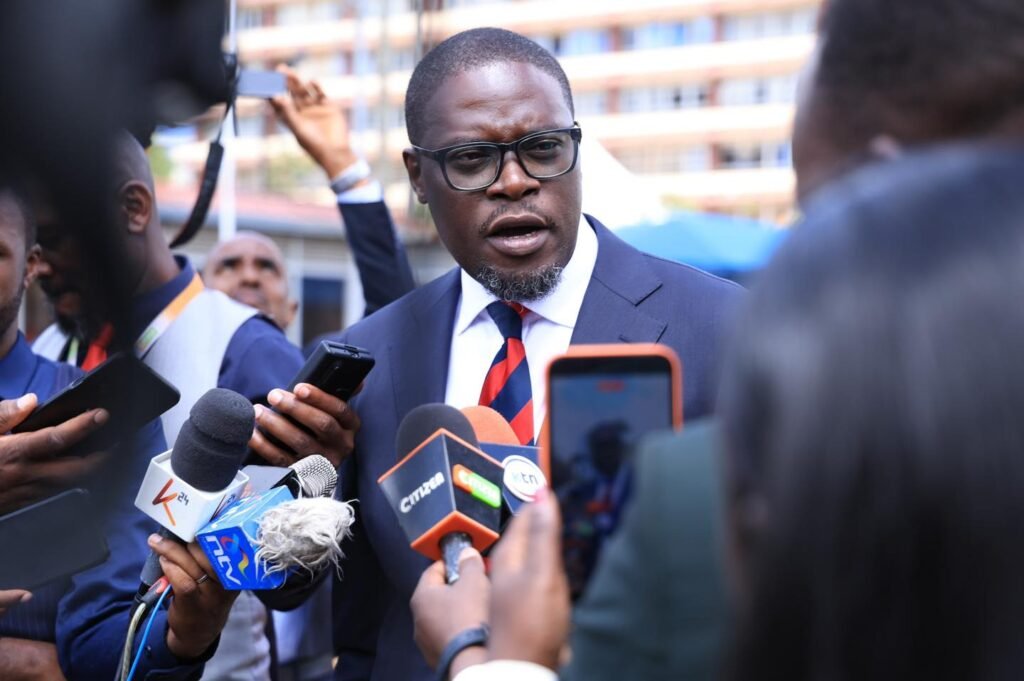
Governor Defends Senate Appearance
Sakaja explained that his decision to present himself before the Senate was deliberate, aimed at clearing speculation about his whereabouts and reaffirming his respect for oversight institutions.
“I came to the Senate to meet the leadership and members of the committee. First, I am a law-abiding citizen,” he stated.
The governor’s appearance came a day after police officers reportedly camped at City Hall in an attempt to arrest him for failing to appear before the CPAC, which is chaired by Moses Kajwang.
Dispute Over Summons and Process
However, Sakaja insisted that his absence from the committee session was not an act of defiance but a collective position taken by the Council of Governors (CoG). According to him, governors had raised concerns about the committee’s mandate and procedures, and agreed to first seek clarity before appearing.
“When the CoG raised issues regarding that specific committee, we were guided that those concerns be resolved first. Accountability is important, but it must be undertaken in the right way,” he explained.
He added that he has since engaged both Senate leadership and the Council of Governors in efforts to de-escalate tensions and find a structured approach that allows governors to participate in oversight processes without conflict.

Calls to Resolve Standoff
Sakaja emphasized that he remains willing to appear before the committee once the underlying issues are addressed, noting that accountability must be conducted within clear institutional frameworks.
Earlier, the Council of Governors condemned the attempted arrest, calling for the withdrawal of warrants issued against Sakaja and Samburu Governor Jonathan Lelit.
The incident has sparked renewed debate over the relationship between county governments and the Senate, particularly regarding oversight powers and the processes used to enforce compliance.
As discussions continue, Sakaja’s remarks signal an attempt to strike a balance between accountability and what he described as the need to avoid “unnecessary drama” in the exercise of oversight.


