
The Kenyan government has outlined measures to cushion the country from global supply chain disruptions linked to the ongoing Middle East conflict, with President William Ruto assuring that key sectors, especially fuel supply, remain stable despite rising global uncertainty.
In a statement dated March 30, 2026, the President said the conflict in the Gulf is already affecting global trade flows and economies, with ripple effects being felt across Africa, including Kenya.
Global shocks begin to hit Kenya
According to the President, the ongoing geopolitical tensions are disrupting supply chains and increasing pressure on economies worldwide.
“The ongoing conflict in the Middle East is having a significant impact on the global economy,” said President Ruto.
“This disruption is already being felt across global supply chains and is placing pressure on economies worldwide,” he added.
He noted that Kenya, like many other countries, is not insulated from these external shocks, particularly in critical sectors such as energy, agriculture, and trade.
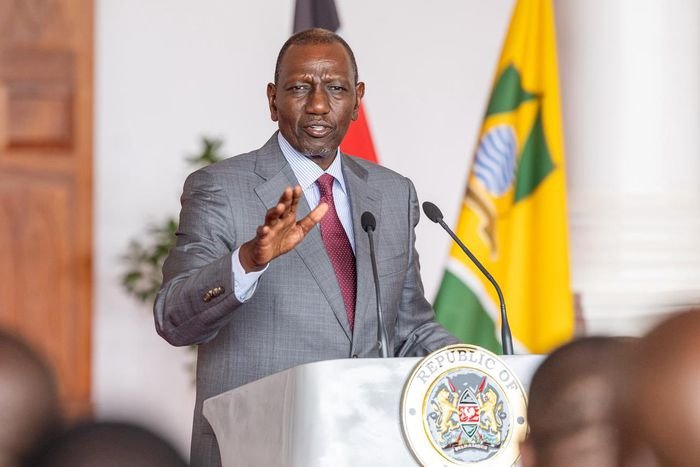
Government steps in to stabilise markets
President Ruto said the government has remained vigilant, closely monitoring developments and coordinating responses across key ministries and institutions.
“In light of the evolving geopolitical developments, I received a comprehensive briefing this afternoon from the Ministries of Energy, Agriculture, Trade, the National Treasury, the Central Bank, as well as private sector players,” he said.
The consultations focused on assessing the situation and identifying practical interventions to cushion the economy from potential shocks.
Fuel supply and prices under focus
The government has identified petroleum products as a key area of concern, given the direct link between global oil prices and domestic fuel costs.
“Regarding petroleum products, while the impact on pricing is still being assessed, measures are being put in place to moderate any adverse effects and ensure that Kenya maintains adequate supplies,” President Ruto stated.
He acknowledged that rising international oil prices are already affecting consumers globally but emphasized that Kenya has taken steps to shield its economy.
Government-to-government deal cushions Kenyans
President Ruto pointed to the government-to-government fuel procurement arrangement as a critical buffer against global price volatility.
“Rising international oil prices are already affecting consumers globally. However, the Government-to-Government fuel procurement arrangement has cushioned Kenyans from immediate shocks,” he said.
“This strategic intervention has mitigated price increases, ensured security of supply, and proven to be both prudent and forward-looking,” he added.
The arrangement has helped stabilize fuel availability while limiting sudden price spikes that could ripple through the economy.
Ongoing monitoring and policy response
The Ministry of Energy will continue to monitor international fuel prices and work with the National Treasury to implement further measures where necessary.
“Additionally, the Ministry of Energy continues to assess international fuel prices and identify mitigating measures. The Ministry will work closely with the National Treasury to implement appropriate interventions,” President Ruto said.
The government’s approach signals a coordinated effort to maintain stability in key supply chains while protecting consumers and businesses from global shocks.
As global uncertainties persist, authorities say continued monitoring and timely policy responses will be critical in safeguarding Kenya’s economic resilience

