
The ruling United Democratic Alliance says it is fully prepared to stage grassroots elections across 20 counties this Saturday. The exercise is billed as the most extensive internal democratic process ever conducted by a political organisation in Kenya.
Accordingf to party records, 310,651 aspirants have registered to contest at some 12,000 polling centres, with an estimated turnout of three million members — figures that underline both organisational capacity and political engagement ahead of the 2027 general election cycle.
UDA Secretary General Senator Hassan Omar Hassan attributed the surge in participation to the party’s deepening organisational infrastructure, asserting that the democratically elected grassroots leadership will be instrumental in shaping candidate selection and political strategy at all levels.

INTENSE COMPETITION
The Mt Kenya region exemplifies the intensity of the contest. Meru County tops the regional tally with 35,343 registered aspirants competing for roughly 21,000 posts, followed by Kiambu with 21,000 candidates vying for about 11,300 positions. Murang’a and Embu counties also show robust competition, with 20,880 and 15,881 aspirants respectively contesting thousands of slots in local units.
“The Mt. Kenya region has demonstrably shown that it firmly supports the presidency,” Hassan said, signalling confidence in UDA’s broader electoral prospects and anticipating victories, including in forthcoming by-elections in Embu County.
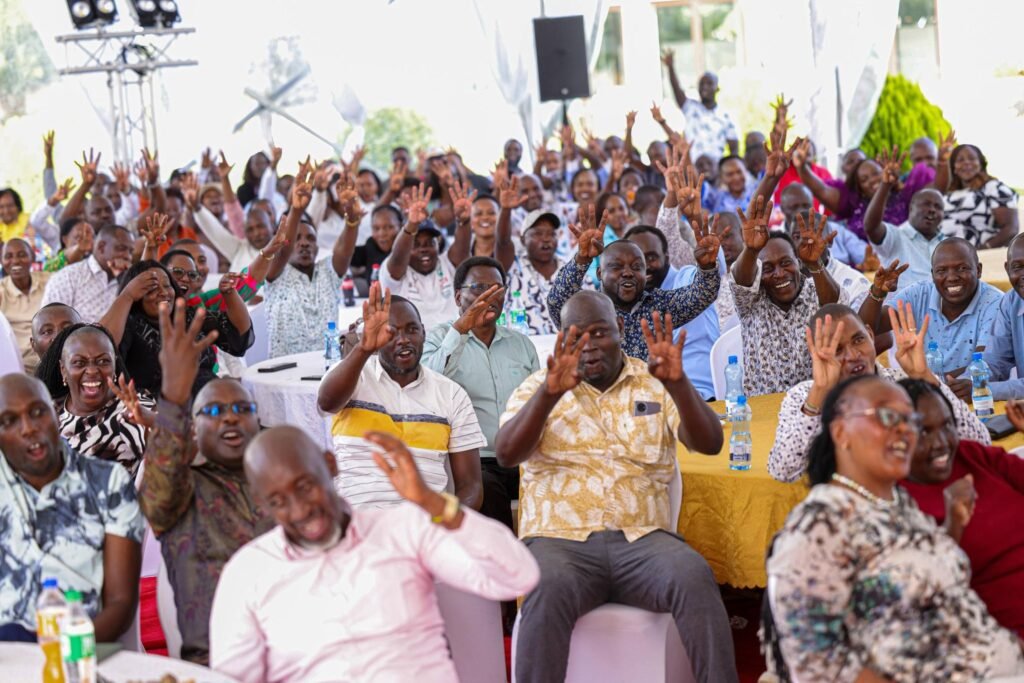
Elsewhere, high numbers of aspirants have emerged in counties such as Kakamega (32,677), Nakuru (27,863), Bomet (25,350) and Nandi (15,220), reflecting a broad national dimension to the exercise.
While many candidates will face competitive races, some 80,038 aspirants are unopposed, according to party figures.
PART POPULARITY
Recent public opinion data from research firm Infotrak indicates that UDA remains the most popular political party nationally, though the contest is competitive and fluid as Kenya prepares for future national elections.
A survey conducted in late December 2025 shows UDA leading with 23 per cent national support, ahead of the Orange Democratic Movement (ODM) at 19 per cent. Smaller parties such as the Democracy for the Citizens Party (DCP), Jubilee and Wiper Patriotic Front registered single-digit support levels in the same poll.
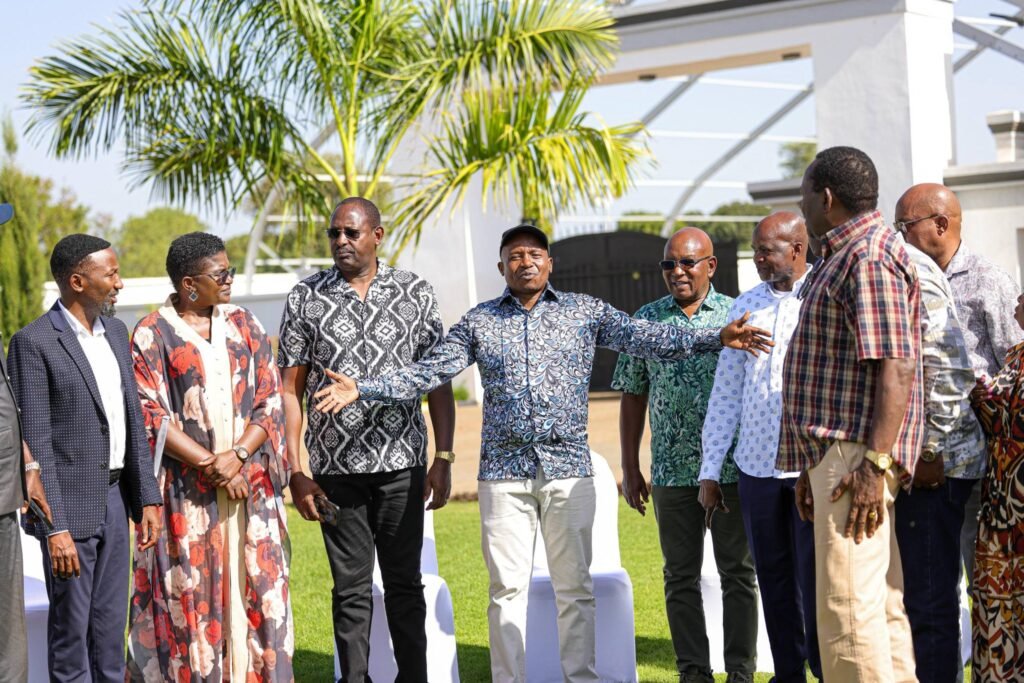
The findings also reveal a notable segment of undecided or non-aligned respondents, pointing to a dynamic political environment. Regional variations underscore this complexity.
In Western Kenya, for example, an Infotrak survey released in January 2026 found ODM narrowing the gap, and in some areas leading, with roughly 25 per cent support compared to UDA’s 20 per cent, highlighting distinct local political contours ahead of the 2027 electoral cycle.
Against this backdrop of heightened intra-party competition and shifting public sentiment, UDA’s grassroots elections are widely viewed as both a test of organisational strength and a barometer of its resonance with the party’s base nationwide.


