
Residents of Nairobi, Kilifi, Homabay, Kiambu, Narok, Migori, Embu, Trans Nzoia and Kitui counties face a higher likelihood of violent death than in other parts of the country, driven by among others, community disputes, family feuds and growing culture of violence, findings from a recent study show.
The study by the National Crime Research Centre that analyzed homicide trends in Kenya, identified its underlying causes and probed the effectiveness of the response measures in the criminal justice system in 15 counties, showed that 1011 homicide were committed last year, with the 9 counties leading.
NUMBER OF CASES
Nairobi had the highest number at 80 followed by Kilifi at 47, Homabay 42 while Kiambu and Narok tied at 41 cases each. Migori had 40, Embu 38, Trans Nzoia 37 and Kitui 35.

Men constituted the majority in both homicide victims and perpetrators with relatively few of the cases involving female offenders at 630 and 88 respectively. Many of the killings were caused by multiple factors.
The research that relied on records from the Directorate of Criminal Investigations, showed that many of the victims were either attacked by people they knew due to unresolved family feuds or community conflicts or killings fueled by the growing culture of violence in Kenya.
Police reports relied on during the study showed 82.8 percent of the attackers were well known to the victims. In 149 of the cases, the perpetrators could not be ientified.
Many of the cases were concentrated in poor neighbourhood, especially in informal settlements with 70 percent of the Nairobi cases happening in Mathare, Kamukunji, Starehe, Kariobangi, Kasarani and Embakasi areas.
Homicide was also common in areas synonymous with land disputes and inter-ethnic and communal conflicts as well as home settings, hotels and short-stay accommodation (Air BnB).
THE REPORT
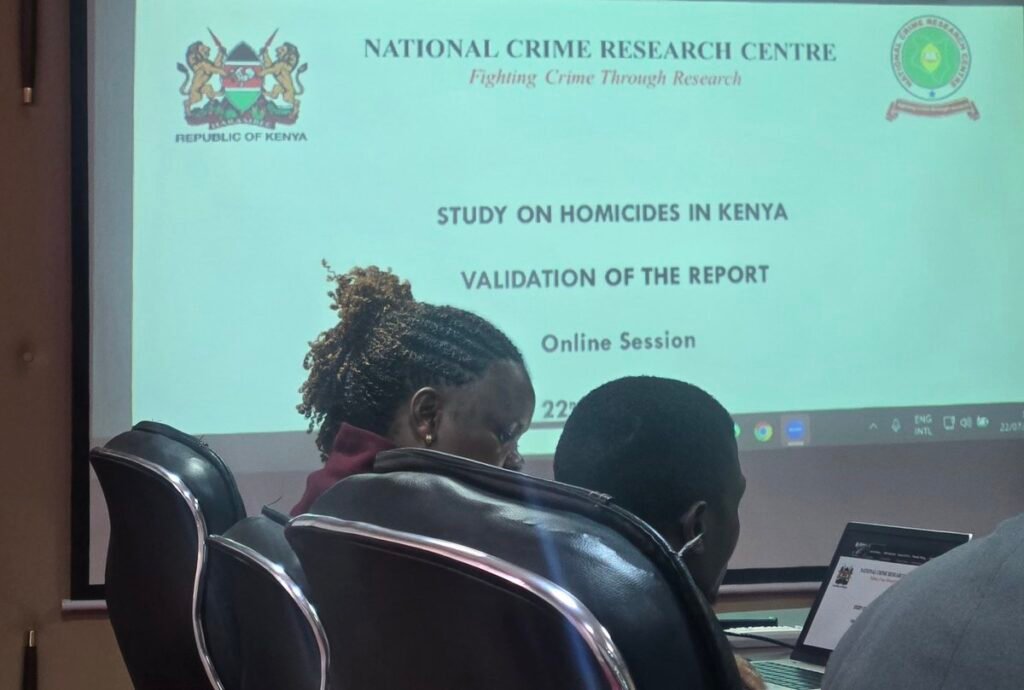
The report, titled: Study on Homicides in Kenya identified poorly lit streets and entertainment joints among the high-risk locations.
Men were mostly affected by incidents such as cattle rustling, land conflicts, communal conflicts, drunken altercations and mob violence on suspicion of theft while women were murdered in incidents of domestic violence, land disputes, succession and alleged infidelity.
“In some areas, elderly women, especially in rural areas, while their husbands worked in towns, were frequently subjected to rape and lethal attacks,” the report said.
The distribution across other counties was: Kisumu 32, Vihiga, Meru and Kisii at 28 each, Tana River 27, Kwale 26, Mombasa 25, Siaya 22, Machakos 21, Makueni 20, Nyamira 18.
The research was conducted in Vihiga, Nairobi, Kakamega, Busia, Isiolo, Embu, Homabay, Nyeri, Mombasa, Nakuru, Kisumu, Kisii, Narok, Kilifi and Kiambu counties.


