
Three years ago, the Kerio Valley was synonymous with fear.
Families abandoned homes, schools closed, livestock was stolen and communities living along the borders of Baringo, Elgeyo Marakwet, West Pokot and neighbouring counties faced repeated attacks by armed bandits.
In March 2023, the then the Interior Cabinet Secretary Kithure Kindiki escalated the government’s response, ordering residents to leave 27 areas identified as bandit hideouts as security agencies prepared for a new phase of operations. At the time, banditry had claimed 135 civilian lives and 20 police officers in seven months, according to government figures reported by The Star.
Three years later, the landscape is markedly different.
The guns have not disappeared completely, but large sections of the valley have experienced relative calm, schools have reopened, markets and farming activities have resumed and the government has established permanent security installations.
Kindiki, now Deputy President, has repeatedly pointed to the Kerio Valley as evidence that sustained security operations can dismantle organised bandit networks.
“When I was in charge of internal security, they did it in Baringo, we crushed them; they did it in Kerio Valley, we crushed them,” Kindiki said in March 2026 while warning bandits in Meru.
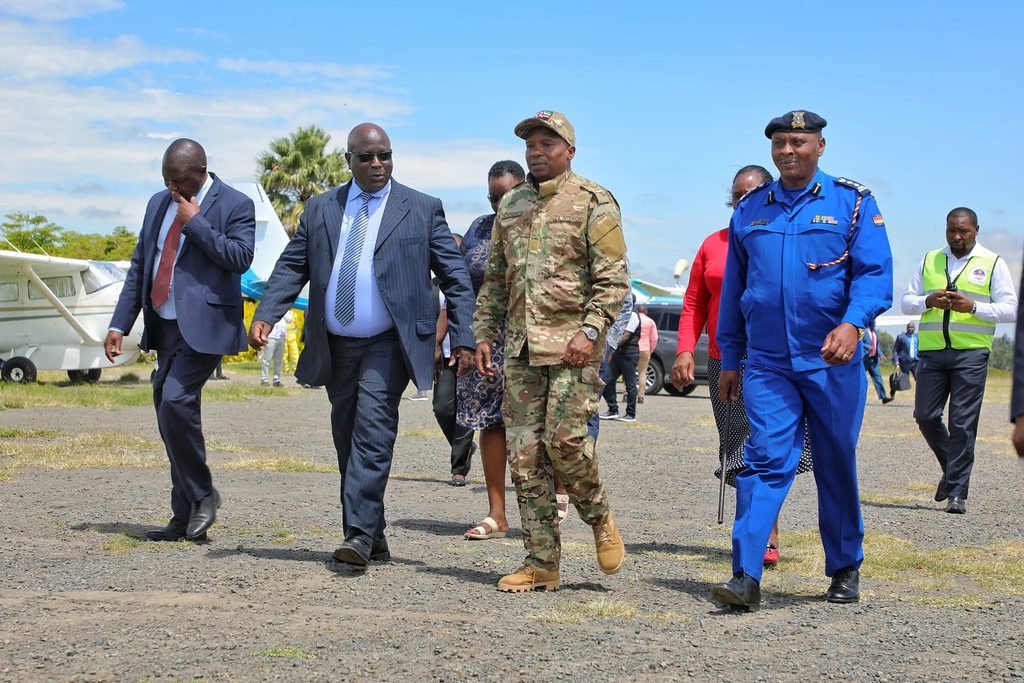
Kindiki during one of his 2023–24 security tours of Kerio Valley — establishes the “three years later” narrative.
What changed after 2023?
The turning point was not a single military operation but a sustained multi-agency approach.
Operation Maliza Uhalifu brought together the Kenya Defence Forces, National Police Service, intelligence agencies and national government administrators. The strategy combined security deployments with intelligence gathering, disarmament, community engagement and the establishment of permanent camps.
In May 2023, Kindiki announced that a permanent security camp with more than 400 officers had been established at Kolowa.
“The camp we have established here will exist forever,” he said, making clear that the government intended the security presence to remain after the immediate operation ended.
That shift from temporary deployments to permanent territorial presence has become one of the defining features of the government’s strategy.
By March 2024, Kindiki said relocation of security camps along the Kerio Valley had significantly improved security in Marakwet East. He also said multi-agency patrols, reorganised command structures and additional deployments were being used to sustain the gains.
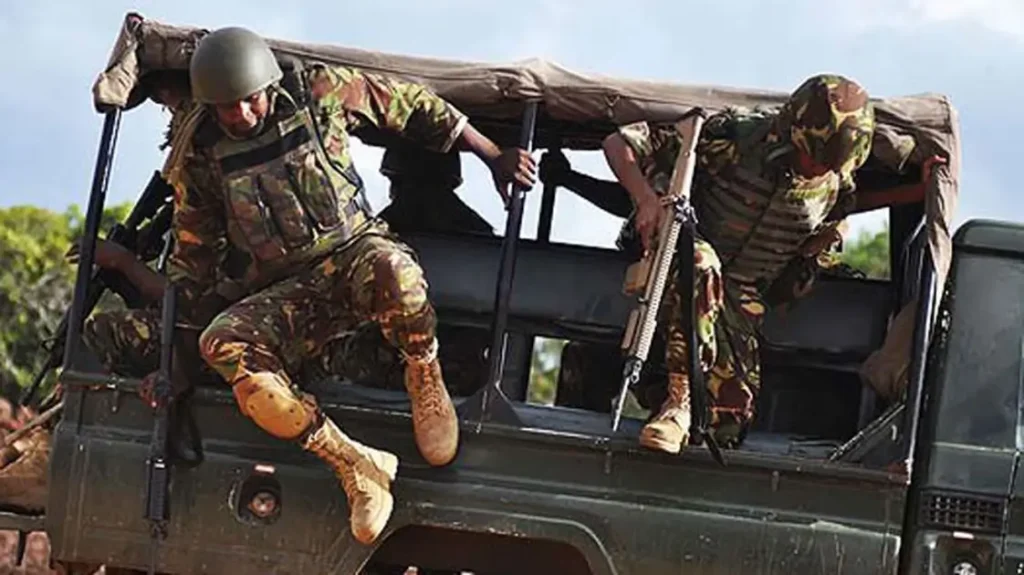
KDF/NPS officers at a Kerio Valley camp — use around the section on permanent security installations.
The numbers behind the turnaround
The scale of the disarmament effort provides one of the clearest indicators of what has changed.
In December 2025, Interior Cabinet Secretary Kipchumba Murkomen reported that more than 1,000 illegal firearms had been recovered from the Kerio Valley in less than five months.
By June 2026, police said more than 500 additional firearms had been voluntarily surrendered in the region, describing the valley as almost free of bandits.
The figures should not be read as evidence that every weapon has been removed. Rather, they demonstrate the scale of the illicit-arms problem and the extent of the disarmament effort.
| Indicator | Situation during the crisis | Recent position |
|---|---|---|
| Civilian deaths reported in seven months before March 2023 | 135 | — |
| Police officers killed in same period | 20 | — |
| Bandit-prone areas ordered evacuated in March 2023 | 27 | — |
| Permanent Kolowa security camp | — | 400+ officers |
| Illegal firearms recovered in less than five months by Dec. 2025 | — | 1,000+ |
| Firearms voluntarily surrendered reported by June 2026 | — | 500+ |
| Operation Maliza Uhalifu | Began 2023 | Still active |
From security to schools
Perhaps the most visible measure of the change is what has happened to education.
At the height of insecurity, schools became casualties of the conflict. In April 2024, the government said General Ogolla had committed to supporting reconstruction of schools in the troubled Kerio Valley before his death.
The government subsequently made school reconstruction part of the wider security strategy.
President William Ruto has argued that restoring schools is inseparable from restoring communities, while the Kenya Defence Forces has participated in rehabilitating learning facilities under Operation Maliza Uhalifu.
Kindiki had already made education part of his own long-term security argument.
“As a Government, we believe that there is no child who is a bandit. No child is born a criminal. They are taught these evil habits as they grow up,” he said in 2024.
The argument was that peace could not be sustained through guns alone. Children needed schools, communities needed livelihoods and families needed alternatives to cattle rustling.
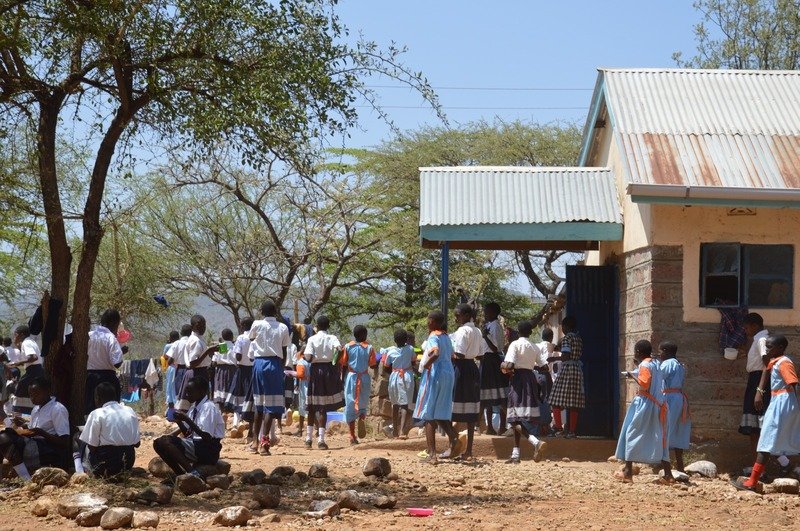
A rehabilitated school in the North Rift reflects the government’s attempt to make education part of the region’s long-term peace strategy.
Farming replaces fear
Security has also created space for economic activity.
For years, insecurity restricted farming, trade and livestock movement across parts of the valley. The return of relative calm has allowed residents to return to farms and markets.
A 2025 report from the Kerio Valley described a visible shift towards maize and sorghum farming as communities took advantage of improved security, irrigation and structured agricultural programmes.
Kindiki repeatedly argued while Interior CS that security was ultimately about restoring livelihoods.
“The impacts are severe. It deprives pastoral communities of their economic mainstay and aggravates the conditions of poverty in the rangelands, fuelling communal grievances and revenge attacks,” he said of cattle rustling.
That connection between security and economic opportunity remains central to understanding the transformation.
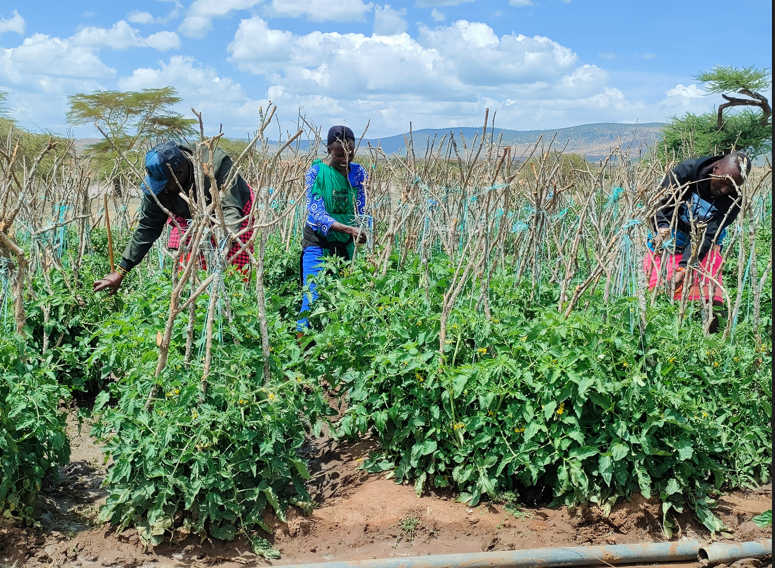
Farmers in the Kerio Valley are returning to agricultural activity as improved security creates space for farming and trade.
Why the Sh7 billion matters
The security transformation was also backed by a wider modernisation of the security sector.
In 2024, Kindiki announced that the government was rolling out about Sh7 billion worth of security equipment, including armoured personnel carriers, mine-resistant vehicles, drones and other surveillance equipment. The equipment was intended to strengthen operations against banditry and terrorism, including Operation Maliza Uhalifu.
The investment formed part of a larger Sh37 billion five-year security equipment modernisation programme.
The significance was not simply the number of vehicles or aircraft deployed. Modern surveillance and mobility equipment allowed security agencies to operate across difficult terrain where conventional policing had struggled.
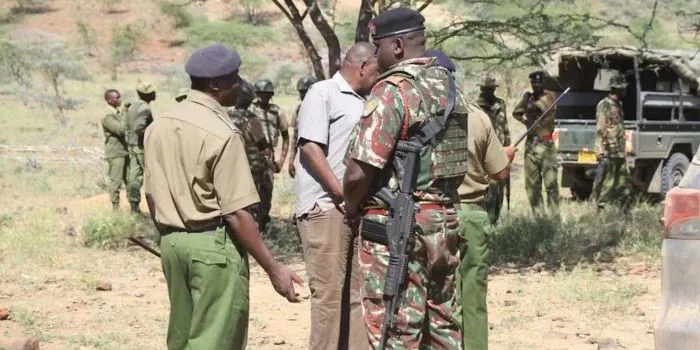
Security personnel patrol the rugged terrain of the Kerio Valley, where difficult geography long provided hideouts for armed groups.
But has banditry really ended?
This is where the story becomes more complicated.
The government has made substantial gains, but it has not declared the wider insecurity problem permanently solved.
In 2025, attacks returned in parts of the valley, including Baringo, prompting renewed calls for stronger security measures. In one attack in Chemoi, Baringo North, two people were killed and eight injured, including National Police Reservists.
By 2026, however, authorities were reporting that most of the region had returned to relative calm.
In January 2026, the Ministry of Defence said only isolated cases of livestock theft, land and border disputes and cattle rustling had been recorded in recent months.
That distinction matters. Relative peace is not the same as the complete disappearance of insecurity.
The Kindiki legacy
Kindiki’s tenure as Interior CS coincided with one of the most aggressive phases of the government’s response to North Rift banditry.
His approach combined force, intelligence, disarmament and permanent security infrastructure, but he also repeatedly argued that the solution had to extend beyond policing.
In 2024, he proposed peace schools bringing together children from different communities, saying the government wanted to create a generation “not poisoned by negative things like banditry and livestock rustling.”
Three years after he drew a hard line against the armed groups, the strongest evidence of change may therefore not be the number of raids prevented or guns recovered.
It is the return of ordinary life.
Children walking to school. Farmers working their land. Traders reopening businesses. Communities travelling without the same fear that once defined the valley.
The guns have not disappeared entirely, and the government still maintains security operations. But the Kerio Valley of 2026 is increasingly different from the valley that confronted Kindiki in 2023.
For Kindiki, that is the measure of the campaign he helped lead.
“Today, there is peace in Kerio Valley due to the work I did there,” he said in December 2024.
The challenge now is whether that peace can become permanent — and whether the security gains can translate into lasting economic development for communities that spent decades living under the shadow of banditry.


