
A proposal to give individual senators county oversight offices and powers to monitor spending has encountered resistance from government legal advisers and county institutions, opening a debate over who should hold devolved governments accountable.
At a National Assembly stakeholders’ forum on September 29, the Attorney-General’s office, Council of Governors and other institutions challenged provisions of the County Oversight and Accountability Bill, 2024, according to the parliamentary account of the meeting.
The dispute matters beyond Parliament. For residents seeking answers about an unfinished road, an under-equipped dispensary or questionable county expenditure, it concerns who can demand information, scrutinise spending and require an explanation.
What would the Bill change?
The Bill seeks to strengthen financial accountability and public participation. Parliament’s published copy confirms that the Senate passed it on July 21, 2026.
Clause 16(2) would give each senator oversight powers over their county. Clause 17 provides for public hearings, access to county information and monitoring of spending and compliance with public finance law.
Clause 18 requires a county oversight office and permits each senator to employ up to three officers. Across 47 counties, that would allow a maximum of 141 officers.
Those officers would need a recognised university degree and at least three years’ relevant experience in budget control, audit, monitoring and evaluation. The county finance executive would be required to provide information necessary for the senator’s oversight work. parliament.go.ke
The potential benefit is closer scrutiny: residents could have another channel through which to raise concerns and obtain information about how county money is used.
Why are government legal advisers objecting?
According to the meeting account, the State Law Office’s central objection is that the proposal transfers an institutional responsibility to individual politicians.
Article 96(3) gives the Senate oversight over national revenue allocated to county governments. The legal advisers argue that this responsibility belongs to the House, exercised through its committees, rather than through separate structures controlled by individual senators.
They also question whether senator-appointed staff would become a parallel administrative layer, overlapping with existing county institutions.
That distinction is important. A senator raising a spending concern through a Senate committee operates within a parliamentary process. A separate office exercising direct county oversight would create a different relationship with the county executive.
These are objections submitted during legislative scrutiny. They are not a court judgment declaring this Bill unconstitutional.
Who already checks county spending?
Kenya’s Constitution assigns different accountability functions to several institutions:
| Institution | Existing role |
|---|---|
| County assembly | Exercises oversight over the county executive and other county executive organs under Article 185(3). |
| Senate | Under Article 96(3), oversees national revenue allocated to county governments. |
| Auditor-General | Audits county accounts and assesses whether public money has been used lawfully and effectively. |
| Controller of Budget | Oversees budget implementation, including authorising lawful withdrawals from county public funds. |
These responsibilities are established under Articles 96, 185, 228 and 229 of the Constitution.
Opponents argue that adding another structure could duplicate requests, blur responsibility and create conflict. The accountability case for the Bill is that closer monitoring and greater public access could help expose problems earlier.
Why a 2022 Supreme Court ruling matters
This is not the first attempt to give senators a formal role within county structures.
In February 2022, the Supreme Court upheld the invalidation of amendments establishing County Development Boards chaired by senators.
The court recognised the value of consultation between national and county institutions, but warned against Senate supervision intruding into county administration. It also found that placing a senator in charge of a county organ conflicted with the constitutional division of responsibilities.
That earlier case concerned development boards, not the current Bill. Its relevance is the boundary it drew between cooperation and interference in county functions.
The Council of Governors cited that decision in opposing the proposed oversight offices, according to the meeting account.
The staffing and funding question
The Kenya Law Reform Commission also raised a procedural objection: whether establishing the offices would impose a charge on public funds and make the proposal a Money Bill.
Article 109(5) provides that a Money Bill may be introduced only in the National Assembly.
The Commission challenged the suggestion that existing institutional budgets would cover the arrangement without new costs. However, the meeting account provides no verified operating budget for the proposed offices.
The maximum staffing figure of 141 should therefore not be presented as a confirmed recruitment plan or converted into an estimated taxpayer bill without supporting figures.
What happens next?
The National Assembly’s Regional Development Committee is considering the proposal and stakeholder submissions.
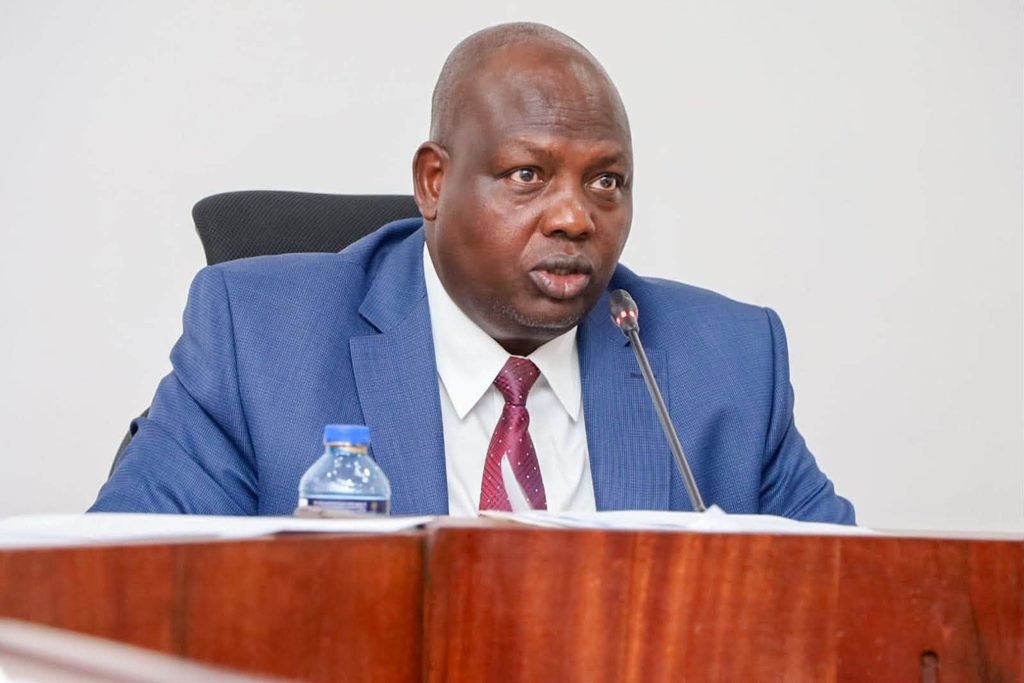
Committee chair Peter Lochakapong said members would review the constitutional concerns and recommend a way forward to the House, according to the parliamentary account.
For residents, the practical test is whether the eventual framework makes county spending easier to scrutinise and officials easier to hold accountable.
More public hearings and clearer financial information could improve participation. Parliament must also establish who exercises each power, how the work is funded and how it connects with existing oversight institutions.
The proposed senator-led offices are not established law. Their future depends on the remaining legislative process.


