
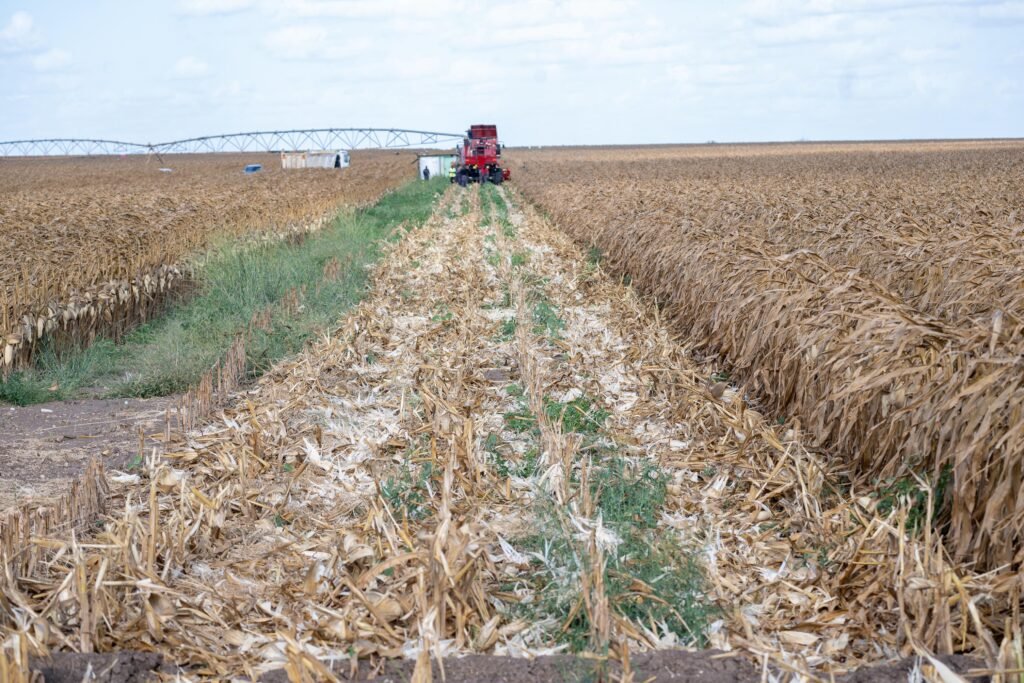
Harvesting of the first maize crop at the Galana Kulalu Irrigation Scheme began on Saturday, marking a dramatic turnaround for a project that only two years ago was widely dismissed as a failed government experiment.
Located on vast public land straddling Kilifi and Tana River counties, the Galana Kulalu Food Security Project is being implemented under a public-private partnership between the government and Selu Limited. The initiative is now being hailed as a model of agricultural collaboration after the first 1,500 acres under maize produced between 28 and 30 bags of seed maize per acre.

The project’s revival follows significant public investment in irrigation infrastructure, including a 20,000-cubic-metre intake well, a 2-kilometre water canal, a 550,000-cubic-metre reservoir, and a 20,000-cubic-metre offtake pump — facilities that have turned previously arid land into productive farmland.
Water and Irrigation Cabinet Secretary Eric Mugaa, who officiated the start of the harvest, described the milestone as proof that the government’s Bottom-Up Economic Transformation Agenda is beginning to bear fruit.
“The Galana Kulalu project is on track to become a food hub for Kenya,” Mr Mugaa said. “This is a crucial step towards reducing the KSh500 billion annual food import bill and ensuring food security. The results we see today confirm that this project is working.”
According to the CS, 330 of 1,500 acres will be harvested within the next five days. He added that the existing irrigation system can currently support up to 6,300 acres, with future plans to expand through the construction of a large dam capable of watering 200,000 acres.
Selu Limited, the private investor behind the current phase, has already cultivated 1,500 acres and plans to expand to 3,200 acres by the end of 2025 and 5,400 acres by mid-2026. The company aims to progressively grow to 20,000 acres as water infrastructure improves.
Selu CEO Nicholas Ambanya said the project has already created about 200 jobs and expects employment to increase as cultivation expands. “The project is not only about food security — it’s about livelihoods and proving that Kenya’s arid regions can be transformed through irrigation,” he said.
Additional land on cultivation
Irrigation Principal Secretary Ephantus Kimotho, who accompanied the CS, echoed the optimism, saying the project demonstrates the potential of arid and semi-arid lands to boost national food production. He revealed that other partners are in talks to bring an additional 180,000 acres under cultivation.
National Assembly Water, Irrigation and Blue Economy Committee Chair Kangogo Bowen praised the efficient use of public funds, pledging continued parliamentary support for the initiative.


