
It was the political equivalent of a tortoise beating the hare, again. On 12 October 2025, Cameroon’s legendary incumbent Paul Biya, now aged 92, secured what official figures list as 53.66 % of the vote — defeat barely avoided, let alone defeat defeated. His main challenger claimed a head-start with 35.19 % and alleged the track had been greased. Meanwhile, a restless electorate – 70% of whom are under 35 – looked on blinking at the same man who first took office in 1982.
The scene: a parliamentary stench of familiarity, an opposition whisper of “again?”, and a crowd of protestors in Douala and Yaoundé remembering the same old order with fresh impatience. With rumpled shoulders and a gait described by some as “majestic wobble”, President Biya stepped out to claim another seven-year term – no term limits thanks to the 2008 constitutional rewrite.
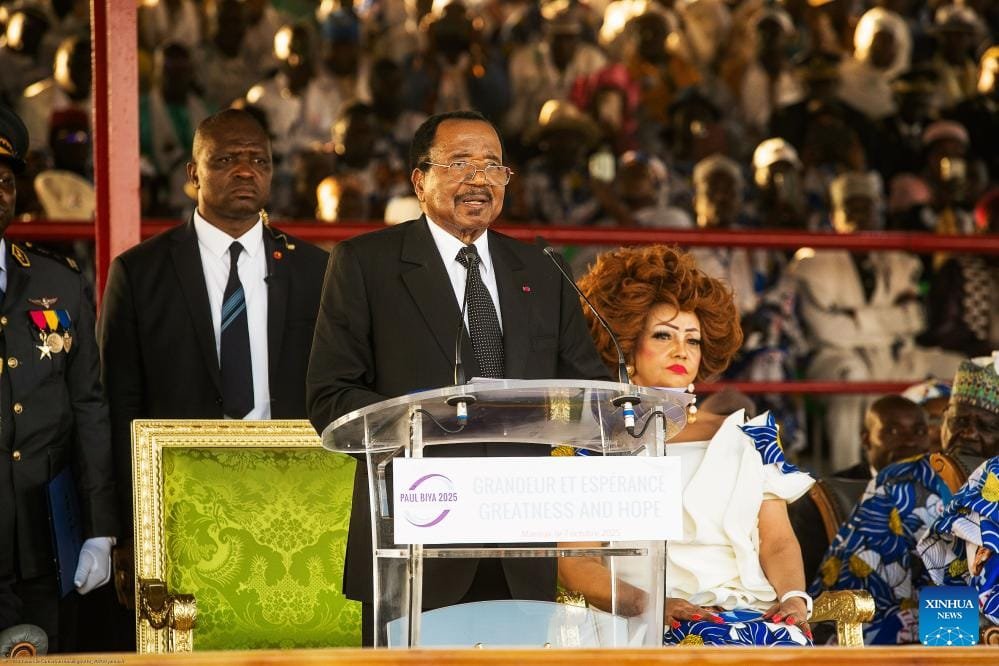
Limping back to the podium
It is a remarkable feat: to outlast three popes, countless prime ministers, and several generations of citizens. And while no one expects presidential sprinting, the key moments of Biya’s campaign offered equal parts spectacle and tender mercy.
Picture this: the official opening ceremony of his campaign tour, the aide nudges him forward, he smiles and waves, but for a moment one wonders if the applause was for him or the shuttle bus that brought the crowd. Later, during a televised Q&A, he paused for a full ten seconds – eyes scanning the studio lights – before replying, “We will continue our path of progress.” The pause allowed viewers at home a moment to wonder whether he was hearing the question or composing a recipe.
Another scene: the inauguration of a rural electrification project, where he gingerly accepted a ribbon-cutting scissor and did that near-impossible dance of “snip, steady hand, wave to camera”. Onlookers muffled chuckles. No one faulted his dignity though some faulted the power lines which trailed off into the distance, never quite reaching the village.
And then the summit tour: in January 2023 at the US‑Africa Leadership Summit in Washington DC, Biya asked aloud while microphone open, “Okay, you mean I should now speak? Where?” He appeared oblivious to the fact that his microphone was on, asking “Are there important personalities amongst them?” His aide replied yes; his speech slot had arrived. “Wow. So I have become a celebrity?” he asked, looking around the room. He even asked “What are all those people doing here?” before being gently guided into his remarks. That moment – viral among online observers – became an emblem of a presidency straining under the weight of time.
These moments, playful in intent, become loaded when one realises they reflect a broader question: can the man who once ruled a younger nation now embody its future?
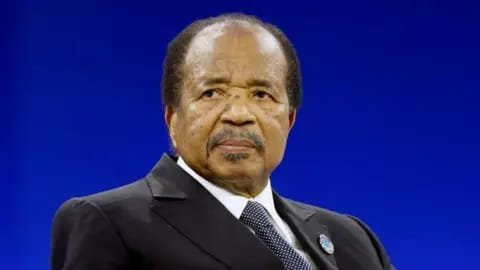
Old-school leadership in a new era
Biya is not alone in this twilight league. Across Africa and beyond, leaders of advanced years cling to power with varying strategies: handshake circuits, televised addresses, Sunday morning appearances with stoic expressions, and the occasional wink that says “everything’s fine”.
Yet for many young Cameroonians the slogan is: “We were born under Biya; we will vote under Biya; we may die under Biya.” Whatever the literal truth, the sentiment sticks.
And so the official narrative is stability. His supporters say: “Better the familiar walker than the uncertain sprinter.” But the opposition, side-eying the same staff in the same hand, says: “If you can’t truly run, why remain on the starting line?” A nation yearning for novelty watches from the sidelines as its captain limps on.
What now?
With his win certified, protests simmer in Douala and Garoua. Some mourn the lost chance; others wonder if this next term offers an encore or an obituary. The economy remains sluggish, the anglophone crisis blinks defiantly in the corner, and the youth vote – so long promised – may yet demand more than script-checked speeches.
What is clear: Biya’s victory is both triumph and trigger. A triumph of endurance, a trigger for questions. If the man who started in the analog era now leads us into the digital age, perhaps the mission will be less about marching ahead and more about handing on the baton.
Because for a country growing younger by the day, the real plank of progress might not be the same face in the mirror – but a fresh one.


