
President William Ruto’s announcement that five high-end hotels would be built within the Tsavo National Park in efforts to boost national tourism has elicited mixed reactions on both the potential benefits and the risks involved.
The Head of State said the government will no longer permit low-cost hotels within the national reserve charging Ksh2, 000 and Ksh3, 000 daily, assuring that the upscale would increase earnings and offer more sustainable support to local communities.

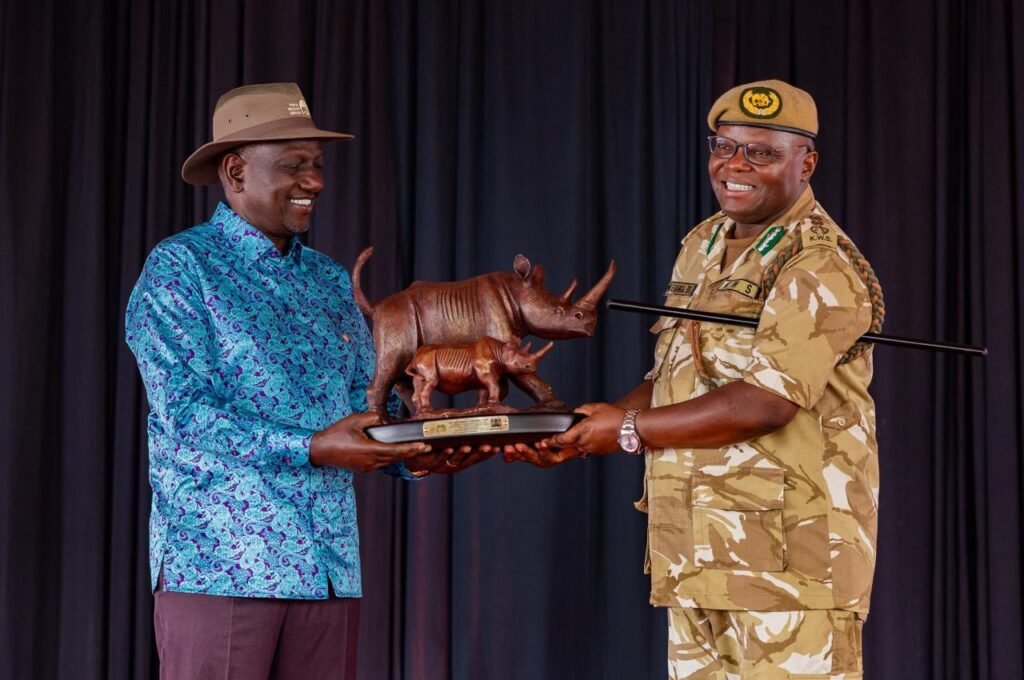
“The new hotels will mandate visitors to pay between USD 500 and USD 1000 per day. That is what will be paid and is also currently being paid in the Maasai Mara,” Dr Ruto said during the yesterday’s commissioning of Tsavo West Rhino Sanctuary in Ngulia, Taita Taveta County.
A directive by the President to the Ministry of Tourism and KWS to develop carbon credits trading framework covering Tsavo East and West is also expected to create an extra revenue stream within the circuit.
The revenue from the lodges could be reinvested in conservation, habitat protection and infrastructure improvement, contributing to improved management of the sanctuaries.
And while luxury tourism has the potential to generate revenue from high spending tourists and position Tsavo National Park as a world-class Safari destination while also stimulating the local economy, past studies show the resorts hardly benefit local communities.
Recent research by the University of Manchester published in the African Studies Review in August this year found out that luxury resorts in Africa often fail to benefit locals because they are foreign-owned, use imported goods and use most profit outside the local communities.
Even when employed, the report states, jobs may be low paying or seasonal and local suppliers could get minimal business compared to international supply chains, creating disparities that could breed resentment among the public.
While a majority of Kenyans are opposed to the luxury lodges because of their high fees, many of the Kenya’s parks remain unattractive to domestic visitors for focusing mainly on game drives.
A Kenyan only identified as Abdi on X platform, said the country’s heritage should serve all and not be fenced off for USD 500-USD 1000 a night tourism. “Don’t privatize public heritage for profit”.
Francis Mbugua calls for diversification of services at the parks, saying luxury lodges would not attract foreign tourists but flora and fauna.
“An ordinary European tourist spends nearly 6 months to save for a tour in Africa to enjoy our Flora and Fauna, which won’t be found in high-end hotels… Expect fewer arrivals, less income, job losses and death of tourism,” he shared.
Watu Saba posed, “So ordinary Kenyans have no business visiting Tsavo?” while Amos Iumush said building roads was better than the high-end hotels.
Many Kenyans want parks that are more accessible with family friendly experiences including night activities, not just expensive lodges.
Tanzania, Uganda and Rwanda have successfully blended their luxury lodges with other curated activities such as bush spas, ballooning and other entertainment program which gives them a regional competitive edge over Kenya.
Premium lodges at the Serengeti National Reserve in Tanzania run high-end activity rich guest experiences, luxury camps, private game drives, guided walks and bush dining while Rwanda’s Volcanoes National Park lodges offer integrated services as a justification for the premium prices.
South Africa is among the countries doing relatively well in the sector and stands out for the historic but controversial elephant interactions, back safaris and rides within some of the facilities in Mpumalanga.
Some of the services offered within the luxury lodges in South Africa include hot air balloon rides to guided walking safaris, horse back safaris, bush spas, private bush dinners, sleepouts, birding, kids programmes and specialists education activities.
Tourism remains one of the Kenya’s major foreign exchange earners and an economic pillar. The sector earned Ksh452.2 billion last year, a 20 percent increase from Ksh377.49 billion in 2023. Last year, Kenya recorded about 2.4 million international arrivals, the country’s highest number on record.
Former President Uhuru Kenyatta had in 2019 when the sector recorded a 31. 2 percent growth in the previous year, urged tourism stakeholders to be more creative and improve the quality and range of the services to raise the country’s profile and compete globally.
“We are operating in a global market and we must invest in improving services in our hotels and national parks. We must work hard to attract and retain tourists,” Uhuru was quoted in January 2019.


