
President William Ruto’s party, the United Democratic Alliance (UDA) has rebuked reports that it is now not keen on the implementation of the 10-point agenda, clarifying that the framework is still part of their agenda.
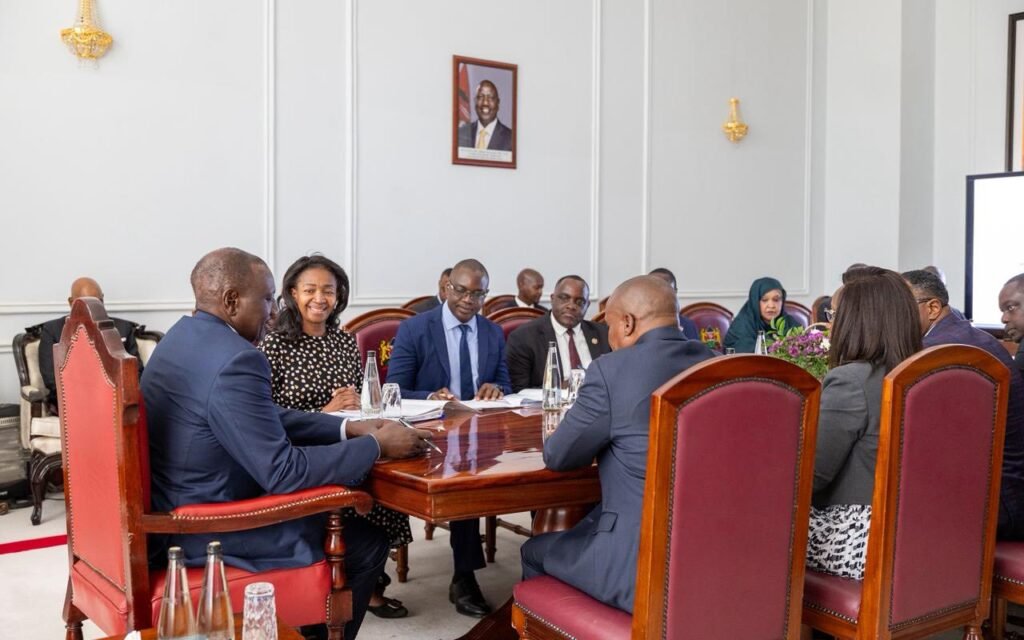
Speaking at the UDA headquarters, party leaders stated that the talks are aimed at strengthening a long-standing relationship that extends beyond the 2027 elections.
At the core of the agreement is the implementation of the NADCO report, which had previously been shelved despite its far-reaching recommendations. The report advocates for inclusivity, good governance, and the protection of devolution, among other reforms.
The pact emphasizes the need to promote inclusivity, a principle enshrined in Article 27 of the Constitution, which guarantees equality and freedom from discrimination. Despite its inclusion in the 2010 Constitution, inclusivity has been inconsistently applied, leaving marginalized groups underserved.
They also assured their supporters that the talks with ODM will not kill UDA’s relationship with its other coalition partners.
“The pact that we have with our partners in the Kenya Kwanza coalition remains intact and very valid. We cannot go looking for new partners and lose the old ones, and I think the president has been very clear on the need to unite the country,” said UDA chairperson Cecily Mbarire.
National Assembly majority leader Kimani Ichung’wah, on his part, expressed commitment to the pact, saying, “Our engagements with our colleagues in ODM go beyond the 10-point agenda. It is our intent to have greater negotiations on how to form a government.”
Senate majority leader Aaron Cheruiyot added, “It has given us the foundation, a place to start, but we believe there is more we can achieve if we build on that foundation. It is not a separate arrangement.”
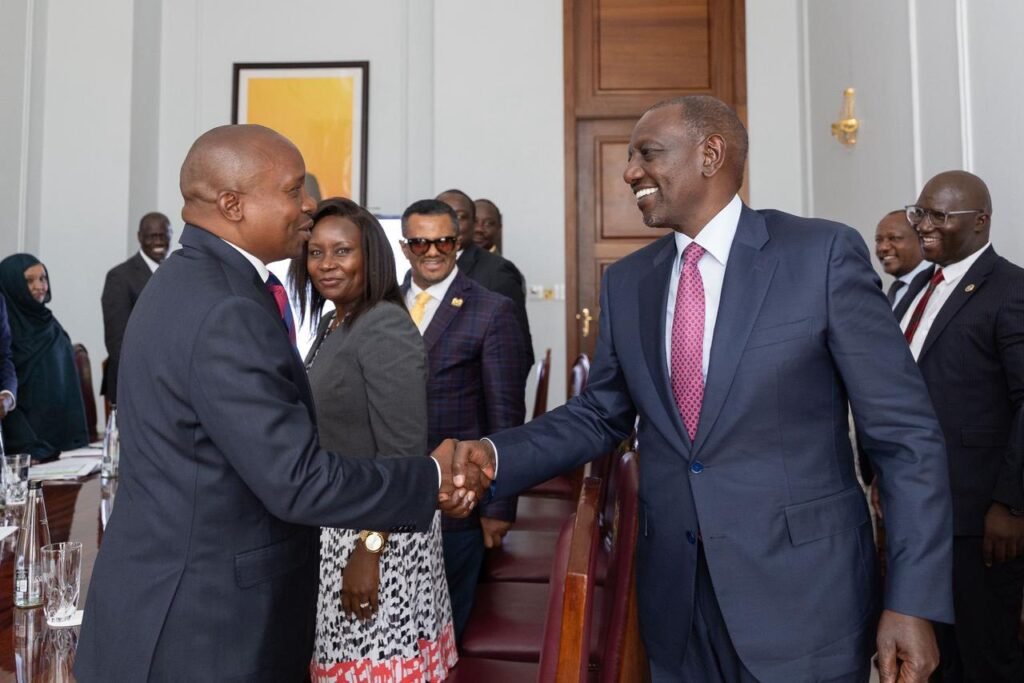
Their statements comes a week after the UDA’s National Executive Committee (NEC) gave Ruto permission to initiate formal talks with the Orange party to firm up a coalition pact ahead of the 2027 General Election.
In a communiqué issued on January 14 after a NEC meeting held in Nairobi, the party said the engagement would seek to strengthen the ongoing political cooperation between the two parties and shape a structured dialogue.
“The NEC mandated the UDA Party Leader to establish mechanisms for structured engagement with the ODM party to achieve the desired outcome,” read the statement.
What it entails
The party associated the existing partnership with ODM for key political milestones, including the adoption of the National Dialogue Committee (NADCO) report, the incorporation of ODM members into government roles, and joint electoral successes in recent by-elections.
The 10- Point- Agenda also addresses the financial challenges faced by county governments, which have long accused the national government of stifling their autonomy. Article 17 of the Constitution outlines the objectives of devolution, including equitable resource allocation and service delivery. However, devolved units have struggled with inadequate funding, hindering their effectiveness.
Integrity, a cornerstone of Chapter 6 of the Constitution, has been a persistent issue in Kenya’s political class. The pact commits to strengthening accountability mechanisms to combat corruption and ensure ethical leadership.
The right to assemble, demonstrate, and petition, as guaranteed under Article 37, has often been curtailed by security agencies. The agreement seeks to safeguard this right, which has been a contentious issue, particularly during protests against government policies. Kenya’s growing public debt and burdensome taxation regime have also sparked widespread public discontent.
The pact aims to address these issues by promoting transparency in public finance management, as outlined in Chapter 12 of the Constitution. The pilferage of public resources at both national and county levels remains a significant challenge, and the agreement reaffirms the commitment to combat corruption through robust legislation and enforcement of anti-corruption laws.
The pact comes against the backdrop of widespread protests by Kenya’s youth in 2024, who expressed frustration over unemployment, underemployment, and marginalization.
The demonstrations highlighted the failure of successive administrations to address systemic issues and uphold constitutional principles. Adherence to the rule of law and constitutionalism has been inconsistent since the promulgation of the 2010 Constitution.


