
The Independent Electoral and Boundaries Commission (IEBC) on Thursday convened a strategic workshop focused on developing voter education, partnerships, communications performance targets, and public outreach strategies for the 2025/26/27 financial years, as preparations for the 2027 General Election intensify.
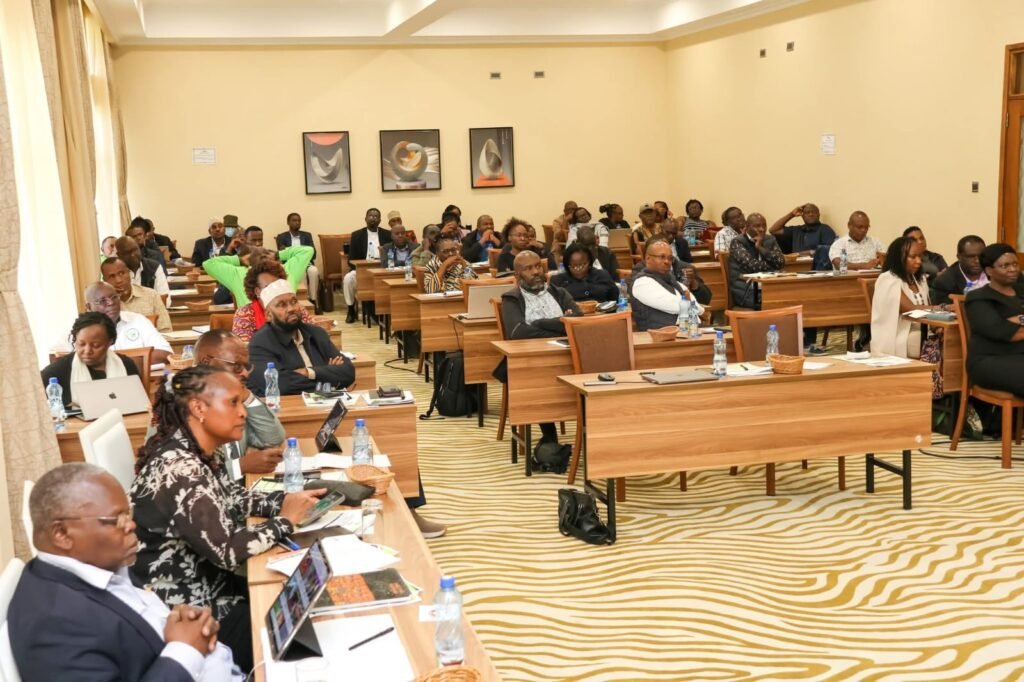
The forum brought together electoral stakeholders, civil society actors, researchers, and democracy institutions to assess Kenya’s evolving political landscape and identify ways to rebuild public trust, counter misinformation, and strengthen citizen engagement.
The workshop was officially opened by IEBC Commissioner Dr. Alutalala Mukhwana, Chairperson of the Voter Education, Partnerships, Communications and Stakeholder Engagement Committee (VEPCSE), on behalf of the Commission Chairperson.
Youth engagement and electoral trust
Reflecting on Kenya’s electoral history, Dr. Mukhwana noted that while the country has long been viewed as a regional symbol of peace and dialogue, shifting socio-political dynamics now demand new approaches to civic engagement.
He emphasized that Kenya’s youthful population has fundamentally reshaped electoral participation.
“The current youth demographic is unlike any previous generation. They are deeply informed, digitally connected, and politically alert. If we engage them correctly, they become our greatest asset. If we fail, they could become a powerful source of instability,” he said.
Dr. Mukhwana underscored the importance of voter education in countering misinformation and disinformation, noting that weak civic education fuels confusion, mistrust, and conflict. He called for stronger stakeholder engagement, improved communication pathways, and renewed efforts to enhance institutional credibility ahead of the 2027 polls.
Institutional readiness and democratic accountability
Frankline Mukwanja, Executive Director of the Centre for Multiparty Democracy (CMD–Kenya), described Kenya as being at a defining democratic moment, requiring electoral institutions to critically assess both their internal capacity and civic preparedness.

Center for Multiparty Democracy Kenya (CMD) executive Director Frankline Mukwanja gestures during the interview on July 18, 2024 where he spoke on the two thirds gender rule which is yet to be fully implemented by the government. Francis Nderitu | Nation
Drawing from Kenya’s multiparty electoral history, Mukwanja highlighted persistent challenges linked to institutional weaknesses, inconsistent voter education, and declining public trust. He stressed the need for accountability-driven performance targets and stronger collaboration between IEBC and democracy stakeholders.
Mukwanja also pointed to the changing nature of the Kenyan voter, particularly young people, whom he described as politically aware, digitally connected, and skeptical of traditional political narratives. This generational shift, he said, requires electoral institutions to rethink how they communicate, build legitimacy, and earn public confidence.
Research insights and community-based approaches
Angela Ambitho, Chief Executive Officer of Infotrak Research, presented findings from a 2024–25 study on voter behavior and engagement trends. The research shows that Gen Z and millennials rely heavily on social media for political information while maintaining strong civic awareness and openness to diversity.
However, the study revealed that low trust in electoral processes, perceptions of electoral manipulation, and voter disillusionment continue to suppress participation. Ambitho noted that voter education efforts remain fragmented and are often treated as one-off activities focused mainly on procedures, rather than confidence-building, transparency, and grievance resolution.
Representing URAIA Trust, Bancy Kubutha emphasized the need for community-driven voter education that builds trust from the grassroots. She highlighted the importance of inclusive outreach, transparency in electoral processes, and leveraging youth networks to counter misinformation and promote peaceful participation.
The workshop seeks to co-create measurable performance targets and outreach strategies to strengthen voter education, partnerships, and communication ahead of the 2027 General Election.


