
Edwin Watenya Sifuna was born on May 22, 1982, in Mumias, Kakamega County, into a working-class family. His father worked as a civil servant with the former Municipal Council, while his mother was a teacher.
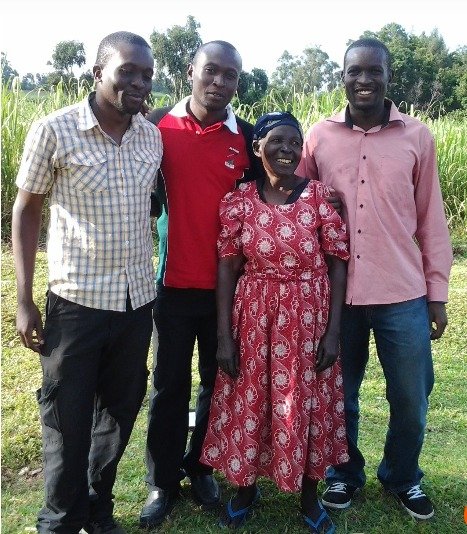
Growing up in Western Kenya, Sifuna has often described witnessing inequality and limited economic opportunities as formative experiences that shaped his outlook on governance and justice. Those early influences, friends say, planted the seeds for his eventual entry into public life.
“He has always believed that systems must work for ordinary people,” a longtime associate says. “That conviction started very early.”
Education and legal training
Sifuna began his education at Kakamega Township Primary School before joining Musingu High School for his secondary education. He later pursued a Bachelor of Laws degree at the University of Nairobi, graduating in 2006.
He went on to obtain a Postgraduate Diploma from the Kenya School of Law in 2007 and was admitted to the Roll of Advocates in 2008.
Before entering full-time politics, Sifuna built a career in legal practice. He worked in corporate legal roles before establishing his own law firm, E. Sifuna & Associates Advocates, in Nairobi. His background in law would later shape his political messaging, particularly around constitutionalism and governance.
Colleagues from the legal fraternity describe him as “argumentative but grounded in the law,” a trait that has defined both his courtroom and parliamentary style.
Entry into politics
Sifuna’s formal entry into politics began in coalition politics during the period following Kenya’s 2010 Constitution. Between 2013 and 2016, he served as a Technical and Advisory Committee member for the Coalition for Reforms and Democracy (CORD). He later held a similar role in the National Super Alliance (NASA).

His first major elective attempt came in 2017 when he sought to become Member of Parliament for Kanduyi Constituency but lost in party primaries. Months later, he was fronted as the Orange Democratic Movement’s candidate for Nairobi Senator in the 2017 General Election. He lost that race to Johnson Sakaja but emerged as a visible national figure.
Political analysts say the 2017 contest introduced him to a broader urban electorate and positioned him as one of ODM’s rising young leaders.
Rise within ODM
In February 2018, Sifuna was appointed Secretary-General of the Orange Democratic Movement, replacing Ababu Namwamba. At just 34 years old, he became one of the youngest leaders to hold such a senior role in a major Kenyan political party.
As Secretary-General, he became the party’s chief communicator and strategist, often defending ODM’s positions in heated national debates. His tenure saw him play a central role in coalition negotiations, internal party organization and election campaigns.
“He was the voice of the party during some of its most defining moments,” a senior ODM official says. “Whether you agreed with him or not, he was visible and consistent.”
Victory in the Senate
In 2022, Sifuna returned to the ballot, contesting the Nairobi Senatorial seat. This time, he secured victory and assumed office in September 2022.
In February 2023, he was appointed Deputy Minority Whip in the Senate, further consolidating his influence within parliamentary politics.

As Nairobi Senator, he has positioned himself as an advocate for devolution, urban governance reforms and youth participation in politics.
Personal life and interests
Away from politics, Sifuna describes himself as a family man. He is married and has a daughter. Raised in a Catholic background, he often credits his upbringing with shaping his values of discipline and public service.
He is also known to be an ardent football fan, supporting AFC Leopards locally and Chelsea FC internationally.
A political figure in transition
Following his recent removal as ODM Secretary-General, Sifuna’s political journey appears to be entering a new phase. While he remains Nairobi Senator, his exit from party leadership has sparked debate about his long-term ambitions and influence within Kenya’s opposition politics.
Political analyst Dr. Miriam Otieno says, “Sifuna represents a generation of leaders who grew up under the 2010 Constitution. His career reflects the transition from coalition politics to institutional party leadership. What he does next will determine whether he remains a party figure or evolves into a broader national actor.”
For now, Edwin Sifuna remains a lawyer-turned-politician whose career has mirrored Kenya’s shifting political landscape — from constitutional reform debates to coalition realignments and generational leadership change.


