
The grand hall of the UN General Assembly echoed with a demand that powerful nations have heard before, but never with such mounting urgency. Kenya’s President, William Ruto, stood before world leaders this week and delivered a stark ultimatum: the United Nations must reform its powerful Security Council to include Africa, or risk its own irrelevance.
His speech was not a request but a pronouncement, underscoring a deepening frustration on a continent that argues it is consistently asked to help solve global crises while being shut out of the rooms where the decisions are made. “You cannot claim to be the United Nations while disregarding the voice of 54 nations. It is not possible,” Ruto declared, his words cutting to the heart of a decades-long debate. The Kenyan leader’s assertive tone signals a new phase in Africa’s campaign for a seat at the world’s top security table, a campaign driven by a sense of historical grievance and contemporary necessity.
The Unrepresented Billion The core of Africa’s argument, articulated in the Common African Position known as the Ezulwini Consensus, is one of simple arithmetic and profound injustice. The continent of 1.4 billion people, represented by 54 sovereign nations, has no permanent seat on the 15-member United Nations Security Council. The five permanent members (P5)—China, France, Russia, the United Kingdom, and the United States—reflect the world order of 1945, a time when most of Africa was under colonial rule.
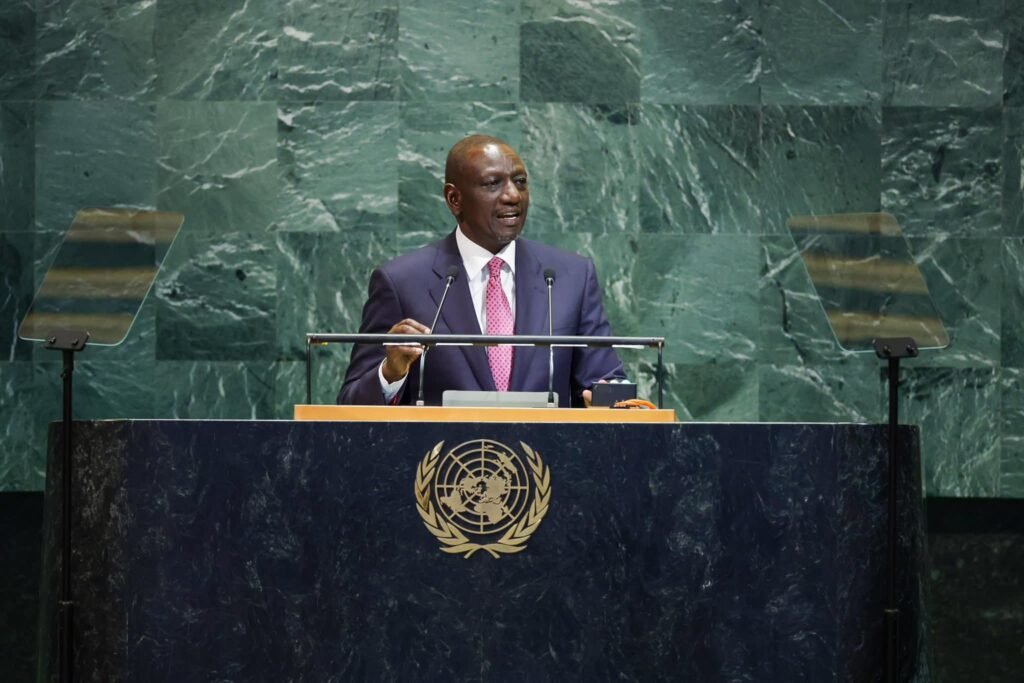
This exclusion is not merely symbolic. Africa dominates the Security Council’s agenda, with nearly 40 percent of its meetings in 2023 focused on African issues. It also provides some of the largest contingents for UN peacekeeping operations. Yet, as Ruto pointed out, it remains “the only continent without a permanent seat at the main table,” where strategies are devised and mandates are approved. Sithembile Mbete, a political science lecturer at the University of Pretoria, framed this as a continuation of a painful history, noting that while “Africa was on the menu, as was the case in Berlin 100 years ago, it still does not have a permanent seat at the table”.
Veto: A tool of exclusion The veto power wielded by the P5 is the most tangible symbol of this imbalance. Rooted in the UN Charter’s Article 27, the veto allows any single permanent member to block any substantive resolution, regardless of the support it has from other nations. For Africa, this has often meant that its security interests are held hostage to the geopolitical rivalries of others.
While specific recent examples from Ruto’s speech were not detailed in the available reports, the pattern is well-established. The conflict in Syria is a prime example of the veto’s impact. Between 2011 and 2024, Russia cast 14 vetoes and China eight on resolutions concerning Syria, effectively paralysing the Council’s ability to act against mass atrocities. Such deadlocks have direct consequences for global security and for Africa, which often feels the ripple effects of unresolved conflicts.
The veto also shapes Council action before a vote is even called. The mere threat of a veto can be enough to strip a resolution of its potency or prevent it from being formally tabled at all, a behind-the-scenes dynamic that further marginalises non-permanent members.
A tale from Haiti President Ruto offered Kenya’s leadership of the Multinational Security Support (MSS) mission in Haiti as a case study in both African commitment and the international community’s failure. He recounted that Kenyan police had helped restore government institutions overrun by gangs and reopened schools despite the mission being “underfunded, underequipped and operates below 40 percent of its authorised personnel strength”.
His speech turned pointed as he framed this partial success as an indictment of the current system. “This begs the question: if so much could be achieved with limited resources… what more could have been accomplished if the United Nations fraternity had truly acted together?” he asked. The implication was clear: Africa is willing to step up, but the outdated architecture of global governance, centred on an unreformed Security Council, is the primary obstacle to lasting peace.
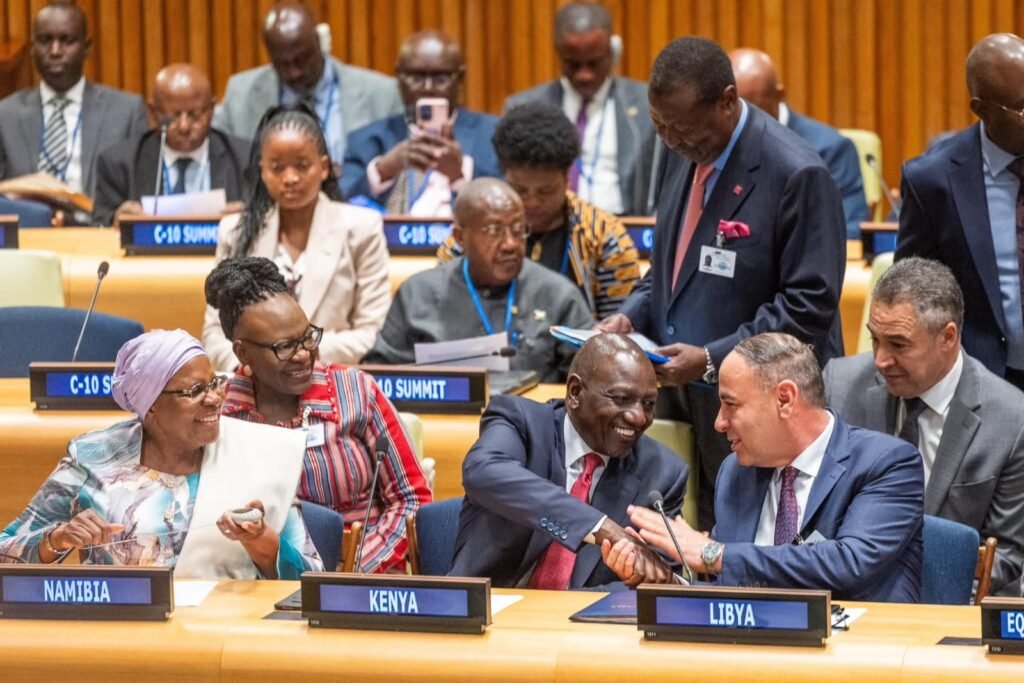
Ruto is not a lone voice. The call for two permanent African seats with full veto rights, plus two additional non-permanent seats, was echoed by other leaders at the assembly, including Malawi’s outgoing President Lazarus Chakwera and the King of Lesotho. They argue that reform is a “necessity for the United Nations’ own survival”.
There is public, if vague, support from some P5 members for including Africa . However, the path to reform is steep, requiring an amendment to the UN Charter that must be ratified by two-thirds of the membership, including all five current permanent members. Convincing nations to dilute their own power has proven impossible for decades.
Yet, the pressure is building. As Africa’s population and economic influence grow, its leaders are increasingly unwilling to accept a status quo they see as a relic of colonialism. Ruto’s speech marks a shift from pleading for a place to demanding one, signalling that the continent’s patience is wearing thin. The question now is whether the P5 will see this reform as a threat to their privilege or, as African leaders argue, the only way to save the UN’s crumbling legitimacy.


