
The ongoing auction saga involving former Cabinet Secretary and ex-Jubilee Party Secretary General Raphael Tuju has brought renewed focus on the risks tied to high-value property investments and debt financing in Kenya.
At the centre of the dispute are prime properties in Karen and Upper Hill, which Tuju says he began acquiring more than four decades ago.
Speaking in a televised interview, Tuju traced his real estate journey back to his twenties, describing how a bold financial decision laid the foundation for his wealth.
“The first time I bought land in Karen was 40 years ago, and it was Ksh100,000 per acre. I took a loan from the National Bank. The minimum you could buy in Karen at that time was Ksh250,000. I took a loan of Ksh180,000,” he said.

From humble beginnings to prime assets
Tuju revealed that at just 27 years old, he secured his first parcel of land using a loan from the National Bank of Kenya.
To raise the remaining funds, he made a personal sacrifice that would define his investment path.
“The other Ksh60,000 I raised by selling the only car I had at that time. This prompted me to go from owning a car back to a matatu,” he explained.
That early investment would later prove highly valuable as Karen transformed from a largely undeveloped area into one of Nairobi’s most exclusive suburbs.
Over the years, Tuju expanded his portfolio, including significant investments in Upper Hill, now a major commercial hub with rapidly rising land values.
The billion-shilling loan at the center of the dispute
Despite the success of his early investments, Tuju’s current troubles stem from a large-scale loan acquired in 2015.
The loan, estimated at about Ksh1.2 billion, was used to finance the purchase and development of a 20-acre property in Karen.
Out of this amount, approximately Ksh900 million went into acquiring the land, while the rest funded construction projects including hospitality and wellness facilities.
However, the loan has since ballooned into a dispute now estimated between Ksh1.9 billion and Ksh2.2 billion, placing the properties at risk of auction.
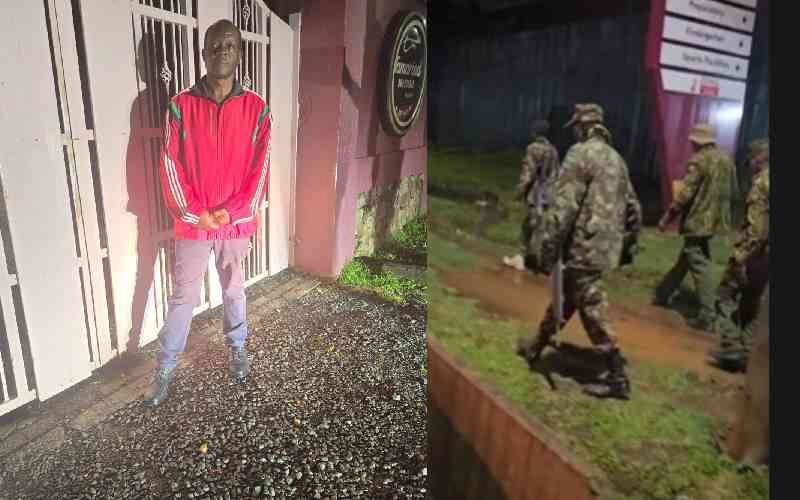
The situation escalated dramatically in recent days, with reported attempts to evict Tuju from his Karen property.
Tuju fights back amid auction threats
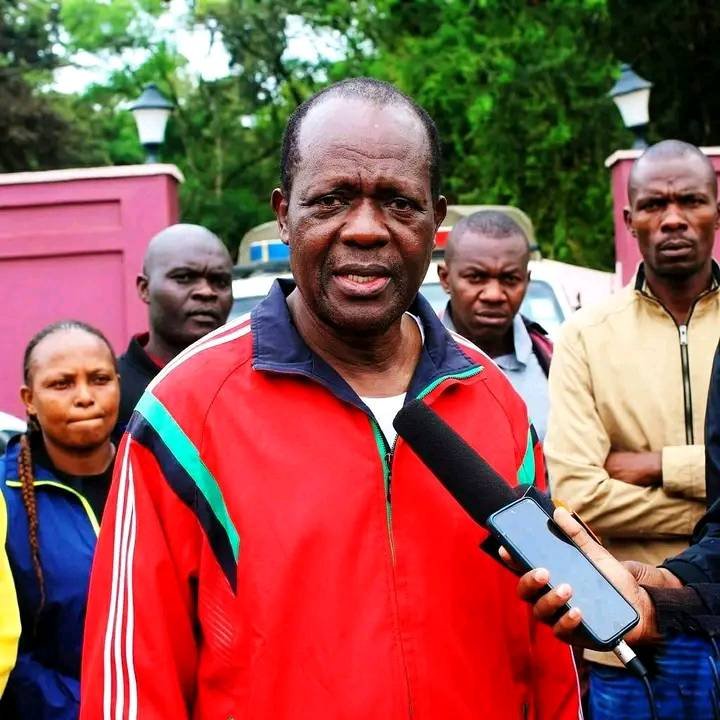
Tuju has strongly opposed the planned auction, alleging that powerful individuals are behind efforts to forcefully take over his property.
While maintaining that he is not refusing to pay the debt, he insists that the process must be transparent.
“I am willing to pay all the money I owe, but there must be transparency from all parties involved,” he stated.
The standoff has drawn public attention, not only because of Tuju’s political profile but also due to the scale of the financial dispute and the value of the assets involved.
A cautionary tale on debt and property
The saga highlights the risks associated with leveraging large loans for property development, especially in volatile economic conditions.
What began as a success story of early investment and strategic land acquisition has now evolved into a complex legal and financial battle.
For many observers, Tuju’s situation reflects a broader reality in Kenya’s real estate sector, where high-value assets can quickly become liabilities when debt obligations spiral.
As the dispute unfolds, the outcome could have significant implications not only for Tuju but also for how large-scale property financing disputes are handled in the country.

