
The County Public Accounts Committee (CPAC) has ordered Vihiga Governor Wilbur Ottichilo to surcharge county accounting officers over Sh1.9 million in staff salary loans that were issued nearly a decade ago but never recovered, citing gross negligence and violations of public finance laws.
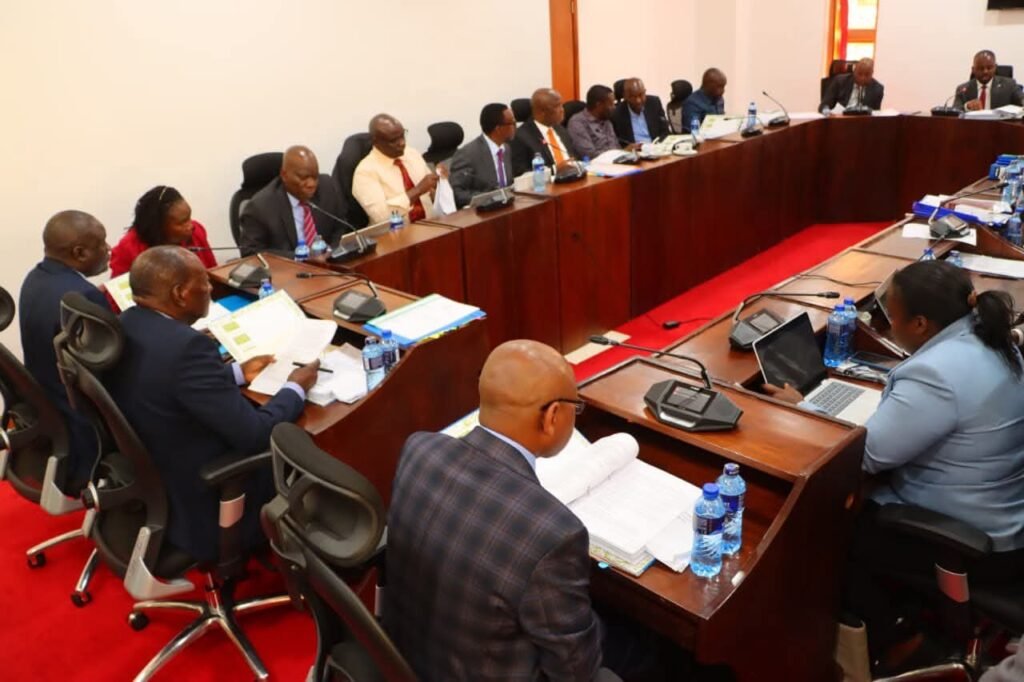
The directive follows scrutiny of the Auditor-General’s report for the 2024/25 financial year, which revealed that the loans — advanced between 2015 and 2017 — remain largely unpaid, with only Sh85,000 recovered to date. Beneficiaries include current and former county executives, Members of the County Assembly (MCAs), and even a deceased former officer.
What triggered CPAC’s intervention
CPAC’s mandate is to ensure accountability in the use of public funds by county governments. During its review of Vihiga County’s financial statements, the Committee expressed alarm at the failure to recover public money advanced to individuals, some of whom are still serving in public office.
Senators noted that the loans were not informal arrangements but official advances processed through county systems and deposited directly into beneficiaries’ bank accounts. As such, responsibility for recovery rested squarely with accounting officers who approved and managed the transactions.
“The issue before us is not whether records were lost, but why public funds were advanced and left unrecovered for close to ten years,” said Senator Moses Kajwang’.
Why CPAC rejected the Governor’s defence
Governor Ottichilo told the Committee that recovery efforts were undermined by the loss of financial records after a county building was destroyed by fire. He also said some beneficiaries had denied receiving the loans and demanded proof.
However, senators dismissed this explanation, arguing that electronic banking trails and payroll systems should have provided sufficient evidence. Senator Johnes Mwaruma noted that destruction of physical files could not justify inaction.
“Money was paid into bank accounts. Fires do not erase bank records,” he said.
Senator Okong’o Omogeni further questioned why no administrative or disciplinary action had been taken against officers responsible for recovery, warning that delays may have rendered court action impossible under the Limitation of Actions Act.
Why surcharge — and not court action
CPAC acknowledged that legal recovery through the courts may no longer be viable due to statutory time limits. Senator Samson Cherarkey told the Governor that pursuing litigation would be “a futile exercise.”
Instead, the Committee invoked the Public Finance Management (PFM) Act, which allows for surcharging accounting officers who authorize expenditure or advances and fail to safeguard or recover public funds.
“The law is clear,” Senator Kajwang’ said. “If an accounting officer advances public money and fails to recover it, that officer becomes personally liable.”
A surcharge means the officers could be required to refund the lost funds from their own resources, regardless of whether the original beneficiaries repay the loans.
Broader concerns over financial discipline
CPAC also directed Governor Ottichilo to take action over a separate Sh5 million expenditure used to finance a housewarming ceremony for the County Assembly Speaker — an expense the Committee described as immoral and unjustified, especially as Vihiga County’s pending bills stood at Sh1.7 billion as of June 30, 2025.
“There was absolutely no justification for that expenditure,” Senator Kajwang’ said. “You must deal with this illegality and recover the money if necessary.”
What the directive means going forward
CPAC’s decision signals a tougher stance on personal accountability in county governments. Governors can no longer shield officers behind lost records, expired timelines or institutional inertia. Where recovery fails, the burden shifts to the officials who authorized the transactions.
For Vihiga County, the directive places immediate pressure on Governor Ottichilo to initiate surcharge proceedings, discipline culpable officers and demonstrate compliance with public finance laws — or risk further sanctions from Parliament.

