



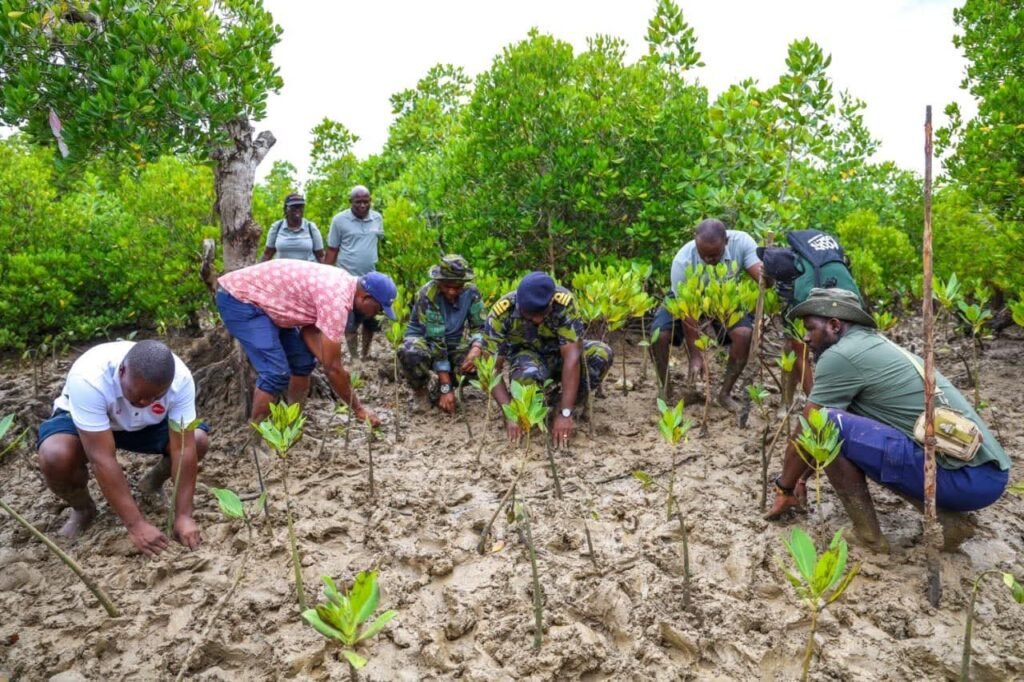
The Kenya Navy, working alongside private sector partners and local communities, planted 10,000 mangrove seedlings in Tsunza, Kwale County, as part of efforts to restore coastal ecosystems and support Kenya’s national tree-growing campaign.
The exercise, held Friday morning despite heavy rains, brought together Kenya Defence Forces (KDF) personnel, conservation groups, insurance companies and residents from nearby communities in a coordinated environmental restoration initiative.
Focus on Coastal Ecosystem Protection
The mangrove planting campaign aims to rehabilitate degraded coastal wetlands that play a critical role in protecting shorelines from erosion, flooding and environmental degradation.
Mangroves also provide breeding grounds for marine life and help sustain fishing activities that many coastal communities depend on for their livelihoods.
The initiative contributes to Kenya’s broader target of planting 15 billion trees by the year 2032 under the national environmental restoration programme.
Kenya Navy Expands Role in Environmental Conservation
Lieutenant Colonel Boniface Amimo of the Kenya Navy said the military remains committed to supporting environmental conservation efforts following President William Ruto’s directive tasking KDF with leading the country’s tree-planting campaign.
“We are here today together with our partners and the local community to plant mangroves in Tsunza as part of efforts to restore and protect our coastal ecosystem,” Lt Col Amimo said.
He noted that the exercise demonstrates the growing involvement of security agencies in climate action and environmental sustainability programmes beyond their traditional security mandate.
Communities and Private Sector Join Initiative
Residents from surrounding villages participated in the exercise alongside conservation organisations and private firms, highlighting increasing collaboration between communities, government agencies and businesses in addressing environmental challenges.
Environmental experts say mangrove forests are among the most effective natural barriers against rising sea levels and extreme weather conditions linked to climate change.
The restoration programme is also expected to improve biodiversity and strengthen resilience among coastal communities vulnerable to environmental degradation.


