
First Lady Rachel Ruto and Kenya’s Permanent Representative to the United Nations Environment Programme (UNEP), Ida Odinga, have led a large-scale tree-planting exercise in the Mau Forest Complex, reaffirming the country’s commitment to restoring degraded ecosystems while improving livelihoods for surrounding communities.
The conservation exercise forms part of the Integrated Conservation and Livelihood Improvement Programme, a long-term initiative targeting the planting of more than 40 million tree seedlings over the next decade to rehabilitate sections of the Mau Forest, one of Kenya’s most critical water towers.
As part of the initiative, the First Lady adopted 33 hectares at Marindas Station within the Mau Forest Complex, adding momentum to the government’s ambitious target of planting 15 billion trees by 2032.
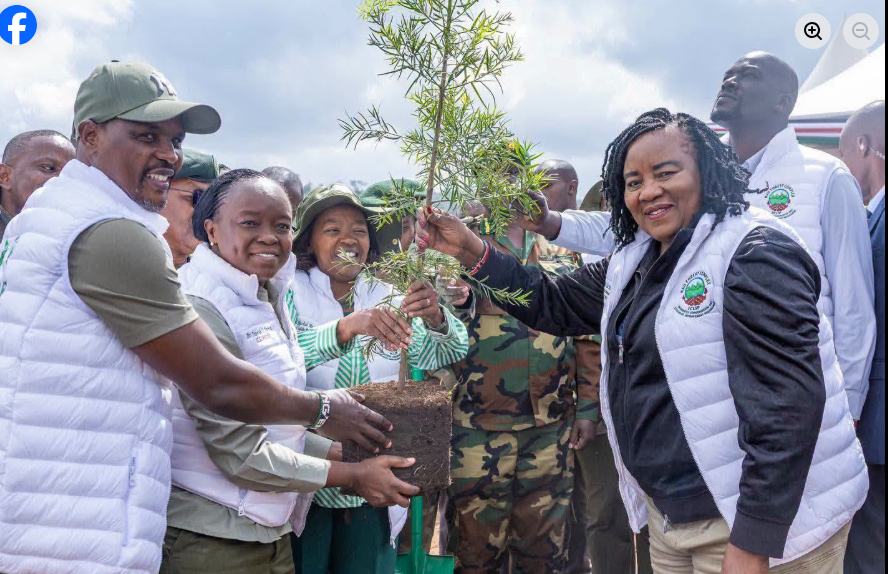
Restoring Kenya’s vital water towers
Speaking during the event at Baringo Primary School in Kuresoi North, Rachel Ruto described the Mau Forest as a symbol of what can be achieved through collective commitment to environmental restoration.
She praised leaders who have championed the protection of the forest over the years, saying their efforts were driven by the need to secure Kenya’s environmental future rather than simply preserve trees.
“The Mau Forest stands as a powerful reminder of what is possible when a nation chooses restoration over destruction,” she said.
She noted that protecting forests safeguards water catchments, supports agriculture, improves air quality and sustains millions of livelihoods across the country.
“Our forests are living ecosystems that provide essential services every day. Conserving them is about protecting the future that we leave for our children,” she added.
The First Lady also reaffirmed her personal commitment to growing 500 million trees and supporting restoration projects in key ecosystems, including Kakamega Forest.
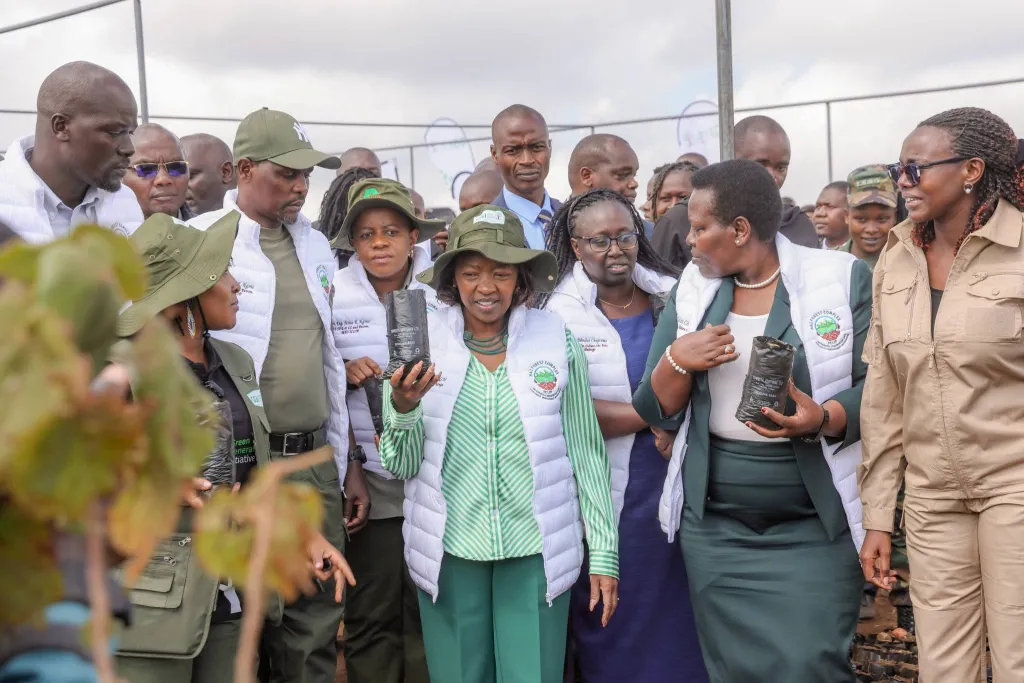
Communities urged to embrace clean energy
Rachel Ruto challenged households, schools and institutions to adopt clean cooking technologies such as biogas to reduce dependence on firewood and charcoal.
She said increasing the use of alternative energy sources would ease pressure on forests while improving public health and contributing to climate action.
“Every biogas unit installed protects our forests, improves our health and secures a cleaner future for generations to come,” she said.
Livelihoods and conservation go hand in hand
Ida Odinga announced that she would also adopt part of the Mau Forest restoration programme, saying environmental conservation should deliver both ecological and economic benefits.
She described the Mau Forest as one of East Africa’s most important water towers, noting that rivers originating from the ecosystem drain into Lake Victoria, the primary source of the River Nile, making its protection vital to millions of people across the region.
“The solutions discussed in international climate forums can be implemented right here in the Mau Forest,” she said.
Odinga called for similar restoration programmes to be expanded to other degraded ecosystems across Kenya.
A key feature of the initiative allows local communities to cultivate food crops for up to three years while nurturing newly planted tree seedlings, creating a balance between conservation and household livelihoods.
More than 148,000 households in Kuresoi North, Kuresoi South, Njoro and Molo constituencies are expected to benefit through integrated value-chain programmes aimed at boosting food security and increasing incomes.
Government pushes nationwide restoration
Environment, Climate Change and Forestry Cabinet Secretary Deborah Barasa urged Kenyans to actively participate in the country’s forest restoration agenda.
She said the ministry will continue distributing tree seedlings during rainy seasons and encouraged every Kenyan to plant at least 30 trees.
“Restoring forests is about restoring our homes and securing the future for generations to come,” Barasa said.
Forestry Principal Secretary Festus Ng’eno revealed that President William Ruto has already adopted 100 acres under the restoration programme.
According to Ng’eno, the initiative aims to plant four million trees annually while restoring more than 33,000 hectares of degraded forest.
“This partnership-driven programme is restoring landscapes while improving livelihoods for local communities,” he said.
The event was also attended by Gender Cabinet Secretary Hannah Cheptumo, Nakuru Deputy Governor David Kones, Kuresoi North MP Alfred Mutai, Nakuru Woman Representative Liza Chelule, Parliamentary Affairs Principal Secretary Aurelia Rono and Forestry Principal Secretary Gitonga Mugambi.
Officials said the restoration activities are concentrated around the Marindas area at Bararget Forest Station, where indigenous and agroforestry tree species are being planted to restore degraded landscapes, protect water catchments and strengthen community resilience to climate change.


, Ida Odinga, have led a large-scale tree-planting exercise in the Mau Forest Complex,)