
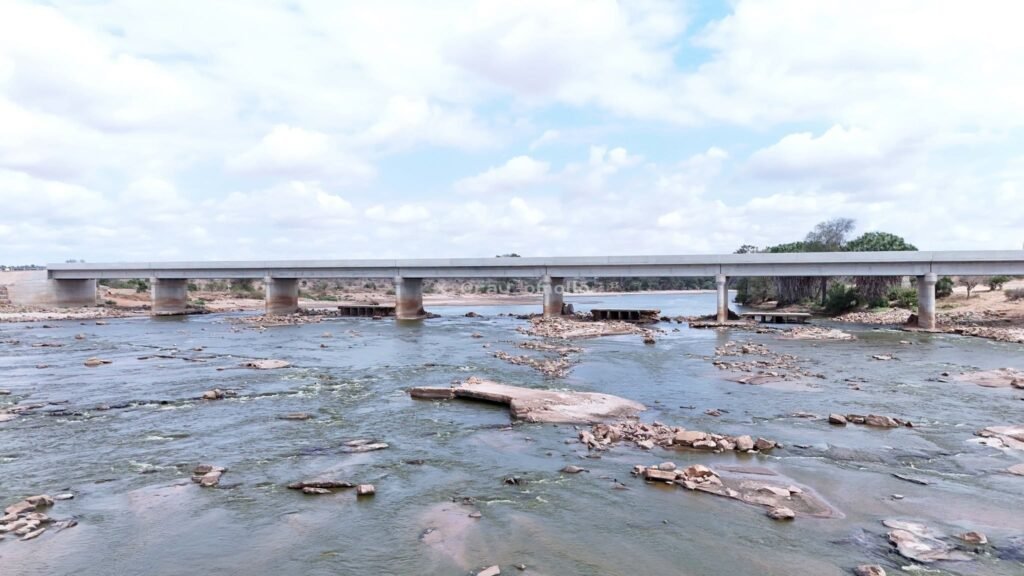
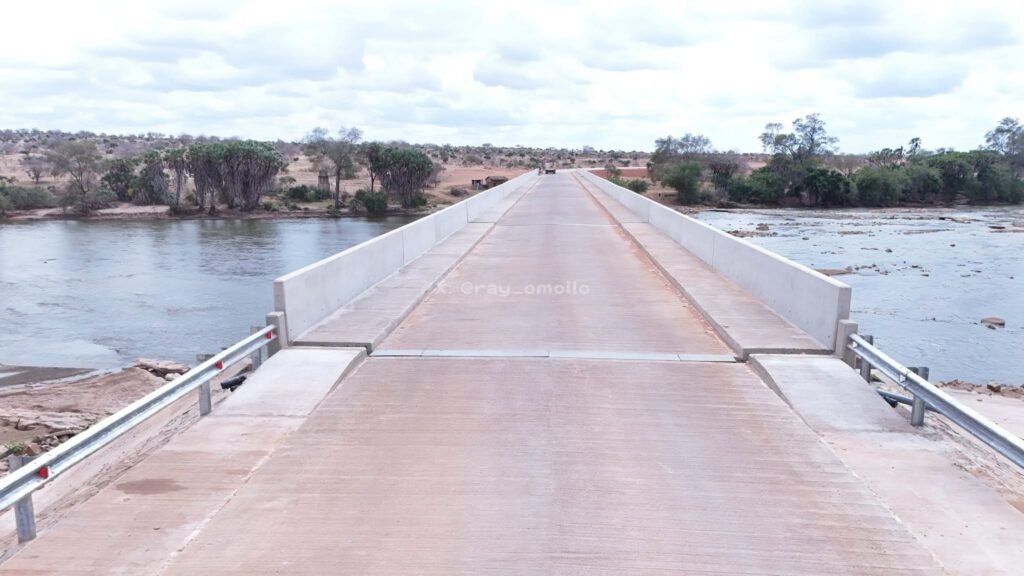
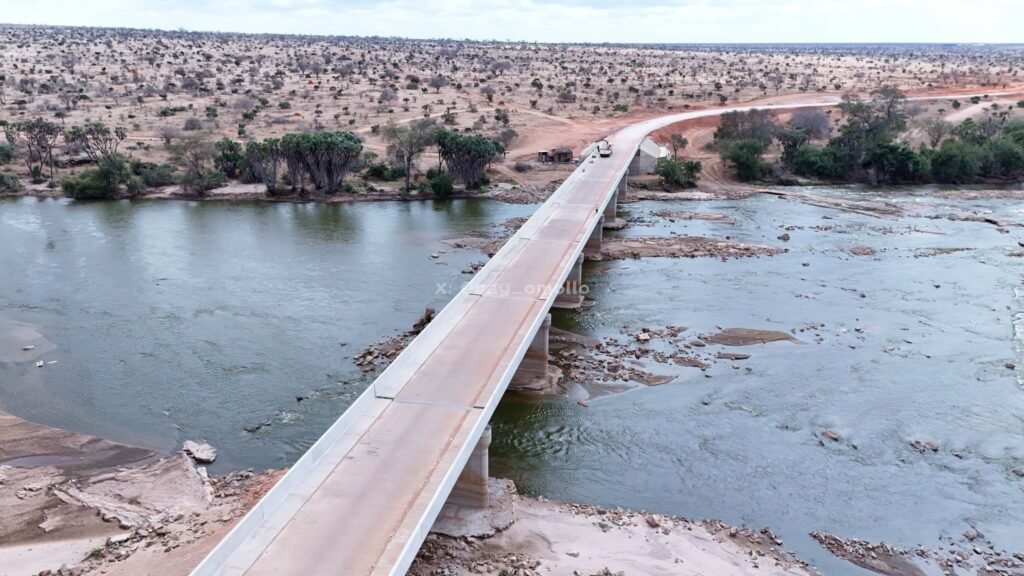
The completion of the 200-metre Galana–Kulalu Bridge has been hailed as a major infrastructure milestone that will improve connectivity between Kilifi and Tana River counties while accelerating the implementation of the Galana–Kulalu Food Security Project.
Principal Secretary for Internal Security and National Administration Raymond Omollo said the bridge will strengthen agricultural production by improving the movement of farm inputs, harvested produce and people, while unlocking new economic opportunities for communities in the region.
“The completion of the Galana–Kulalu Bridge is a significant investment in Kenya’s food security agenda. It will enhance connectivity, improve logistics and create new opportunities for trade, investment and economic growth across the region,” Omollo said.
The bridge spans the Galana River and provides a direct connection to the Malindi–Sala Gate Road, replacing the longer diversion through Baricho that previously increased travel time and transport costs for farmers, traders and residents.
Improving access to agricultural markets
Omollo said the new crossing will significantly improve access to the Galana–Kulalu irrigation scheme by enabling faster transportation of agricultural inputs and produce, making the project more efficient and commercially viable.
“Reliable infrastructure is essential for successful agricultural production. By improving access to the project area, this bridge will reduce transport costs, support farmers and strengthen the agricultural value chain,” he said.
He added that the improved road network will also facilitate the delivery of government services while encouraging private sector investment in agriculture, logistics and other sectors.
Boost for regional development
According to Omollo, the bridge is expected to stimulate economic activity by opening up surrounding areas to trade, tourism and investment while improving mobility for local communities.
“The bridge is more than a transport link. It is an enabler of inclusive development that will connect communities, expand business opportunities and improve access to essential services,” he said.
He noted that reduced travel times will make it easier for businesses to transport goods and for residents to access markets, schools and healthcare facilities.
Security measures to protect infrastructure
Omollo said the State Department for Internal Security and National Administration continues to work closely with other government agencies to safeguard the bridge and ensure its long-term sustainability.
“Our responsibility is to provide a secure operating environment that protects this strategic infrastructure and guarantees safe movement for all road users,” he said.
He added that coordinated security operations, traffic management and road safety measures have been put in place to protect the bridge, preserve public investment and ensure it continues delivering economic and social benefits.
“The Galana–Kulalu Bridge is a national asset that will support Kenya’s food security ambitions while improving livelihoods for communities in Kilifi, Tana River and beyond. We remain committed to ensuring it serves the country safely and efficiently for generations to come,” Omollo said.


