
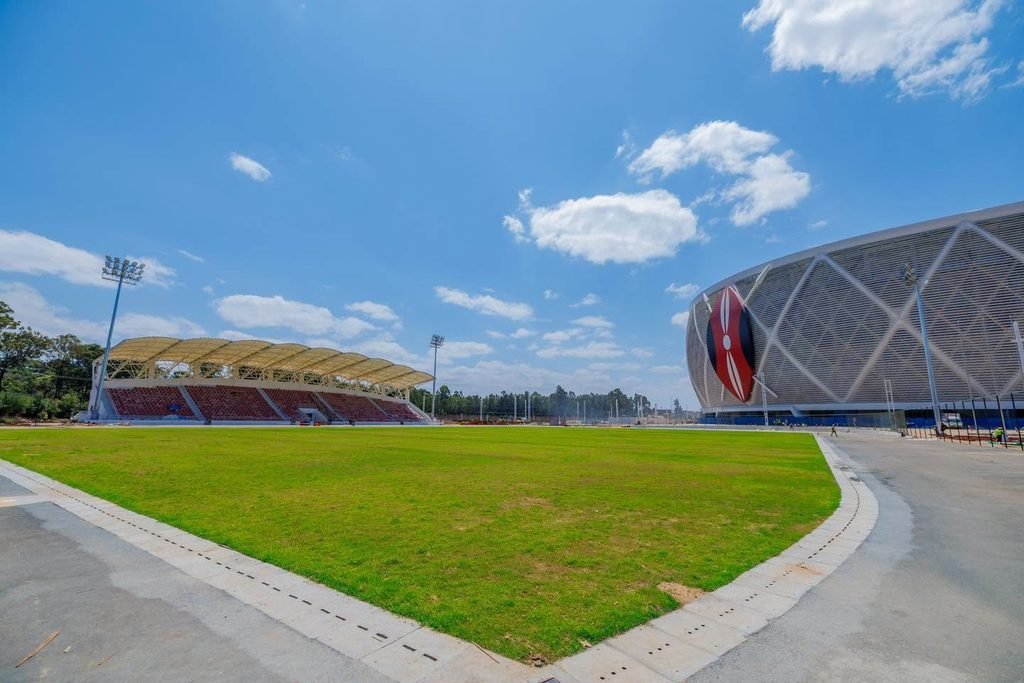
Talanta Stadium has moved closer to completion after Sports Cabinet Secretary Salim Mvurya confirmed that construction of the 60,000-seater facility has reached 94 per cent.
The update places the stadium, officially known as the Raila Odinga International Stadium, in the final phase of construction as the government prepares to have the facility ready to host its first match before the end of 2026.
Mvurya gave the latest progress update after inspecting the project on Wednesday, August 19, 2026. He said most of the major construction work had been completed, leaving contractors to concentrate on finishing works across the facility.
Stadium enters final phase
The main playing surface has already been laid and is awaiting stitching, while work continues on two training facilities within the wider complex.
According to the Sports CS, one of the remaining training facilities is about 50 per cent complete, while the other has reached 40 per cent.
The latest figures represent an improvement from the 92.57 per cent completion recorded in late July, highlighting an acceleration of construction activity at the project.
More than 2,400 workers are currently engaged at the site as contractors push to complete the remaining sections.
The stadium is being constructed by China Road and Bridge Corporation under the supervision of the Kenya Defence Forces.
What will Talanta Sports City contain?
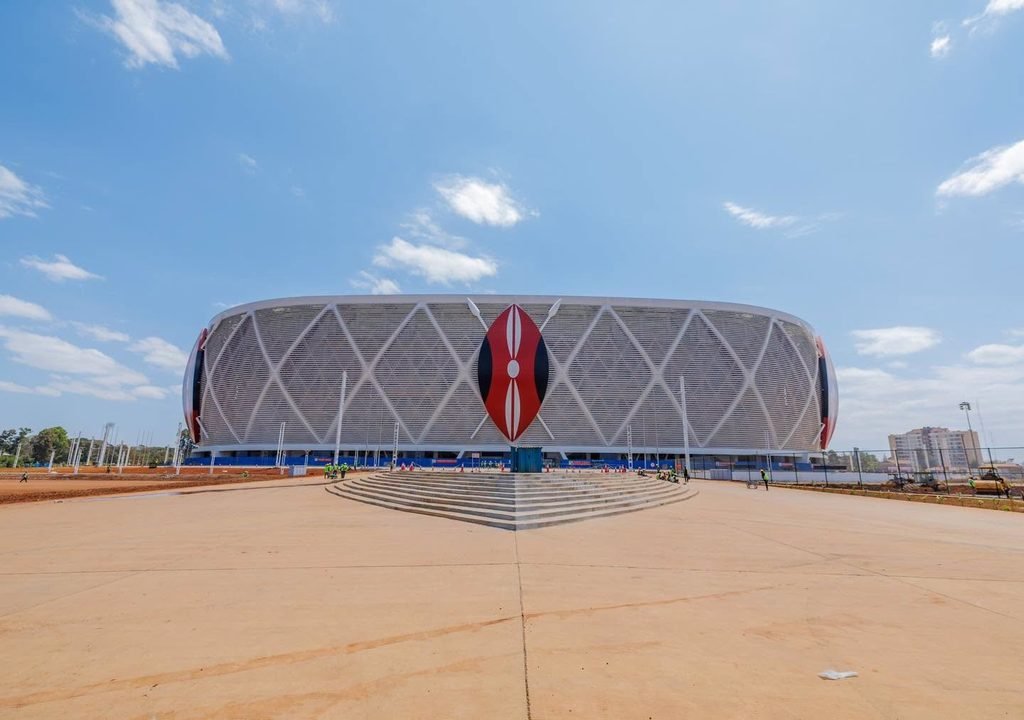
Talanta Stadium is the centrepiece of the wider Talanta Sports City development, which sits on approximately 45.64 hectares.
The project is designed to provide more than just a football venue. The complex will include three outdoor training grounds, an Olympic-standard swimming pool, conference facilities, fan zones, food courts, parking areas and a police station.
Once completed, the stadium will become Kenya’s largest football venue, significantly expanding the country’s capacity to host major international sporting events.
The facility is also expected to provide a modern home for major football matches and other sporting competitions, while supporting Kenya’s wider ambitions of positioning Nairobi as a major sports and events destination.
Why the stadium has taken longer than expected
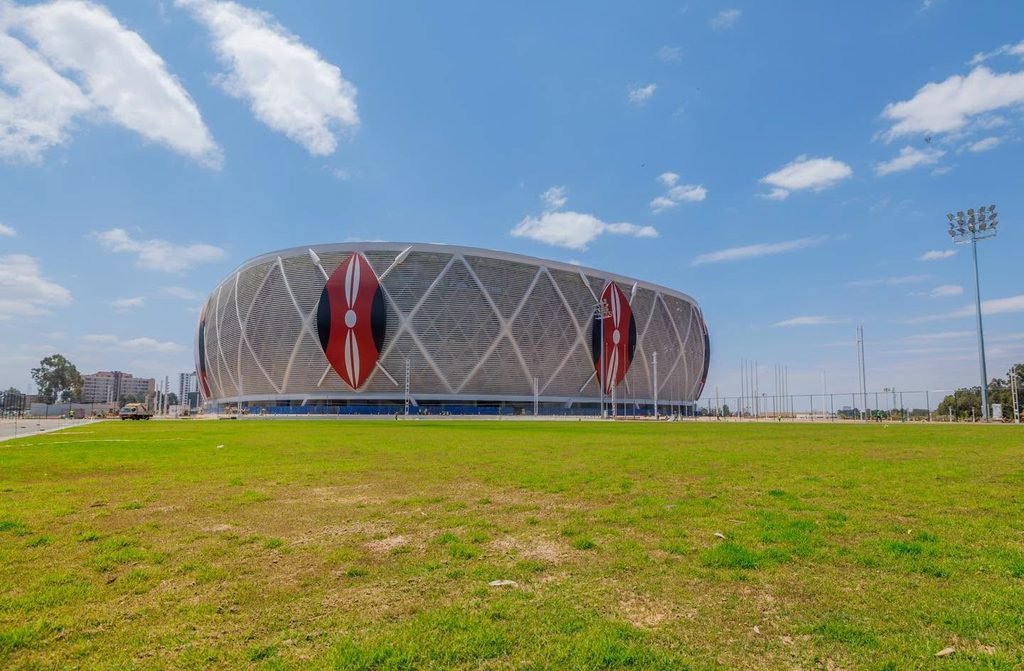
Despite the latest progress, the project has faced a series of delays since construction began.
Groundbreaking took place in March 2024, with the stadium initially expected to be completed much earlier. Several completion targets, including December 2025, February 2026 and July 2026, were missed.
The latest 94 per cent completion figure therefore comes as the government seeks to bring the project to an end and ensure that it meets the standards required for international competitions.
The remaining construction work will be closely watched because the stadium is expected to play a major role in Kenya’s preparations for the 2027 Africa Cup of Nations.
Talanta to play role in 2027 Afcon
Kenya is scheduled to co-host the 2027 Africa Cup of Nations alongside Uganda and Tanzania, making the completion of major sporting infrastructure a key priority.
Talanta Stadium is expected to serve as one of the country’s principal venues during the continental tournament.
Government officials have maintained that the facility is being developed to meet the standards required by the Confederation of African Football (CAF).
Its completion would give Kenya a major modern venue capable of hosting high-profile international matches while reducing pressure on existing stadiums.
Mvurya links project to Harambee Stars
Beyond the construction of the stadium, Mvurya said the government is also focusing on improving the performance of Kenya’s national football team.
He revealed that the football technical team has been tasked with developing a roadmap aimed at strengthening Harambee Stars ahead of major international tournaments.
The CS called on Kenyans and the private sector to support the national team as the country prepares for upcoming competitions.
The government sees improved infrastructure and stronger investment in football development as important components of raising Kenya’s profile in the sport.
With construction now at 94 per cent, attention is shifting from the major structural works to the final installations and preparations needed before the stadium can become operational.
If the remaining work stays on schedule, Talanta Stadium could host its first match before the end of 2026, marking the completion of one of Kenya’s most closely watched sports infrastructure projects.


