
President William Ruto has urged African countries to shift the focus of climate negotiations from making new promises to delivering the financing and investments needed to turn climate action into jobs, economic growth and greater resilience.
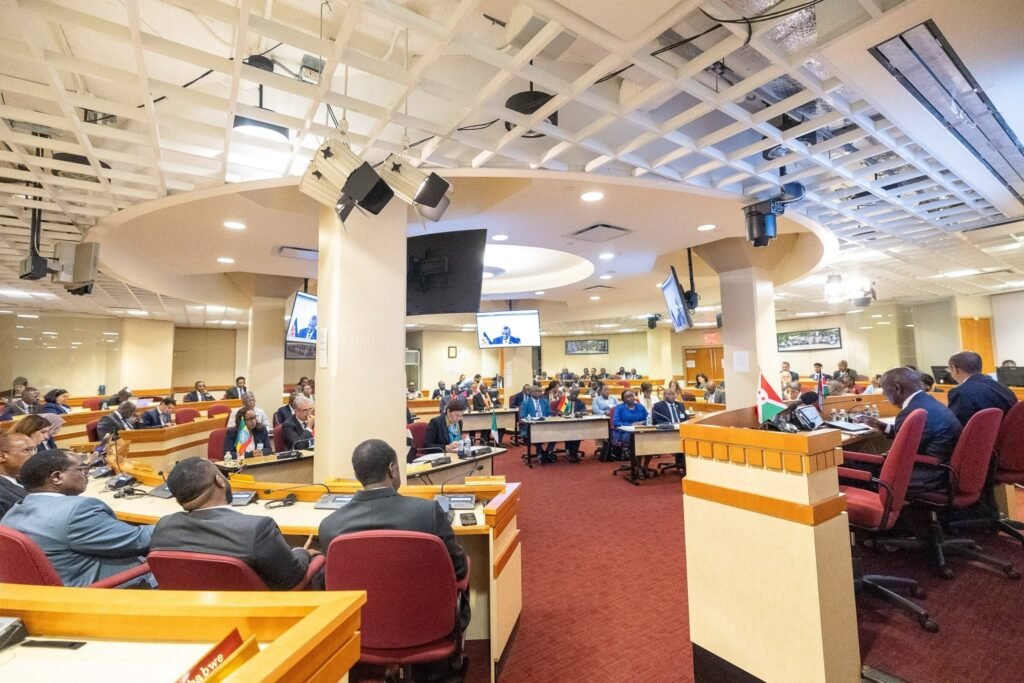
Ruto made the remarks on September 22 after chairing a meeting of the Committee of African Heads of State and Government on Climate Change (CAHOSCC) on the sidelines of the 81st United Nations General Assembly in New York.
The meeting was aimed at building a common African position ahead of the 2026 UN Climate Change Conference, COP31, which will be held in Antalya, Türkiye. African leaders are also preparing for COP32, which Ethiopia is expected to host in 2027.
Ruto said Africa needs to move from climate commitments to implementation, arguing that climate action should deliver tangible economic benefits for communities across the continent.
“The world does not lack climate pledges, it lacks delivery. As climate impacts intensify, Africa must turn climate action into investment, jobs, stronger economies and greater resilience,” Ruto said.
Climate finance remains central issue
At the centre of the African position is the question of climate finance.
Ruto said inadequate financing remains a major barrier to Africa’s ability to prepare for climate shocks, build resilient infrastructure and expand clean energy.
He called for adaptation-finance commitments to be honoured and for greater access to affordable capital, guarantees and risk-sharing mechanisms that can attract private investment.
“The principal constraint remains finance. Climate finance is key for preparedness, for resilience building, and for climate action,” Ruto said.
The African Union has similarly identified climate finance as a major concern, saying African countries need significantly more accessible and predictable funding for adaptation, while warning against financing arrangements that deepen the continent’s debt vulnerabilities.
Africa seeks a stronger COP31 position
The New York meeting was part of efforts to coordinate African countries before COP31.
The AU said the continent’s priorities include increased adaptation finance, support for loss and damage, access to technology and capacity building, and arrangements for a just energy transition.
The bloc also wants climate action to support affordable energy, employment and stronger community resilience.
Ruto said Africa’s negotiating position should remain focused on implementation rather than simply adding new commitments.
He argued that climate risks are increasingly affecting economic decision-making and that the continent should treat the transition to low-carbon development as an investment opportunity.
From climate challenge to economic opportunity
Ruto said investments in renewable energy, green industries and resilient infrastructure could help African economies create employment while responding to climate change.
“Africa’s position is that climate action is not simply a cost. It is an opportunity for climate-positive growth that strengthens our economies while protecting our people and environment,” he said.
The approach builds on the climate-positive growth agenda advanced through the Africa Climate Summits in Nairobi and Addis Ababa, which linked climate action with investment, job creation and economic transformation.
For Africa, the economic argument is increasingly important as governments face pressure to finance development while dealing with climate-related disasters, high borrowing costs and limited access to affordable international capital.
COP31 and the road to an African COP
The discussions in New York also looked beyond COP31 to COP32, which the African Union says will be hosted by Ethiopia in 2027.
Ruto said the future African-hosted conference should focus strongly on adaptation, implementation, investment and climate-positive growth.
AU Commission Chairperson Mahmoud Ali Youssouf also stressed that Africa bears a disproportionate share of climate impacts despite its historically limited contribution to global emissions. He called for climate action to be guided by equity and the principle of common but differentiated responsibilities.
The African position heading into COP31 is therefore centred on a practical question: how can global climate commitments translate into financing, infrastructure, energy access, jobs and stronger protection for communities facing increasingly severe climate risks?
For Ruto and other African leaders, the next phase of climate diplomacy will be measured not only by the commitments made at international conferences, but by whether those commitments translate into resources and projects on the ground.


