
Kenya Airways’ latest government-backed rescue seeks to address two problems: finding money to keep aircraft flying and reducing the weight of old debt.
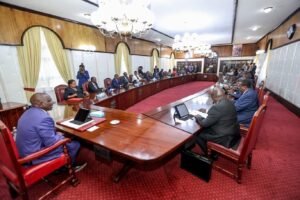
Cabinet approved $350 million—approximately Sh45.4 billion in shareholder financing on October 9 to help the airline meet urgent obligations, maintain aircraft and return grounded planes to service. Separately, it endorsed a proposal to restructure approximately Sh122 billion in existing government loans and accrued interest.
The distinction matters. One measure provides fresh financing for operations. The other changes how money already owed to the government is treated, with the aim of making the airline financially stronger and more attractive to investors.
What will the Sh45 billion pay for?
The immediate priority is aircraft maintenance, restoring grounded planes and meeting other pressing operational obligations.
The financing will be released in instalments under National Treasury oversight, with repayment over up to 10 years. It may also be converted into shares, subject to the necessary approvals. Cabinet approval does not mean the entire sum has already reached the airline.
For an airline, aircraft availability directly affects earning capacity. A grounded plane cannot carry paying passengers or cargo, while some ownership, staffing and maintenance costs continue.
Returning aircraft to service can therefore help KQ sell more seats and operate a more dependable schedule. However, additional flights must generate enough income to cover their costs if fleet restoration is to produce a lasting recovery.
Why is Sh122 billion also being mentioned?
The Sh122 billion concerns existing shareholder loans owed to the government, including accrued interest. It is a separate restructuring proposal, rather than another cash payment of that amount.
The proposed arrangement would convert those obligations into an equity-qualifying tradable instrument. Kenya Airways says the intention is to address its negative equity position, improve its creditworthiness and support efforts to attract strategic investors. The final transaction remains subject to agreements and corporate, shareholder and regulatory approvals.
Negative equity means a company’s recorded liabilities exceed its assets. That position can make raising new capital difficult because investors must consider both the business’s prospects and its accumulated financial obligations.
The proposed conversion seeks to improve that starting position. It does not, by itself, repair an aircraft or make a route profitable.
Why does KQ still need support?
Kenya Airways’ recent financial results show how quickly operational difficulties can undermine a recovery.
The airline recorded a Sh17.93 billion pre-tax loss in 2025, reversing its return to pre-tax profitability in 2024. Revenue fell to Sh161.47 billion, with capacity declining by 18%. Three Boeing 787-8 Dreamliners were temporarily grounded amid global supply constraints.
Pressure continued in the first half of 2026. KQ reported a Sh15.92 billion pre-tax loss, compared with Sh12.17 billion in the corresponding period of 2025.
The airline also reported that fuel costs rose by 72% in the first half of 2026, attributing the increase to the Middle East conflict, which disrupted spare-parts supplies and aircraft maintenance.
These pressures help explain the rescue’s two components: operational financing to restore flying capacity, alongside restructuring intended to ease the burden of existing debt.
What is the government’s case for intervening?
The government’s argument extends beyond the airline’s own accounts.
In announcing the package, it said Kenya Airways contributes more than $1.3 billion annually to the economy through tourism, trade and regional connectivity. That is the government’s stated estimate of the airline’s wider contribution, rather than KQ’s profit.
A functioning national carrier helps connect Nairobi with overseas markets, carries visitors and supports businesses that depend on air transport. The economic case for intervention is that allowing those connections to weaken could affect activity beyond the airline.
But that wider value must be weighed against the cost of repeated public support. Financing can give KQ room to recover; sustained commercial improvement is what would justify the intervention over time.
What would show that the rescue is working?
The first test is whether maintenance funding returns aircraft to reliable service. The next is whether the restored capacity improves earnings enough to narrow operating losses.
Readers should watch for:
- Aircraft availability: How many grounded planes return, and whether they remain operational.
- Service reliability: Whether cancellations and disruptions decline.
- Financial performance: Whether additional revenue translates into smaller losses.
- New investment: Whether the restructuring leads to completed agreements with strategic partners.
- Public exposure: Whether KQ’s need for further government assistance begins to fall.
Kenya Airways has issued a cautionary notice advising shareholders and investors to exercise care when dealing in its securities while outstanding transaction terms are finalised.
The Sh45 billion financing offers a route to restoring operations. The Sh122 billion restructuring could improve the airline’s financial foundation. Their success will depend on whether KQ can turn that breathing space into reliable flights, stronger earnings and a reduced dependence on future rescues.


