
A road-building contract worth Sh588 million sits at the centre of Ferdinand Waititu’s long confrontation with the justice system. But the transaction that proved personally damaging to the former Kiambu governor was much smaller: Sh25.6 million that the trial court found had reached his business interests or been paid for his benefit.
On October 14, the High Court upheld corruption convictions arising from the contract and overturned acquittals on money-laundering charges. The decision returned Waititu to custody and opened another sentencing stage.
Behind that outcome lies a story of procurement, private business and political power—and a separate battle over how much property the State can lawfully recover.
A public promise, a private interest
The contract was for upgrading gravel roads to bitumen in Thika, Limuru, Gatundu North, Juja and Ruiru during the 2017/2018 financial year. Its precise value was Sh588,198,328.20.
Testimony Enterprises Limited won the work. The trial court found that its directors used forged academic certificates for technical personnel in the bid, and that the company fraudulently acquired approximately Sh147.3 million from Kiambu County.
Former county roads chief officer Luka Mwangi Wahinya was convicted of abuse of office over the award. Testimony, its directors and businesses associated with Waititu were among those convicted on different counts in February 2025.
The offences were therefore spread across the procurement and payment process. This was more than a prosecution over a governor’s signature on a contract.
Following the payments
The trial judgment traced money using county payment records, bank statements and evidence from officials involved in processing payments.
It identified Sh12,410,500 received by Saika Two Estate Developers Limited, a company associated with Waititu, and Sh7,214,000 received by Bienvenue Delta Hotel, a business he owned with his wife, Susan Wangari.
Another Sh6 million was paid to Lake Naivasha Resort Limited on Waititu’s behalf in connection with a property purchase.
Together, those amounts make Sh25,624,500—the indirect personal interest identified against Waititu. The Sh7.2 million linked to the hotel forms part of that total; adding it again would double-count the same money.
The judgment’s tracing also covered county payments through requests for quotations, alongside the main roads tender.
The explanation the court rejected
Waititu did not accept that the payments were corrupt. His defence described legitimate commercial dealings with Testimony director Charles Chege Mbuthia, including a proposed land sale. The defence also said the hotel supplied services and goods to the contractor.
Chief Magistrate Thomas Nzioki rejected those explanations. The judgment identified documentary inconsistencies and inadequate supporting records, concluding that payments were kickbacks channelled through the governor’s business interests.
Those were judicial findings reached after hearing the defence, rather than allegations left unanswered in an investigator’s statement.
Why the different millions matter
The figures describe different things:
| Amount | What it represents |
|---|---|
| Sh588.2 million | Total value of the roads contract |
| Sh147.3 million | Payments the trial court found the contractor fraudulently acquired |
| Sh25.6 million | Indirect personal interest attributed to Waititu |
| Sh7.2 million | Hotel receipts included within the Sh25.6 million |
It would therefore be inaccurate to describe the entire Sh588 million contract value as money personally pocketed by Waititu.
The narrower finding is still significant: a governor had a private financial interest in dealings involving a contractor paid by his county.
Politics offered a defence; the courts examined the records
Waititu presented the prosecution as politically motivated, linking his troubles to his alignment with the Tanga Tanga camp. The trial court expressly rejected that political witch-hunt defence.
His removal from the governorship followed a separate process. On January 29, 2020, the Senate voted to impeach him after considering charges brought by the Kiambu County Assembly.
Impeachment removed him from office. Criminal proceedings examined individual offences and penalties. Asset proceedings examined particular money and property.
These processes intersected in his political life, but their legal questions were different. Losing office did not conclude the criminal case, just as a criminal conviction did not automatically settle every claim against his property.
Conviction, bail and the appeal
Waititu was convicted in February 2025. Contemporary sentencing coverage put his penalties at a Sh53.5 million fine or, in default, 12 years in prison.
His subsequent bail proceedings did not erase those convictions.
The February 18, 2026 ruling records that he had been granted bail pending appeal in July 2025, subject to a Sh53.5 million bank guarantee. He later said he could not obtain it.
Justice Wilfrida Okwany varied the terms to Sh20 million cash bail or two sureties with property security worth Sh30 million each, subject to verification, and required him to surrender his passport.
That distinction matters: release pending appeal meant the conviction was being challenged, not that the prosecution had collapsed.
On October 14, Justice Rose Ougo upheld the corruption convictions and sentences and allowed the State’s challenge to acquittals on money-laundering counts. Bonds were revoked, with mitigation and sentencing on the money-laundering convictions scheduled for October 19.
The asset case did not give EACC everything it wanted
A separate December 19, 2025 judgment reveals an important qualification to the broader narrative about Waititu’s wealth.
EACC sought forfeiture of assets and funds valued at approximately Sh1.94 billion. Justice Nixon Sifuna ordered forfeiture of specified assets totalling Sh131.2 million, while accepting explanations for other properties and rejecting the blanket approach to bank transactions.
The assets ordered forfeited included two Thindigua properties, two cars, a Caterpillar machine, a Kitengela parcel and a Sh52 million property identified as Solar House.
The court accepted that other assets had lawful explanations, including loans and business activity. A corruption conviction did not automatically make everything the defendants owned recoverable.
That finding neither overturned the criminal convictions nor established that all the wealth originally questioned by EACC was unlawful.
The unfinished public-interest question
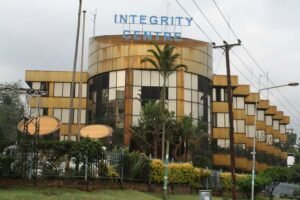
EACC is also pursuing a separate civil claim for Sh170 million against Waititu and Testimony Enterprises, according to its latest account reported by KBC. That claim remains pending.
The distinction between money sought, property ordered forfeited and value actually recovered is essential. A court order alone does not tell residents how much has reached public coffers.
Nor do the records reviewed for this report establish the present condition or completion status of every road covered by the contract.
As Waititu faces the next court appearance, his political story is increasingly defined by judicial findings about how public authority intersected with private benefit.


