
Kenya’s environment Cabinet Secretary, Dr Deborah Mulongo Barasa, has used the opening of the high-level segment at COP30 to mount one of the strongest appeals yet for Africa’s place in global climate.
Speaking beneath the canopy of what she called “the great lung of our planet”, Barasa reminded delegates that the rainforest is no scenic flourish but a distress signal for a world running out of time.
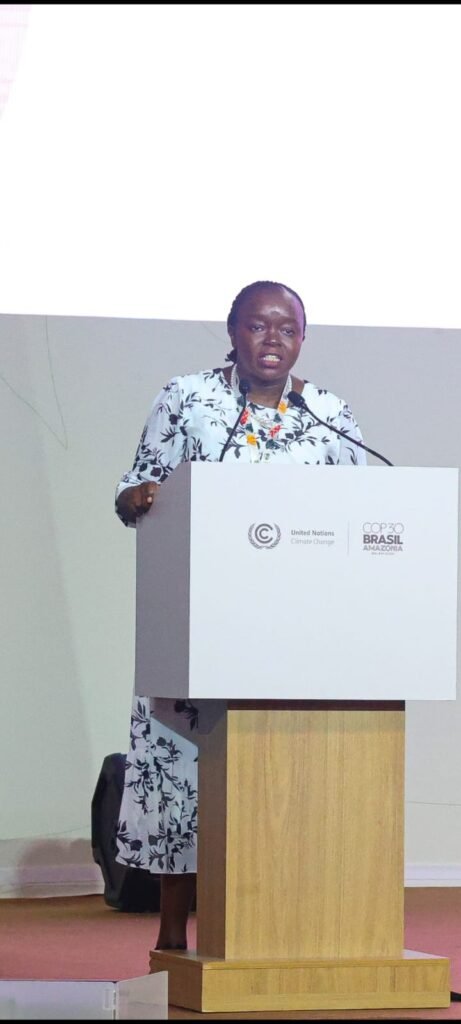
Her message was blunt: Africa is in Brazil with more clarity. Although the continent contributes the least to global emissions, Barasa said it is already absorbing some of the harshest consequences of climate breakdown including droughts, fatal floods, and punishing heatwaves that have become routine, eroding hard-won development gains and stretching fragile economies to breaking point. “This is not a future threat, she argued, but “the lived reality of a continent already in the eye of the storm”.
Against that backdrop, she renewed Africa’s long-standing demand for formal recognition of its “special needs and circumstances”. This, she stressed, was no bid for sympathy but a call for fairness. Recognition, she said, is also essential to unlock the scale of financial and technical support required to help countries adapt.
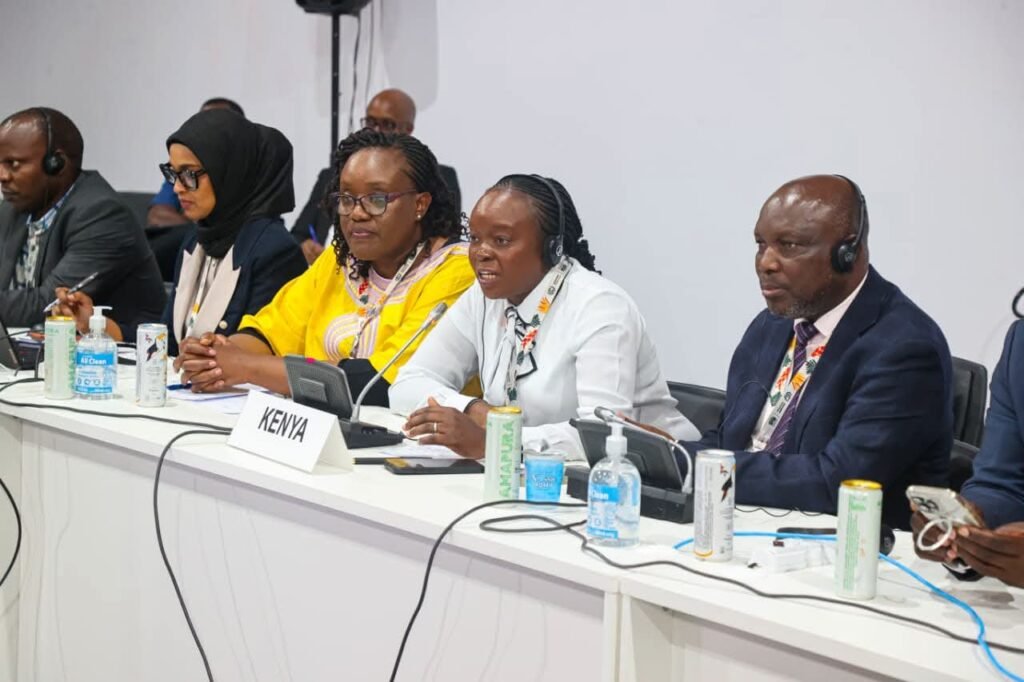
With negotiations intensifying over the Global Goal on Adaptation, Barasa warned that the process can no longer drift in abstraction.
Africa expects a framework with measurable indicators that capture the breadth of adaptation: resilient infrastructure, food security, public health, ecosystems, gender equity and the protection of marginalised communities.
Adaptation, the Kenyan official said, must stop being “the poor cousin of climate action, which has been underfunded, vaguely defined and perpetually delayed”.
Developing countries, including the least-developed states, have called for adaptation finance to be tripled, a demand Kenya fully backs. Barasa said funding must be predictable, scaled up and delivered principally as grants, not loans that compound already heavy debt loads.
The minister pointed to the hard-won agreement reached earlier this year in Baku, setting an annual climate-finance target of $1.3tn by 2035.
The task in Belém, she said, is to turn that figure from aspiration into reality by activating the “Baku-to-Belém” roadmap. Funds must move quickly and reach frontline communities without being tangled in bureaucratic knots. On loss and damage, she warned that those rebuilding shattered lives “cannot rebuild on promises”.
But Barasa’s vision extended beyond finance. She endorsed the creation of an African Just Transition Technical Assistance Network, arguing that workers and communities must not be sacrificed as economies shift towards low-carbon systems. And she cautioned against the rise of unilateral trade measures often framed as green policy that risk shutting African exporters out of emerging markets.
Her closing remarks returned to a long-neglected dimension of climate justice: gender. African women, she said, continue to bear the brunt of food insecurity, water scarcity and displacement. Climate justice, she insisted, is impossible without gender justice. She pressed for a strengthened Gender Action Plan that embeds gender considerations across every COP decision and confronts the structural inequalities, including entrenched patriarchy that have long excluded women’s voices.


