
President William Ruto while meeting representatives of Gikomba Market in Nairobi made a pronouncement that could end decades’ long struggle for city traders.
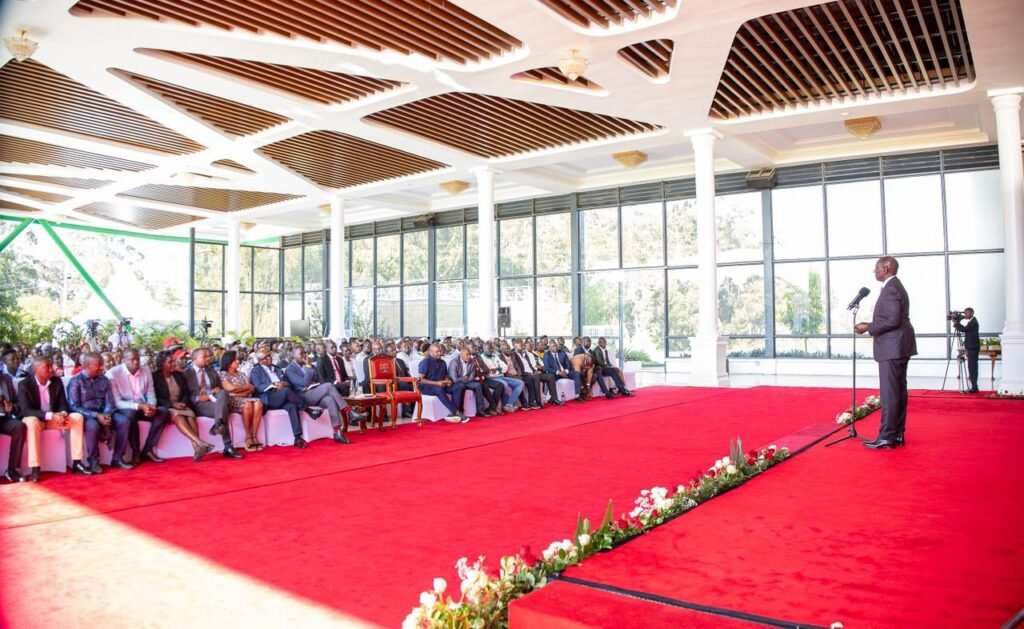
The president announced that Gikomba Market land is a public entity and ordered the ministry of lands to organise for it’s title deed within three months.
There’s big hope that this could end perennial land cases and fire incidences in the the market, that’s widely known for second hand clothes.
The evolution of Gikomba
The Gikomba market has a history dating back many years ago, which many people probably don’t know about.
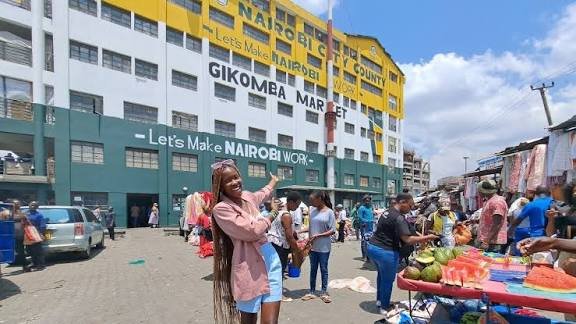
Located in Pumwani Ward in Nairobi’s Kamukunji sub-county, Gikomba market is a vibrant business hub where almost everything is sold — from clothes to shoes, vegetables, and household accessories among other items.
Viewed from above, the market resembles a patchwork of stalls, some sheltered by iron sheet roofs while others stand exposed to the elements of weather.
Dating back to the 1960s, this open-air market has earned a reputation as the go-to destination for an eclectic array of second-hand clothes, popularly known as “mitumba” in Kiswahili.
Its origins can be traced back to a time when railway workers from Muthurwa in Nairobi flocked to the area in search of household essentials and the coveted second-hand garments brought in by Asian traders.
Witnessing the market’s rapid growth, the government intervened by providing iron sheet shelters for traders in 1952 and erected a barbed wire fence to manage the bustling activities.
According to research by Ngugi Joan of the University of Nairobi in June 2014, Gikomba’s journey through the colonial period was shaped by various economic forces.
The convergence of transport routes from upcountry and a growing population with limited purchasing power in adjacent neighbourhoods fuelled the market’s expansion. Restrictions imposed by authorities pushed many traders toward informal trading.
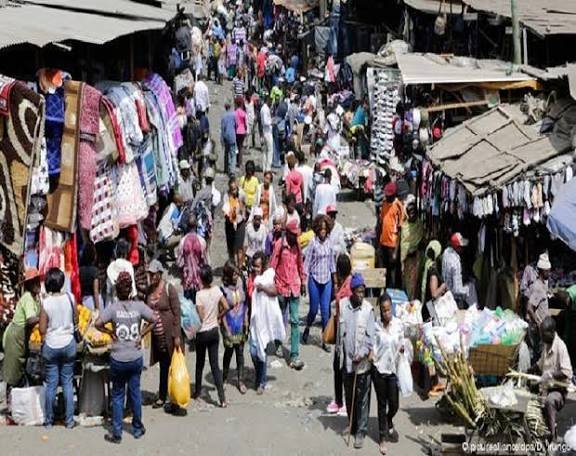
The demolition of the original Gikomba market in 1977 gave way to light industries in the Chiriku area.
However, as the cost of living soared, residents set up makeshift kiosks and stalls to cater to the needs of the local community. These informal ventures found fertile ground on undeveloped plots, including the riparian reserve of the Nairobi River and adjacent government land.
Looking at Gikomba Market today, it stands as the region’s largest hub for second-hand clothing. Beyond fashion, it offers a variety of goods, from fresh produce to kitchenware, all at bargain prices.
Securing land tenure
Ruto specifically directed Lands Cabinet Secretary Alice Wahome and Principal Secretary Nixon Korir to work with the National Land Commission to issue a title deed to the county.
“This will once and for all address speculation by land grabbers,” he said.
He also announced the construction of phase three of Gikomba Market that will be built after completion of phase two.
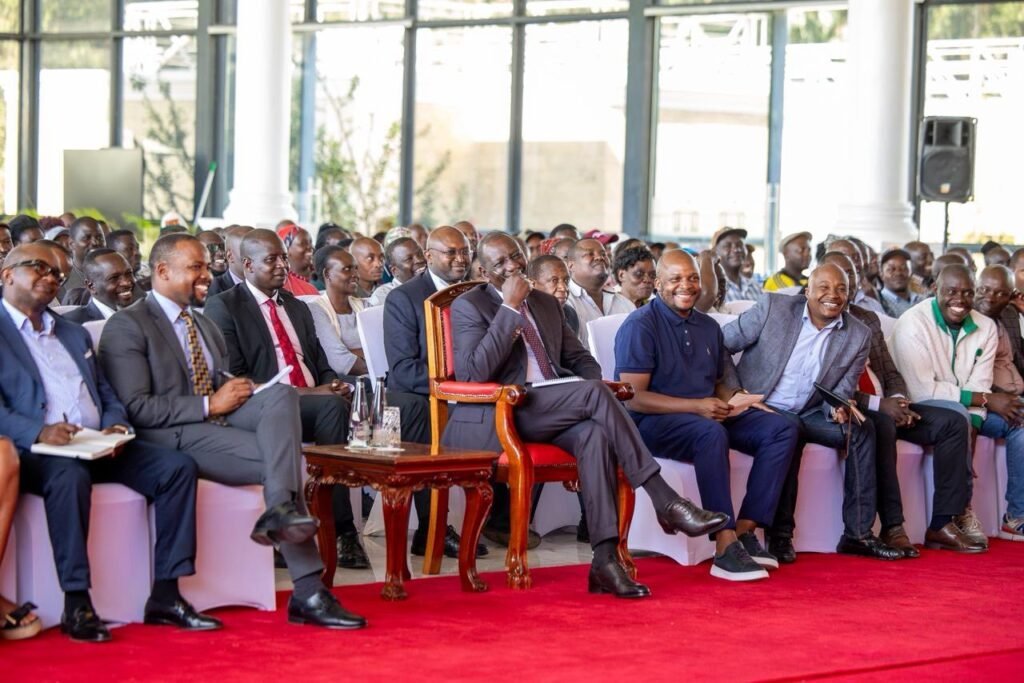
He made the remarks during a meeting with Gikomba Market businesspeople at State House Nairobi on Tuesday.
He met chairpersons and committee members of other markets in Nairobi County. The markets represented included Kangundo Road, Wakulima, Muthurwa, Burma, Kangemi, City Park, Othaya (Woodley Jamuhuri), and Kawangware.
According to Ruto, his administration is working with the Nairobi County Government to address waste and garbage management in the county.
He revealed that the National Government is supporting Governor Johnson Sakaja’s administration in getting an effective and comprehensive means of dealing with waste and garbage management.
“We are supporting the County Government of Nairobi so that we provide a lasting solution to that challenge,” he said.
He also said the government will also work with the county to enhance access to electricity across the county.
He asked the leadership of the markets to work closely with the government in curbing illegal power connections in the markets.
Ruto’s modern markets vision
In planning to build additional markets for the growing population of Nairobi city, Ruto said the government is committed to delivering its promise to traders, including mama mboga, by building 450 modern markets across the country.
In Nairobi County, the President said the government is investing KSh7.2 billion in the construction of 15 new modern markets.
He explained that eight markets are currently under construction, while the tenders for seven others have either been awarded or procurement is underway.
He said the new markets will have adequate water, and be equipped with cold rooms, cyber services and sanitation, among other facilities.
President Ruto said the objective is to address the challenges faced by traders by ensuring a decent working environment, reducing losses and increasing incomes.
In Starehe Constituency, a KSh350 million market is under construction and is 77 per cent complete.
In Kasarani Constituency, the KSh415 million Maji Mazuri Market is 72 per cent complete and will accommodate 1,200 traders.
In Ruaraka, Mathare North Constituency, another market valued at KSh177 million is 93 per cent complete and will serve 305 traders.
In Riruta, a KSh313 million market is 36 per cent complete and will accommodate 667 traders, while the Kasarani Wholesale Market, valued at KSh1.7 billion, is 60 per cent complete.
At Gikomba, Block D, a KSh729 million market that will accommodate over 1,700 traders, is 92 per cent complete.
Construction of the KSh315 million Uhuru Market in Makadara Constituency, with 853 stalls, has just begun.
In Kangemi, a KSh275 million tender for phase one of the market, with 750 stalls, has been awarded . Phase two, also comprising 750 stalls at a cost of KSh275 million, will be advertised in the next several weeks.
Additionally, President Ruto said the government has rolled out the Hustler Fund to enhance access to affordable credit to traders and curb the role of shylocks who had been charging exploitative interest.
He explained that the Hustler Fund offers affordable credit at 8 per cent a year unlike market shylocks who charge 10 per cent a day.
He explained that KSh50 million is borrowed from Hustler Fund every morning between 3am and 11a.m
He added that 800,000 borrowers are frequent users of the fund, accessing the service once or twice a day.
He said some of these customers have graduated and are now borrowing up to KSh150,000.
“Since the launch of Hustler Fund on November 30, 2022, KSh80 billion has been borrowed,” he said.
Nairobi Governor Johnson Sakaja, Woman Rep Esther Passaris, Dagoretti North MP Beatrice Elachi, and MCAs were present.
Ending the ‘mysterious fire’ cycle
On November 28, 2021, as Nairobi was experiencing heavy rainfall, traders were once again crying in pain as properties of unknown value were destroyed in another mysterious fire. This was the second time that month and the fifth in 2021 that the traders were counting millions of shillings in losses after fire razed their commodities.
In February 2021, a mysterious fire visited the open-air market, and another one happened in August of the same year.
At that time, the government gave orders for the installation of security cameras, giving the contractor seven days to complete the work.
This was after former Interior PS Karanja Kibicho, former Nairobi Metropolitan Services (NMS) Director-General Mohammed Badi and Kamukunji MP Yusuf Hassan visited the area.
Two months later, on October 19, 2021, another fire razed several stalls at the market and a similar incident occurred on November 8, 2021.


