
The ongoing construction of the 205-kilometre Isiolo–Kulamawe–Garbatulla–Modogashe road is emerging as one of the most consequential infrastructure investments in Northern Kenya in decades.

Implemented under the Horn of Africa Gateway Development Project (HoAGDP), the corridor is designed to reshape security, trade, and economic inclusion across a region long constrained by poor connectivity.
The road forms a critical section of the wider 740-kilometre Isiolo–Mandera highway, a Sh100 billion flagship project that the government says will reposition Northern Kenya as a strategic economic gateway linking Kenya to Ethiopia and Somalia.
Interior Cabinet Secretary Kipchumba Murkomen has repeatedly underscored the project’s national importance, describing it as central to opening up the region and anchoring long-term development. Speaking after a high-level security review meeting in January 2026, Murkomen reaffirmed the State’s commitment to completing the corridor on schedule.
Security as the Foundation of Development
Security has historically been the biggest obstacle to infrastructure delivery and economic activity along the Isiolo–Garbatulla–Modogashe axis. The government says that challenge is now being addressed head-on.
“We wish to reassure our development partners and contractors that security measures on the ground have been significantly bolstered and that adequate resources have been deployed to guarantee the safety of personnel and equipment along the entire corridor,” Murkomen said following the inter-agency meeting involving the Ministries of Interior, Defence, and Roads.
The enhanced security framework allows multiple sections of the highway to be constructed simultaneously, reducing delays that have previously stalled projects in the region. Murkomen noted that sustained field inspections and engagement with local leaders are ongoing to ensure security protocols remain effective throughout the construction period.
Defence Cabinet Secretary Soipan Tuya has also emphasised the role of inter-agency coordination, noting that the involvement of security agencies is critical to safeguarding both infrastructure and communities along the route.
Lower Costs, Faster Trade, Stronger Connectivity
Economically, the Isiolo–Kulamawe–Modogashe road is expected to significantly lower transport costs and travel times across Northern Kenya. Once completed, the all-weather bitumen corridor will link pastoral and agricultural communities directly to major markets in Isiolo, Meru, Nairobi, and across the northern frontier.
According to Murkomen, the project will “enhance trade, strengthen connectivity, and improve security in northern Kenya,” helping integrate the region into national and regional supply chains.
The road also carries a digital component, with 295 kilometres of fibre optic cable being laid along the corridor. This infrastructure is expected to expand internet access, support mobile money, enable e-commerce, and improve access to government and education services in remote areas.
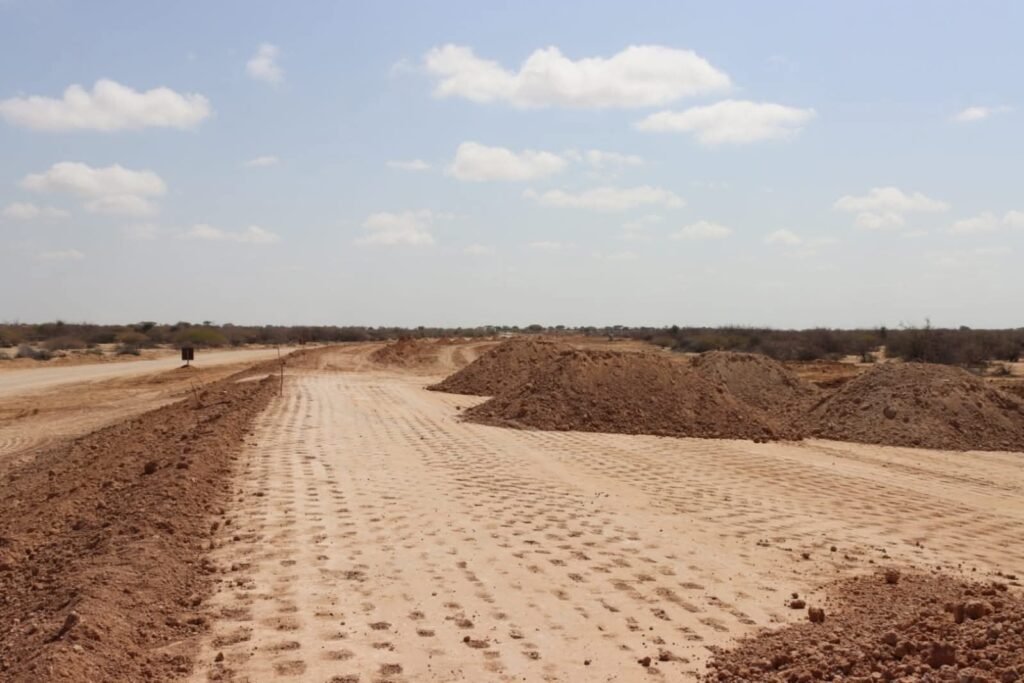
Roads Cabinet Secretary Davis Chirchir has assured contractors that works can now proceed without interruption, citing improved stability along the corridor and closer coordination between government agencies.
Jobs, Services, and Community Impact
Beyond transport, the project is already delivering tangible local benefits. More than 2,000 direct jobs have been created during construction, with about 80 per cent of the workforce sourced from local communities. This has injected income into households while building skills that can support future employment.
Supporting infrastructure includes the Garbatulla town loop road, street lighting, bus bays, and the drilling of 13 boreholes to improve access to clean water. To address displacement, the National Land Commission has processed approximately Sh500 million in World Bank-funded compensation for affected residents.
Deputy President Kithure Kindiki last year confirmed that the broader Isiolo–Mandera highway remains on track for completion by June 2027, ahead of the next general election.
“My work is to ensure we are proceeding well in delivering this promise,” Kindiki said during a site engagement, adding that consultations with contractors and communities confirmed steady progress.
A Gateway for Northern Kenya’s Future
The Isiolo–Kulamawe–Modogashe section is widely seen as the backbone of a larger transformation agenda for Northern Kenya. As part of the HoAGDP — a $750 million (about Sh100 billion) programme supported by the World Bank and the Government of Kenya — the road is expected to attract private investment, stimulate cross-border trade, and improve service delivery across the region.
By combining infrastructure, security, and digital connectivity, the corridor is positioning Northern Kenya not as a peripheral region, but as a central player in Kenya’s economic future.


