
The National Treasury has unveiled a raft of measures aimed at curbing rogue digital lenders and strengthening consumer protection in Kenya’s fast-growing credit market.
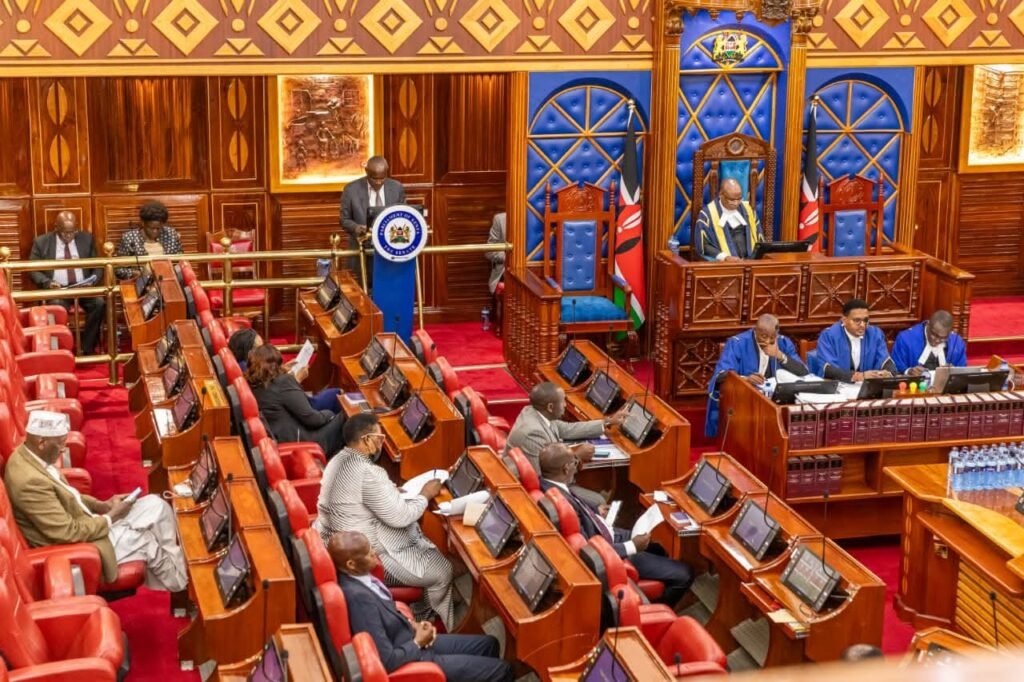
Appearing before the Senate, Cabinet Secretary for the National Treasury and Economic Planning, John Mbadi, detailed the Government’s regulatory and policy interventions in response to questions raised by Kisumu Senator Tom Ojienda and posed on his behalf by Bungoma Senator Wafula Wakoli.
“These measures have been introduced to ensure compliance with the law and most importantly to safeguard customers’ interests and prevent rogue lending institutions from infringing consumer rights,” Mr Mbadi told the House.
Tighter licensing and regulatory oversight
At the centre of the reforms is a strengthened licensing regime led by the Central Bank of Kenya (CBK), which now requires all Non-Deposit Taking Credit Providers (NDTCPs) to be licensed under a Digital Credit Providers regulatory framework.
The framework outlines strict eligibility criteria, governance standards, operational requirements and consumer protection obligations designed to clean up the sector and eliminate predatory actors.
According to the CS, the licensing requirement has already played a critical role in addressing exploitative practices, including exorbitant interest rates and unethical debt recovery tactics.
“CBK requires all licensed NDTCPs to fully comply with the Data Protection Act and its Regulations,” he said. “As part of the licensing and supervisory framework, NDTCPs must obtain a certificate issued under Section 19 of the Act from the ODPC as a pre-licensing condition and develop a robust data protection policy.”
Stronger data protection enforcement
Mr Mbadi revealed that the CBK is working closely with the Office of the Data Protection Commissioner to coordinate enforcement and ensure consistent application of privacy standards across digital lending platforms.
“That policy must clearly set out how personal data is collected, processed, stored and protected and must align with lawful, fair and transparent practices under the Act,” he said.
The collaboration is intended to curb misuse of borrowers’ personal information, a practice that has in the past drawn widespread public complaints against some digital lenders.
Kenya’s credit market
The CS provided an overview of the current lending landscape, noting that the CBK licenses three categories of institutions: 38 commercial banks, 14 microfinance banks and 195 non-deposit-taking credit providers.
Licensing and oversight are conducted under the Banking Act, the Microfinance Act and the CBK Act.
“As of December 2025, credit to the private sector by commercial banks, microfinance banks and digital credit providers stood at Ksh 4,369.6 billion, Ksh 32.7 billion and Ksh 110.5 billion respectively,” Mr Mbadi disclosed. “This represents 96.8 per cent, 0.8 per cent and 2.4 per cent of total credit advanced by these institutions.”
Poverty reduction and economic reforms
In a separate response to Prof. Ojienda, the CS updated Senators on poverty reduction efforts and economic reforms aimed at easing household hardship.
He cited interest rate adjustments as part of broader economic stimulus measures.
“In December 2024, the CBK reduced its benchmark interest rate from 13.0 per cent to 11.25 per cent. This led to a 1.4 per cent increase in credit advanced by commercial banks and non-bank financial institutions to Ksh 7,140.3 billion as of December 2024, according to the Economic Survey 2025,” he said.
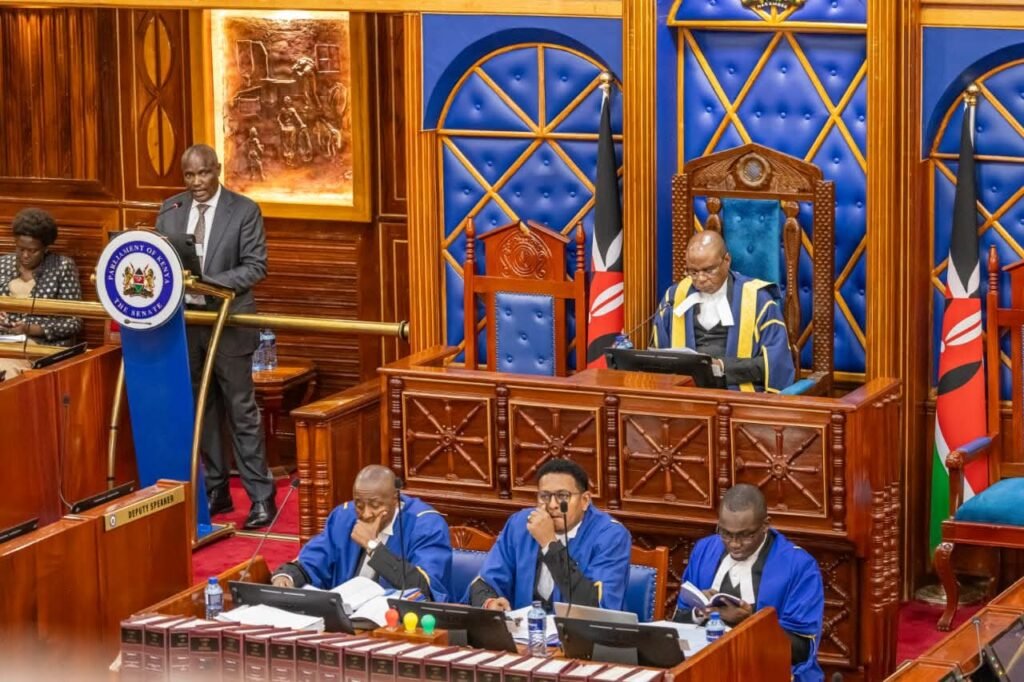
The CS added that successive Medium-Term Plans have prioritised direct social transfers and indirect economic policies to reduce poverty and boost incomes.
Addressing regional poverty disparities
Citing findings from the 2022 Kenya Continuous Household Survey, Mr Mbadi said the national poverty rate stands at 39.8 per cent, with 22 counties recording poverty levels above the national average.
He listed Turkana, Mandera, Samburu, Garissa, Tana River, Marsabit, Wajir, West Pokot, Kitui, Isiolo, Elgeyo Marakwet, Busia and Kwale among counties where poverty rates exceed 50 per cent.
Despite the disparities, he assured Senators that the Government remains committed to equitable development.
“The Government is strengthening beneficiary identification and targeting through improved use of national databases, including the Single Registry, to reduce duplication, eliminate ineligible beneficiaries and ensure support reaches the most vulnerable households,” he said.
He further noted that transparency is being enhanced through digital payment systems, strengthened monitoring and audit mechanisms, and improved coordination between national and county governments.
“We are reinforcing verification, monitoring and audit systems, including periodic beneficiary revalidation, enhanced internal controls and independent oversight, to curb leakages and improve value for money,” Mr Mbadi told the Senate.


