
Ayatollah Ali Khamenei was Iran’s unelected supreme leader from 1989 until his death in February 2026, wielding more power than the country’s president, parliament and judiciary combined.
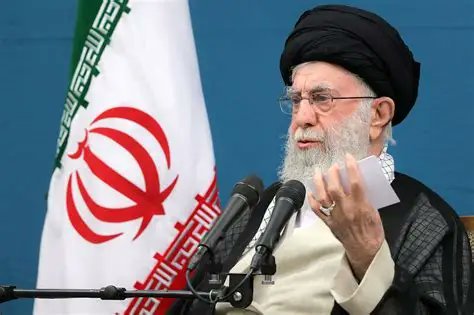
As the Islamic Republic’s highest religious and political authority, he shaped Tehran’s domestic and foreign policy for nearly four decades — and became one of the most controversial figures in the world’s most enduring East-West standoff.
Born in 1939 in Mashhad into a clerical family, Khamenei emerged as a key figure in the 1979 Islamic Revolution that overthrew the US-backed Shah. He rose through the ranks, serving as president in the 1980s before being chosen as supreme leader after the death of Ayatollah Ruhollah Khomeini, the revolution’s founder.
From that perch, he became the architect of Iran’s modern state — conservative in doctrine, assertive abroad, and deeply suspicious of Western influence.
Decision maker
Khamenei was the ultimate decision-maker on Iran’s security, nuclear policy, economy and foreign relations. He controlled the Islamic Revolutionary Guard Corps (IRGC) — Iran’s powerful military and intelligence arm — and oversaw how the state responded to dissent.
The IRGC, under his leadership, expanded its reach beyond Iran’s borders, backing militant allies like Hezbollah in Lebanon, Houthi forces in Yemen and factions in Iraq and Syria. This network, dubbed the “Axis of Resistance,” was central to Tehran’s challenge to U.S. and Israeli interests.
At home, his rule was marked by periodic uprisings — from the 2009 Green Movement to the mass protests sparked by the death of Mahsa Amini in 2022 — which were met with harsh crackdowns by security services. Critics say his intolerance of political dissent contributed to stagnation and human rights abuses; supporters view him as a bulwark against Western domination.
Hostility towards US
Khamenei’s tenure was defined by deep hostility toward the United States. He branded America Iran’s “number one enemy,” accusing Washington of endless efforts to undermine Iranian sovereignty through sanctions, propaganda, and support for hostile actors.
Under his watch, Tehran pursued nuclear enrichment — insisting it was for peaceful energy — which the U.S. and allies feared could lead to a bomb. This dispute triggered waves of sanctions designed to isolate Iran economically and politically.
In 2015, he reluctantly allowed negotiators to strike the Joint Comprehensive Plan of Action (JCPOA) — the Iran nuclear deal — which eased some sanctions. But when President Trump pulled the US. out of the pact in 2018 and reimposed harsh measures, Khamenei rejected further concessions as a betrayal, hardening Tehran’s stance and fueling renewed tensions.
US interests
The U.S. government long labelled Khamenei and his inner circle as threats. In 2019, the Treasury Department sanctioned his office and senior aides for “advancing the regime’s domestic and foreign oppression,” including links to past attacks on U.S. and allied interests. These measures froze assets and barred U.S. entities from dealing with them, intended to squeeze Tehran’s ability to fund proxies and maintain regional influence.
Beyond sanctions, the U.S. has a history of targeting Iranian figures and assets associated with what Washington calls destabilizing behaviour. The 2020 killing of Qassem Soleimani, commander of the IRGC’s elite Quds Force, under President Trump was one such flashpoint — aimed at deterring attacks on American troops but instead escalating fears of broader conflict.
In 2026, the U.S. and Israel jointly carried out airstrikes on Iran that killed Khamenei himself — an unprecedented escalation after years of rising tensions over missiles, nuclear ambitions, and regional hostilities. The operation marked a dramatic leap from sanctions and covert pressure to open military action.
Iranian targets
The U.S. has hit a range of Iranian officials and entities over the years:
Qassem Soleimani — slain in a U.S. airstrike in Iraq in 2020, triggering sharp retaliation threats from Tehran.
IRGC — designated a foreign terrorist organisation by the U.S. in 2019, making its members and supporters globally exposed to sanctions.
Senior regime advisers — targeted in sanctions aimed at choking off financial and operational networks linked to Tehran’s foreign policy.
These moves reflect U.S. efforts to constrain Iran’s nuclear and missile programs, curtail support for militant groups, and respond to attacks on American forces.
Power vacuum
Khamenei’s death leaves a power vacuum in Tehran at a moment of explosive conflict. His legacy — intertwining defiance of U.S. pressure with aggressive regional posture — helped make Iran a central front in U.S. foreign policy. As Tehran vows revenge and the region bristles with tension, one thing is clear: the collapse of a half-century of fraught diplomacy has profound implications for global security.


