
Health Cabinet Secretary Hon Aden Duale has announced a major shift in Kenya’s health system, prioritising preparedness and resilience to safeguard public health and national security.
Speaking during the launch of the Kenya National Public Health Institute (KNPHI) Strategic Plan (2023–2027) and the National Action Plan for Health Security (2026–2030), Duale emphasized that Kenya is moving from reactive to proactive health management.
“Strong health security systems are essential for protecting lives, livelihoods, and the economy. Kenya is now building the capacity to anticipate, prevent, and manage health threats before they escalate,” said Duale.
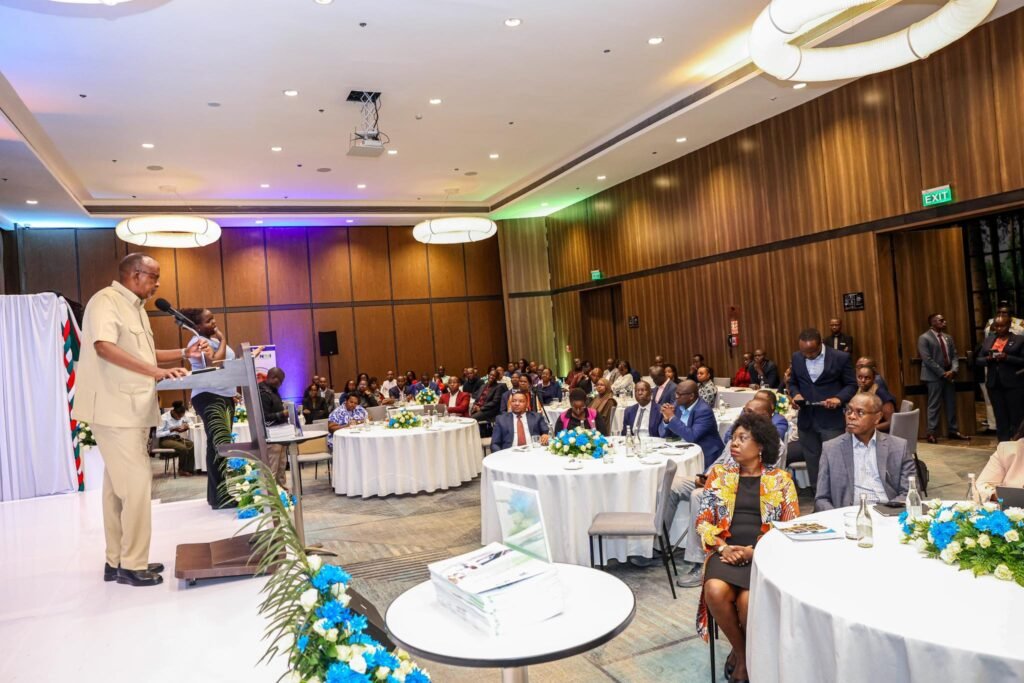
KNPHI: Backbone of Kenya’s Health Security
The Cabinet Secretary described the Kenya National Public Health Institute as the cornerstone of the country’s health security architecture. The institute integrates surveillance, laboratories, and emergency operations into a coordinated national response.
Progress in operationalising KNPHI includes establishing robust governance structures, technical transitions, and dedicated financing to support rapid response and continuous monitoring.
Duale noted that these frameworks provide a clear roadmap for real-time data use, emergency preparedness, risk communication, and a One Health approach, linking human, animal, and environmental health.
Expanding Access and Universal Health Coverage
In addition to health security, Duale highlighted advancements in Universal Health Coverage (UHC), revealing that over 30 million Kenyans are now registered with the Social Health Authority (SHA). The expanded coverage improves access to quality care, financial protection, and early disease detection at the community level.
“Kenya is ensuring that health security is not only about responding to emergencies but also about strengthening the everyday health system for every citizen,” said Duale.

Kenya’s Role as a Regional Health Leader
The Health Cabinet Secretary also underscored Kenya’s growing regional leadership in health security, pointing to the Africa CDC Eastern Africa Regional Coordinating Centre and the WHO Regional Emergency Hub in Nairobi.
He called for sustained domestic financing to anchor health security gains and maintain Kenya’s position as a hub for regional health preparedness.
Looking ahead, Duale announced the inaugural Kenya Health Security Convention, a platform designed to align priorities, foster collaboration, and position Kenya as a center for dialogue on regional health security.
Among those in attendance were Mary Muthoni, Principal Secretary for Public Health and Professional Standards; Festus K. Ng’eno, Principal Secretary for Environment and Climate Change; Neema Kimambo, WHO Acting Country Representative; Paul Kariuki, Chairperson of the KNPHI Board; and Kamene Kimenye, Acting Director-General of KNPHI, alongside representatives from Africa CDC, development partners, and county governments.


 and National Action Plan for Health Security)