
Kirinyaga County’s steady rise in Early Childhood Development Education (ECDE) enrolment is increasingly being cited as a case study in how sustained public investment can strengthen the foundation of learning.
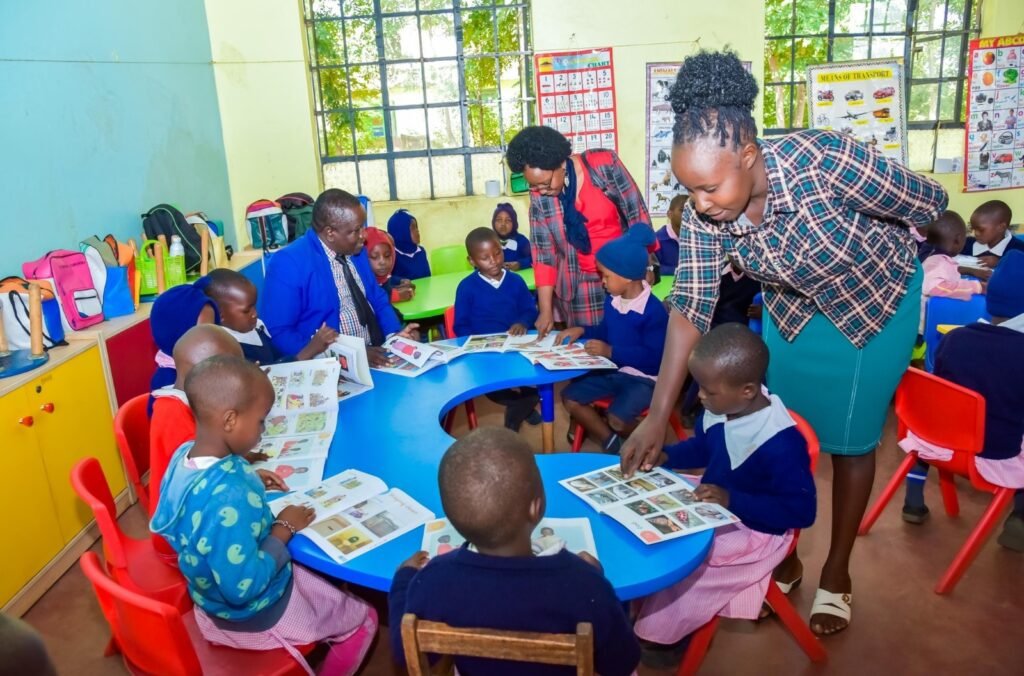
County data shows enrolment grew from 13,280 learners in 2017 to 16,398 in 2025, a gain education officials attribute to deliberate reforms in infrastructure, teacher welfare and access to learning materials.
Governor Anne Waiguru says the strategy was anchored on restoring confidence in public ECDE centres.
“Kirinyaga County has recorded a steady rise in ECDE enrolment following sustained investment in school infrastructure, improved service delivery and enhanced teacher welfare,” Waiguru said.
“The absorption of teachers into permanent and pensionable terms has improved morale and service delivery at the centres.”
Infrastructure, Uniforms and Feeding: Removing Barriers to Access
At the heart of Kirinyaga’s ECDE turnaround is a major upgrade of learning environments. Since 2017, the county has constructed about 40 modern classrooms and renovated 45 existing structures, replacing temporary iron-sheet units with child-friendly classrooms fitted with terrazzo floors, ceilings and age-appropriate furniture.
The county also became the first in Kenya to provide free ECDE uniforms to all learners, benefiting more than 15,000 pupils. The uniforms are produced at the county-owned Kaitheri Apparel Factory, an initiative that has doubled as a local jobs programme for women.
In 2025, Kirinyaga further rolled out a nutrition intervention, flagging off KSh 25 million worth of food supplies to support learners in 653 ECDE centres. Officials say the move has helped stabilise attendance, especially in vulnerable communities.
At the school level, teachers say the changes are visible.
“We want to thank Governor Anne Waiguru for looking into our plight and restoring the dignity of an ECDE teacher,” said Winnie Wairimu, an ECDE teacher in Kimbimbi.
Teachers and Technology: Investing in Quality, Not Just Numbers
Kirinyaga has also focused on teacher welfare as a driver of quality learning. All 420 ECDE teachers have been absorbed into Permanent and Pensionable terms, with monthly salaries rising from about KSh 15,000 to between KSh 35,000 and KSh 55,000, depending on qualifications.
Looking ahead, the county is preparing for a digital shift. From 2026, a digital learning programme will be rolled out across 200 ECDE centres, with 401 teachers currently undergoing intensive ICT training.
Deputy Governor David Githanda said the move is about future-proofing early learning.
“Digital learning is a significant milestone for us. We want teachers prepared for the realities of modern classrooms and the expectations of the new curriculum,” he said.
How Kirinyaga Compares Nationally
Nationally, ECDE enrolment reached about 2.91 million learners in 2024, up from 2.88 million the previous year, but access remains uneven. Counties such as Kakamega lead in absolute numbers, with enrolment rising to about 124,000 learners, while Kiambu crossed 39,000 learners following the construction of more than 200 model centres.
On the other end, Mandera and Marsabit record the highest ECDE exclusion rates, with 51.4% and 33.3% of eligible children respectively not enrolled. Nationally, about 7.4% of children still enter Grade One without any ECDE experience, underscoring persistent regional disparities.
President William Ruto has repeatedly linked early education to long-term development, saying:
“No nation can achieve sustained prosperity without investing in knowledge, innovation and human capital development.”
While Kirinyaga’s enrolment figures may be modest compared to urban counties, education experts note its strength lies in high retention, improved learning conditions and teacher stability — elements increasingly seen as critical to building a strong education system from the ground up.

