
Construction of the Talanta Sports City Stadium recently proposed to be named the Raila Odinga International Stadium is progressing at pace, with government inspections confirming the project is now over 80 percent complete as of early February 2026.
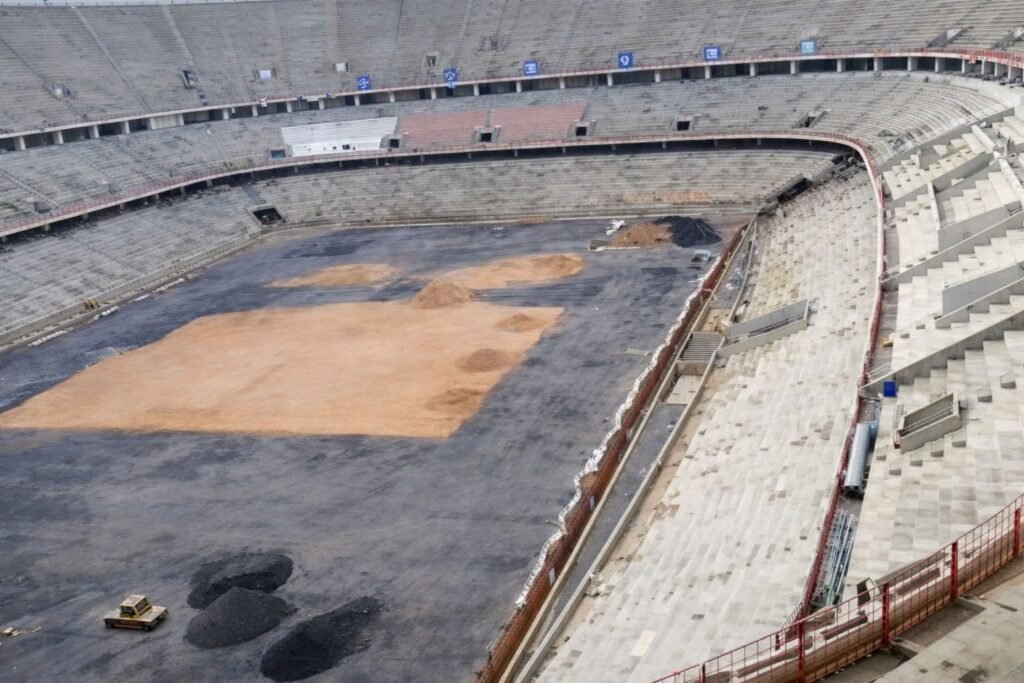
The 60,000-seater facility at Jamhuri Grounds in Nairobi is expected to be fully operational by March 1, 2026, positioning Kenya to host major continental and global sporting events.
But as the stadium rises rapidly, questions have emerged about timelines, financing and the overall cost to taxpayers. Here is what the facts show.
Is the stadium really over 87% complete?
Yes. Official inspections conducted between November 2025 and January 2026 show consistent progress.
In mid-November 2025, the project stood at 66 percent completion. By early December, it had reached 68 percent. By late January 2026, inspections confirmed it had crossed the 80 percent mark.
President William Ruto, during earlier inspections, expressed satisfaction with the pace of work.
“I am happy with the progress. This stadium will be ready by December 2025,” the President said on April 11, 2025, during a site visit.
Sports Cabinet Secretary Salim Mvurya also confirmed in November 2025 that major infrastructural works were nearing completion.
“Major infrastructural works will be finalised, paving the way for full operationalisation by February 2026,” Mvurya said during an inspection tour.
Principal Secretary for Sports Patrick Mariru further assured the public during a December 3, 2025 visit:
“I can assure you they will be delivered on time, on standard, and on budget.”
The structure now visibly dominates the skyline along Ngong Road, reflecting rapid round-the-clock construction under a 24-hour shift system.
What makes Talanta Sports City unique?
Talanta is not just a stadium — it is designed as a sports and commercial mini-city.
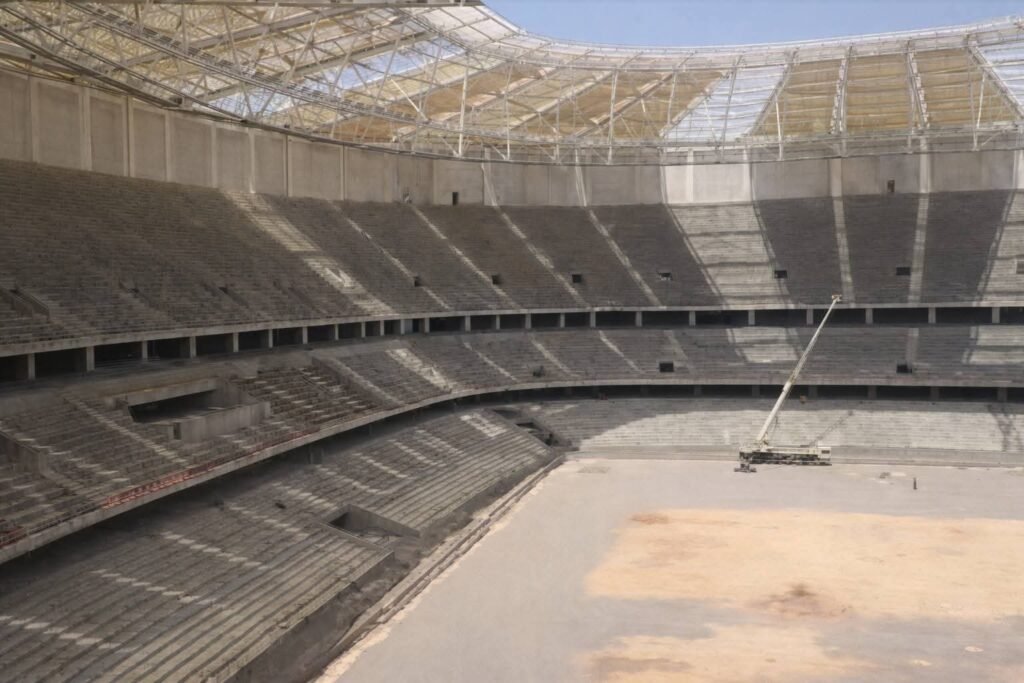
The main arena is a football and rugby-specific facility without a traditional athletics track, bringing fans closer to the action. It features 54 VIP skyboxes, advanced broadcast systems, VAR technology and a distinctive ball-shaped design supported by hydraulically tensioned steel cables.
Complementary infrastructure includes a planned 300-room four-star hotel, a 30,000-square-metre shopping mall, a dedicated railway station and a Bus Rapid Transit (BRT) connection along Ngong Road — enhancing accessibility and long-term commercial viability.
This integrated model positions the stadium as both a sports venue and an economic hub.
How much is the stadium costing?
The official construction cost stands at KSh 44.7 billion (approximately $344.5 million).
The project is financed through a KSh 44.79 billion Infrastructure Asset-Backed Security (IABS) bond listed on the Nairobi Securities Exchange, backed by the Sports, Arts and Social Development Fund.
Critics, including MP Ndindi Nyoro, have argued that the financing structure — with an estimated 15.04 percent annual interest rate — could push the total repayment to approximately KSh 145 billion over 15 years.
However, it is important to distinguish between principal construction cost and long-term financing costs typical of infrastructure bonds. The KSh 44.7 billion figure reflects the build cost, while repayment figures include interest spread over time.
Notably, early 2026 reports indicated that despite significant physical progress, only about 5 percent of the total cost had been paid at the time of roughly 37 percent structural completion — suggesting performance-based disbursement mechanisms.
What is the economic impact?
The stadium is already delivering measurable economic benefits.
At peak construction, approximately 3,700 workers were employed. On a daily basis, between 1,000 and 1,500 personnel operate on-site under a 24-hour shift model.
More than 500 individuals from the neighboring Kibera community have reportedly secured employment opportunities.
In addition to job creation, the project has incorporated on-site skills training in welding, masonry, carpentry and electrical works — leaving behind a trained workforce beyond the project’s completion.
The bigger picture
Talanta Sports City is part of Kenya’s broader ambition to upgrade sports infrastructure to global standards, strengthen sports tourism and unlock youth talent.
President Ruto has previously stated:
“The Talanta Stadium… will be completed this January and we will start using it,” he said during the GENOWA Governor’s Cup in late 2025.
Beyond politics and financing debates, the physical reality on the ground shows a stadium nearing completion at significant speed.
If operational by March 2026 as projected, Talanta Sports City will stand as one of the largest and most modern sports facilities in East Africa — a long-term national asset designed to serve sports, commerce and urban development.
The key question now is not whether it is rising — but how quickly it will begin delivering its full economic and sporting returns.

