
Virginia Muthoni still laughs when she talks about getting lost on a road she has known all her life. A resident of Marua in Nyeri County, she remembers when the Sagana–Karatina-Marua highway was rough, narrow and predictable.
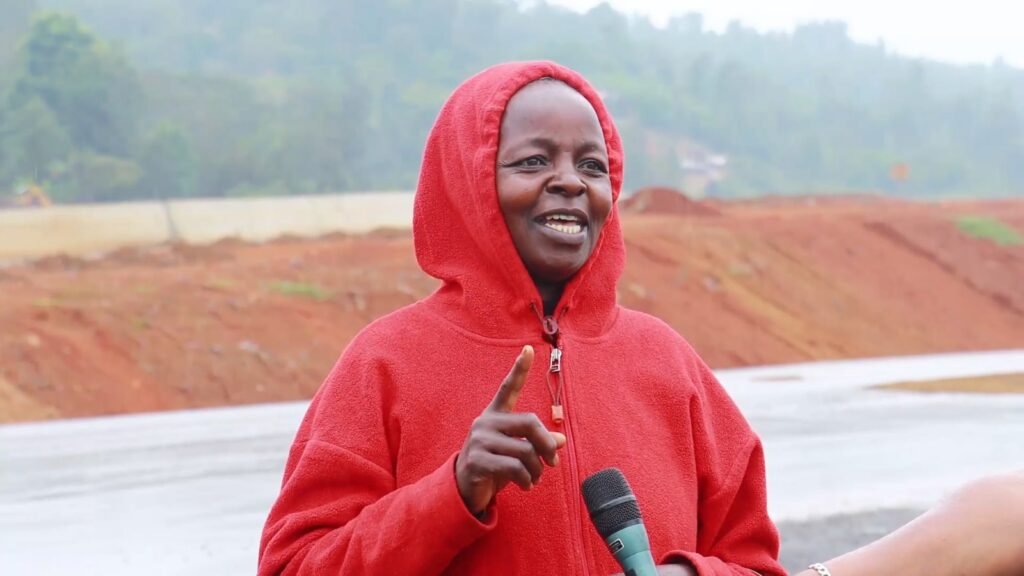
Today, it is so transformed that even locals sometimes lose their bearings.
“I am a resident here in Marua. But this road was really stuck, and now, honestly, those contractors are back,” she says.
“Let me tell you, drivers, if you are not careful, touts, and those who have not studied much yet… Make sure you talk to the driver before you get into the vehicle because you might find yourself taken somewhere you were not going.”
She compares the experience to a popular saying: “You know that song that says, ‘I was going to Murang’a and found myself in Kitui.’ Now you might find yourself in Moyale or somewhere else you do not know.”
For Muthoni, the confusion is a small price to pay for progress. “This road, honestly, has been built so well, I felt like I was in South Africa. I even got lost… So, it is good to be careful,” she gleefully adds.
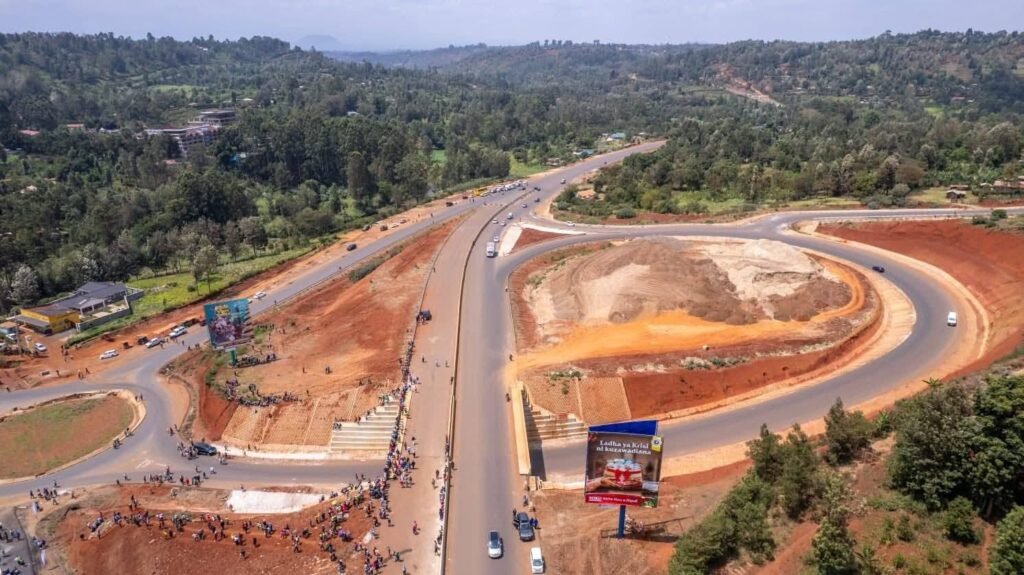
Behind the sweeping interchanges and smooth carriageways is a massive infrastructure project reshaping mobility in Central Kenya.
According to engineer Clinton Okupu, the Computer-aided Design (CAD) engineer for the Sagana–Marua Highway project, the road is part of the 84-kilometre corridor, divided into two sections: “There is lot one from Kenol to Sagana, 48 kilometers and lot two from Sagana to Marua, which is 36 kilometers.”
Beyond the highway itself, Okupu says the project has been designed with community impact in mind.
“Apart from constructing the road, the project also includes other benefits to the community,” he explains. Among them is “the construction of a modern autism centre at Karatina Special School that has been completed, equipped and handed over to the school.”
The unit cost Ksh 32 million, with an additional Ksh 5 million for equipment.Seventeen border shades are also being built along the route, seven already complete, alongside plans for market shades to support roadside trade.
A modern bus park is planned for Karatina Town, while access roads are being constructed to connect hospitals, schools and police stations.
“The total length of the access roads is 23.5 kilometres at a cost of about 200 million,” Okupu says.
A modern market at Kibirigui has also been completed at a cost of Ksh13 million.To help motorists navigate the complex interchanges, Okupu says the design includes multiple loops linking Nyeri, Nairobi and Nanyuki, with “adequate signage” to guide traffic.

President William Ruto recently underscored the project’s national importance, noting that it forms part of the Trans-African Highway.
“This key infrastructure development will enhance traffic flow, boost road safety, facilitate trade between Nyeri and the entire region, and foster regional integration,” the President said.
He added that in Nyeri County alone, more than eight major roads are being upgraded during the current financial year at a cost of Ksh 4 billion.
Deputy President Kithure Kindiki said the government, through strategic and innovative financing models, has secured sufficient resources to complete road projects that had stalled for years across the country.
He added that a dual carriageway will also be constructed from the Marua Interchange to Nyeri Town and extended to Chaka Township in Kieni Constituency, to support safe, efficient and seamless movement of people and goods.
Transformation for residents like Virginia Muthoni is already real. The road may be confusing at first glance, but to her, it is a sign of a future where Marua is no longer cut off, only connected.


