
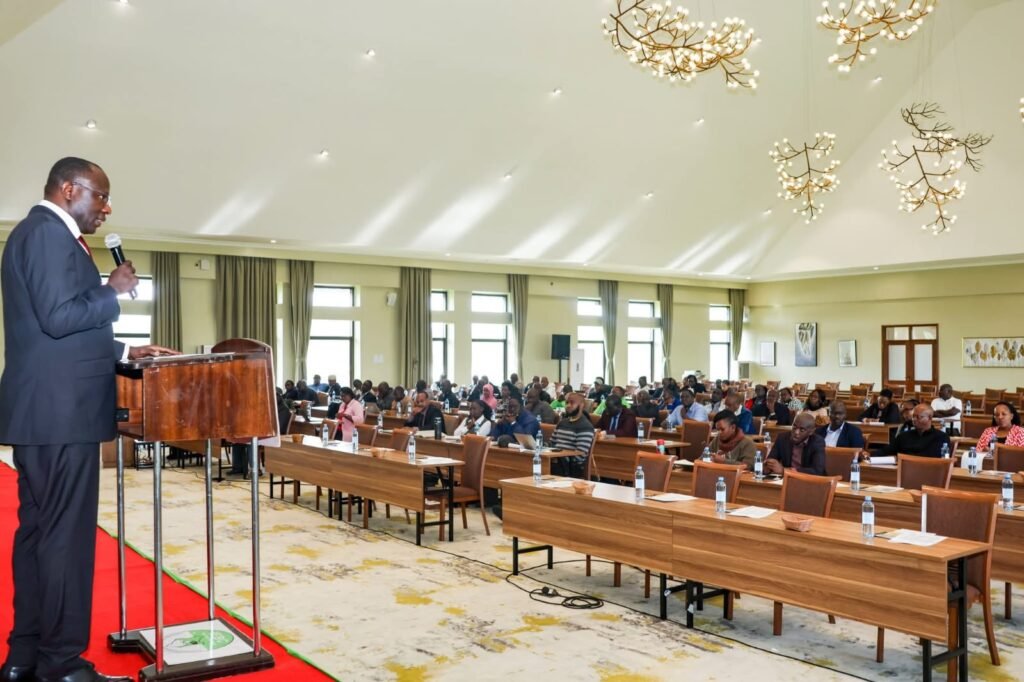
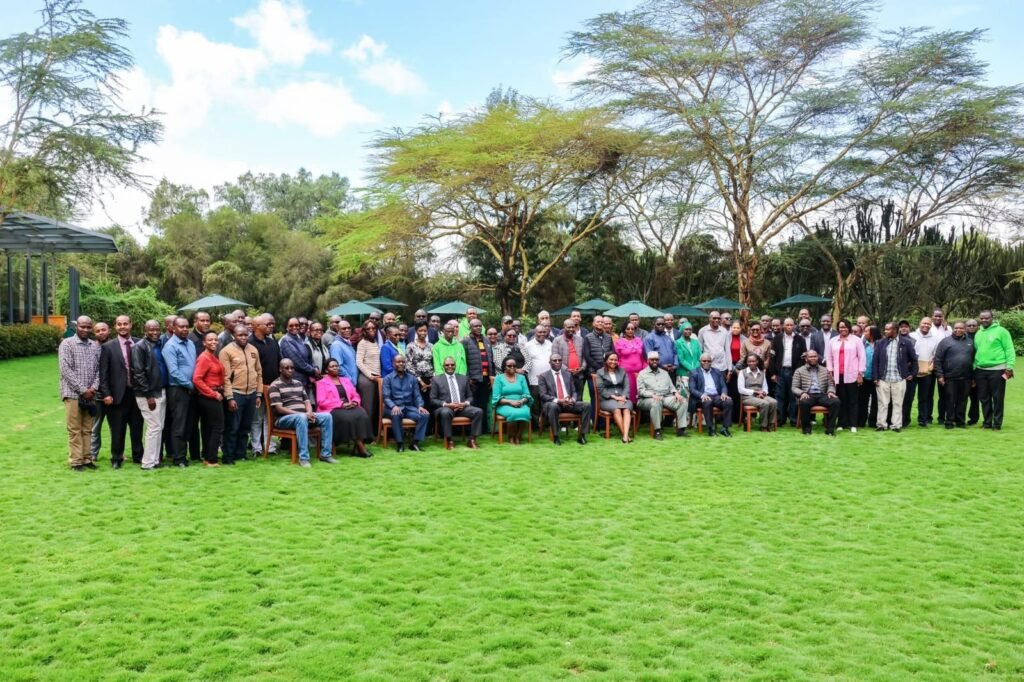
The Independent Electoral and Boundaries Commission (IEBC), led by Chairperson Erastus Ethekon, is holding a high-level planning meeting ahead of the nationwide rollout of the Enhanced Continuous Voter Registration (ECVR) exercise set to begin on March 30, 2026.
The Commission has set an ambitious target of registering 2.5 million new voters within 30 days during Phase One of the exercise. The broader objective is to enroll at least 6.3 million new voters before the 2027 General Election, pushing the national voter register to a projected 28.5 million voters.
The planning meeting is focused on providing strategic direction for the national rollout, clarifying coordination frameworks between field officers and headquarters teams, outlining legal and procedural guidelines, identifying operational risks and developing mitigation measures. The Commission is also shaping a monitoring, evaluation and reporting framework with clearly defined performance indicators, alongside a unified public communication and stakeholder engagement strategy.
“The ECVR is one of the initiatives of fulfilling a constitutional obligation. Our fundamental objective is to ensure that every eligible Kenyan citizen can exercise their right to vote. The credibility of any electoral process begins with an inclusive, accurate and trusted Register of Voters,” Ethekon said.
Shift to proactive voter registration
The ECVR exercise will run for 30 consecutive days across the country, marking a shift in the Commission’s voter registration model. According to Ethekon, the IEBC is moving from a passive system to a proactive approach that takes services directly to citizens.
“Voter registration is a constitutional guarantee. Our responsibility is to make this exercise practical and accessible to all,” he stated.
Under the new strategy, the Commission will recruit temporary voter registration clerks who will travel from village to village delivering registration services. Registration will be decentralised to the lowest feasible administrative levels, with special attention given to remote, marginalised and hard-to-reach areas.
“Our approach must be adaptive to geographical and infrastructural challenges. No Kenyan should be excluded because of where they live,” Ethekon emphasised.
He added that transparency and professionalism must guide the entire process, from recruitment of clerks and logistics to biometric data capture and upload of new registrations.
“We are trustees of public confidence. Every action we take must reflect that responsibility,” he noted.
Youth surge and operational readiness
Commissioner Dr Ann Nderitu, Chairperson of the Electoral Operations Committee, said the 2.5 million target is informed by demographic realities, particularly the large number of young people who have attained voting age since the last mass registration cycle.
“The credibility and inclusiveness of the 2027 electoral process will depend significantly on the Register we build today,” Nderitu said.
She identified training, logistics and stakeholder engagement as the three critical pillars of success. Emphasis will be placed on practical competency, including biometric capture quality, kit operation, data transmission and troubleshooting in areas with low network connectivity.
Nderitu stressed the need for strict adherence to kit movement schedules to ensure timely rotation across wards and centres within the limited timeframe. She added that real-time monitoring, rapid issue resolution and strong field supervision will be essential.
Acting Commission Secretary and CEO Moses Sunkuli said the exercise will rely heavily on stable network connectivity and strict compliance with data protection laws.
“The Commission needs to ensure that network connectivity is up and running and any challenges still remaining are dealt with and given priority so that all our processes and activities are supported by the network to make sure transfers and voter registration are real time,” Sunkuli said.
He urged staff to anticipate risks and develop clear strategies to address operational challenges. He also called for purpose-driven voter education to encourage participation and counter misinformation.
“The voter education strategies must be purposefully designed to make sure all voters are educated and IEBC is able to receive interactive feedback. Let’s go all out to engage and ensure all people participate,” he added.
The Commission has framed the upcoming exercise under the civic call to action hashtags #YourVoteYourFuture, #TalkwithIEBC and #StopFakeNews, signalling a renewed push to build public trust ahead of the 2027 polls.


