
President William Ruto’s ambitious plan to transform Kenya into a First World economy—popularly referred to as the “Singapore Plan”—is anchored on a radical shift in how the government funds development.
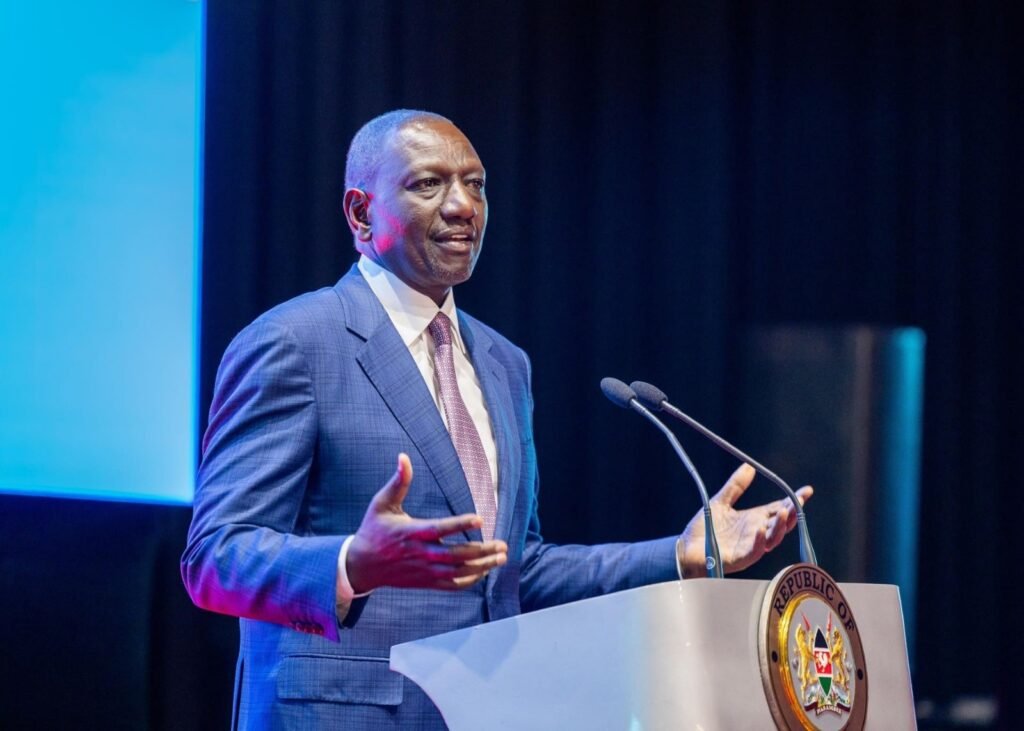
Rather than relying on new taxes or excessive foreign borrowing, the strategy focuses on monetising existing public assets and leveraging private capital to finance large-scale infrastructure and economic transformation.
The plan, officially part of Ruto’s First World Agenda, is valued at KSh 5 trillion and targets long-term structural change in transport, energy, agriculture and human capital. The President has declared 2026 as the “Year of Execution,” marking a pivot from economic stabilisation to aggressive delivery.
The funding model behind the Singapore vision
At the centre of the strategy is the creation of new financial engines designed to unlock capital without burdening taxpayers. The flagship vehicle is the National Infrastructure Fund (NIF), which the government intends to use to crowd in private investment at scale.
Speaking during his State of the Nation Address at Parliament Buildings on November 20, 2025, President Ruto said:
“Their rise was not magic. It was intentional and crafted through leadership, discipline, strategic investment and an uncompromising rejection of mediocrity. Today, they stand as First World economies. If they could rise, so can Kenya.”
Under the NIF model, every shilling of public capital is expected to attract up to ten shillings from private investors, pension funds and sovereign partners. The fund is being capitalised through the sale or leasing of mature state assets, including a proposed sale of 65 per cent of Kenya Pipeline Company shares, projected to raise about KSh 110 billion.
On January 23, 2026, President Ruto emphasised how proceeds from asset sales would be used, stating:
“Any money proceeds of privatisation will be used for only one purpose—to develop the infrastructure of Kenya.”
Unlike previous privatisation efforts, the law requires that all funds raised be ring-fenced strictly for infrastructure investment and not for recurrent expenditure or debt repayment.
Sovereign Wealth Fund and long-term stability
Alongside the NIF, the government operationalised a Sovereign Wealth Fund in January 2026 to provide long-term fiscal stability. The fund is designed to save and invest revenues from natural resources, dividends from state-owned enterprises and part of privatisation proceeds.
The fund has a triple mandate: safeguarding wealth for future generations, stabilising the economy during global shocks, and making strategic commercial investments aligned with national priorities.
In his New Year address from State House, Nairobi, on December 31, 2025, President Ruto declared:
“2026 marks the moment when our journey to transform Kenya into a First World economy begins in earnest.”
Where the KSh 5 Trillion will go
The massive investment envelope is structured around four core pillars meant to replicate the development pathways followed by Singapore, South Korea and China.
Transport and logistics will take a significant share, including dualling 2,500 kilometres of highways, tarmacking 28,000 kilometres of roads and extending the Standard Gauge Railway from Naivasha to Malaba starting in 2026.
Energy expansion targets an additional 10,000 megawatts through geothermal, wind and solar projects to lower electricity costs and boost manufacturing competitiveness.
In agriculture, the plan proposes the construction of 50 mega-dams and 200 mini-dams to irrigate 2.5 million acres, shifting Kenya from a net food importer to an exporter.
Human capital development will see the education budget rise above KSh 700 billion, with research and development funding increased to 2 per cent of GDP.
While addressing residents in Nyeri County on October 12, 2025, President Ruto framed the timeline for the transformation, saying:
“Raising Kenya from a third to a first world country will take us 30 years just like Korea, Singapore and China. By 2055, this nation will be a first world country.”
Risks, skepticism and economic pressures
Despite the scale of ambition, the strategy faces economic and political headwinds. The 2026–2029 debt strategy still requires KSh 906 billion in domestic borrowing, raising concerns about crowding out private sector credit. Critics also argue that high living costs and persistent poverty could undermine public support for long-term infrastructure investments.
Public resistance to privatisation of strategic assets has emerged as another major challenge. Addressing sceptics during the Tobong’u Lore celebrations in Turkana County on December 16, 2025, President Ruto said:
“I want to say while here in Turkana that the plan for Sh5 trillion we started yesterday—by next year we will be halfway.”
The Controller of Budget has also questioned whether First World ambitions are achievable given Kenya’s reliance on IMF support and current fiscal pressures.
A high-stakes bet on asset-led growth
President Ruto’s Singapore Plan represents a decisive bet on asset-led growth, private capital mobilisation and disciplined execution. By declaring 2026 the Year of Execution, the administration has signalled that the era of policy design is over and delivery has begun.
As Ruto told grassroots leaders at Sagana State Lodge on January 17, 2026:
“We are going to change Kenya to catch up with Singapore. We have what it takes.”
Whether the strategy delivers transformative growth or runs into implementation and political resistance will define Kenya’s economic trajectory for decades to come.

