
Kenya has recorded significant progress in the fight against malaria, with national incidence declining from 104 to 72 cases per 1,000 population between 2023 and 2025, even as the government intensifies accountability measures, expands local production of antimalarial commodities and strengthens regional partnerships under the Zero Malaria Campaign.
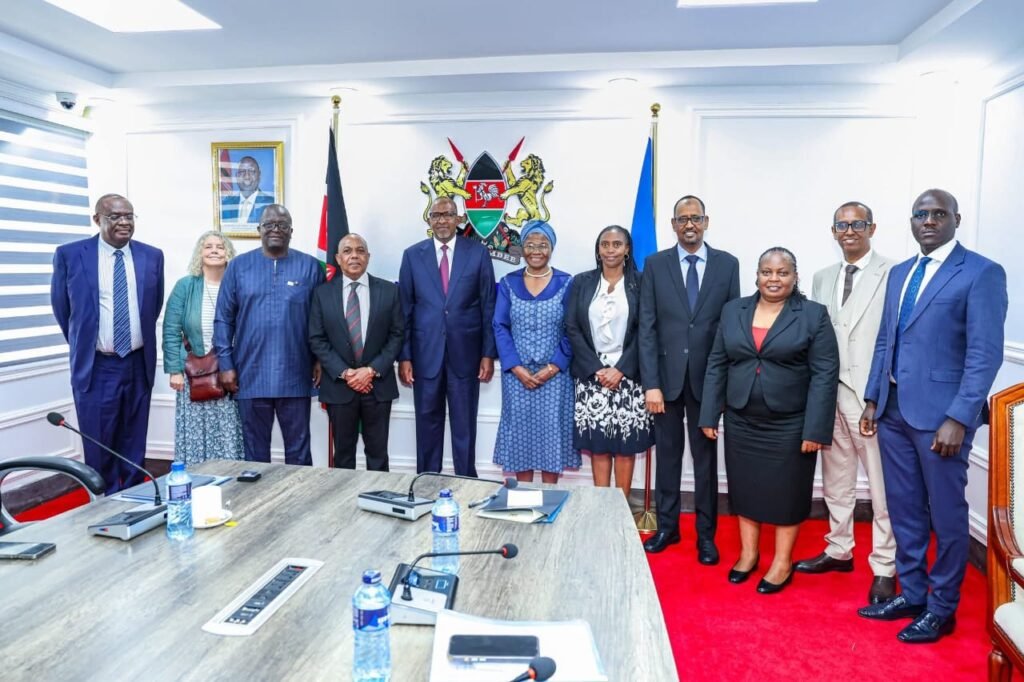
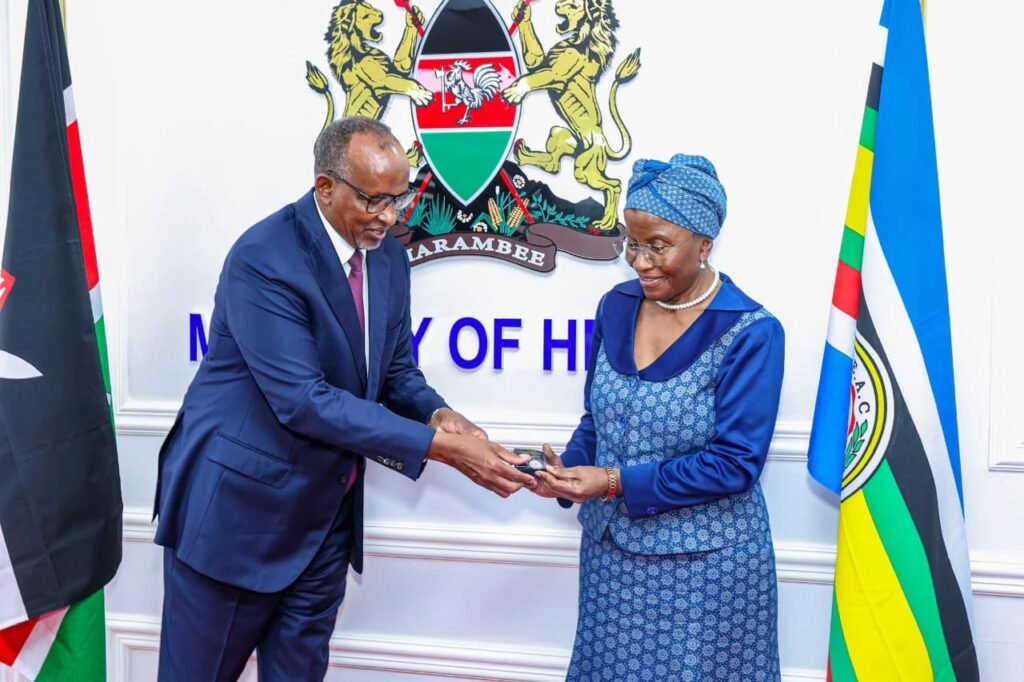
The gains were highlighted during a high-level consultative meeting between the Ministry of Health and the African Leaders Malaria Alliance (ALMA), led by Executive Secretary Ms Joy Phumaphi. Health Cabinet Secretary Aden Duale used the forum to outline milestones achieved and the work that still lies ahead in eliminating malaria across the country.
Community health promoters role
CS Duale attributed the steady decline in malaria incidence to integrated service delivery anchored at the community level.
“Kenya has recorded steady progress in the fight against malaria, with national incidence declining from 104 to 72 cases per 1,000 population between 2023 and 2025,” Duale said.
He noted that more than 107,000 Community Health Promoters have played a central role in improving early case detection, referrals, treatment adherence and uptake of preventive interventions at the household level.
“Integrated service delivery supported by over 107,000 Community Health Promoters has significantly improved early case detection, referrals and treatment adherence, contributing to better survival among children under five and improved maternal health outcomes, particularly in high-burden counties,” he stated.
Guided by the Kenya Malaria Strategy 2023–2027, the Cabinet Secretary reaffirmed the government’s commitment to achieving an 80 per cent reduction in malaria incidence and a 90 per cent reduction in mortality, alongside interrupting indigenous transmission in selected counties by 2028.
Data, financing and regional partnerships
During the meeting, Duale called for enhanced collaboration with ALMA in line with Kenya’s Universal Health Coverage agenda.
“To accelerate progress, we must strengthen data systems, accountability frameworks and sustainable financing mechanisms that support life-saving interventions,” Duale said.
He proposed support for the Reproductive-Age Mortality Survey (RAMOS) to bolster data-driven decision-making, scaled implementation of the Rapid Results Initiative to improve planning and budgeting, and expanded partnerships to mobilise sustainable financing for malaria and maternal health programmes.
ALMA Executive Secretary Ms Joy Phumaphi commended Kenya’s efforts and reaffirmed the alliance’s support for the country’s elimination agenda.
“Kenya’s progress demonstrates what strong leadership, community engagement and accountability can achieve. ALMA remains committed to supporting Kenya and the region in advancing towards a malaria-free Africa,” Phumaphi said.
Health sector reforms strengthen response
Kenya’s malaria response is further reinforced by broader health sector reforms, including the Digital Superhighway Programme, the Social Health Authority, Practice 360 and the Green Charter, all aimed at delivering equitable, efficient and affordable healthcare.
The consultative session was attended by Principal Secretary for Public Health and Professional Standards Mary Muthoni, End Malaria Council Advisor Dr Willis Akhwale, Director of Family Health Dr Bashir Issak and Kenya National Public Health Institute Acting CEO Dr Maureen Kamene, among other Ministry of Health officials.
With incidence figures on a downward trend and renewed focus on accountability and sustainable financing, Kenya is positioning itself as a regional leader in the push towards eliminating malaria and advancing universal health coverage.

