
Nairobi is interested in strategic access to regional markets to bolster its trading endevours.
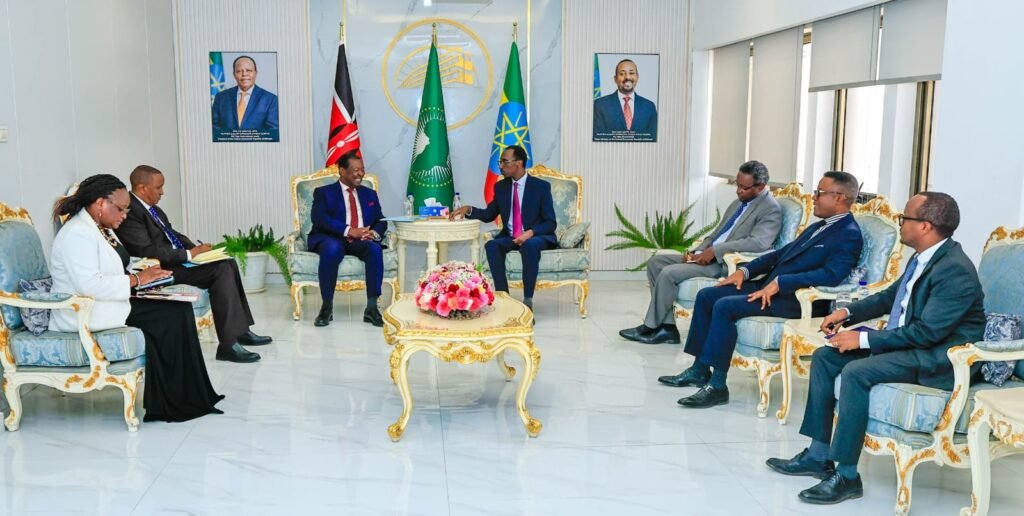
Prime Cabinet Secretary Musalia Mudavadi has revealed that Kenya’s partnership with Ethiopia will help strengthen regional security while opening opportunities for trade and investment between the two countries.
Speaking after a bilateral consultative meeting in Addis Ababa on Sunday, February 1, 2026, Mudavadi emphasized the historical ties that bind the two nations.
“Kenya and Ethiopia share a long and enduring partnership, built on trust, shared priorities, and a common vision for prosperity and stability in our region. In Addis Ababa, held a productive consultative bilateral meeting with Gedion Timothewos Hessebon, Ethiopia’s Minister of Foreign Affairs, as we continue to strengthen the ties that bind our two nations and our people,” Mudavadi said.
During the meeting, the leaders discussed strategies to boost inter-regional trade and investment, as well as ways to enhance peace and security across the Horn of Africa.
In December 2025, Kenya and Ethiopia signed a Simplified Border Trade Regime agreement in Addis Ababa to formalize and streamline cross-border, small-scale trade, focusing on reducing bureaucratic barriers, setting, and lowering trade thresholds for local communities. This, combined with Ethiopia’s October 2025 entry into the AfCFTA Guided Trade Initiative, aims to increase agricultural and goods trade, aiming for over $166 million in annual bilateral commerce.
On October 9, 2025, a convoy of Ethiopian trucks carrying coffee, meat, beans, fruits, edible oil, and manufactured goods crossed into Kenya through Moyale.

At first glance, it was just another border crossing. In truth, it marked the moment Africa’s most ambitious economic pact, the African Continental Free Trade Area (AfCFTA), finally moved from treaty pages to trading floors.
For years, Ethiopia stood among the AfCFTA’s more cautious signatories. Ratification was followed by painstaking internal work: aligning customs law, publishing tariff concessions, digitizing documentation, and training border officials.
Now, with about 90 percent of its tariff lines liberalized and the rest classified as sensitive or excluded, Ethiopia has joined the Guided Trade Initiative (GTI), the AfCFTA’s pilot program linking ready countries in real shipments.
Kenya is the first destination under this framework. The cargo includes priority agro-commodities that underpin Ethiopia’s export base and Kenya’s import demand, a deliberate match intended to stress-test corridor systems before wider rollout.


