
This Content Is Only For Subscribers
In a dazzling display of diplomatic prowess and legal brilliance, Kenya has achieved a historic milestone with the election of Professor Phoebe Nyawade Okowa as the first Kenyan judge of the International Court of Justice (ICJ).
Announced on 12 November 2025, after a nail-biting four-round vote by both the United Nations General Assembly and Security Council, the victory marks a proud moment for the nation—and a glowing testament to Okowa’s extraordinary legal career.
So, who exactly is this trailblazing legal mind now representing Kenya on the world’s highest court? Grab a cup of chai, and let’s dive in.
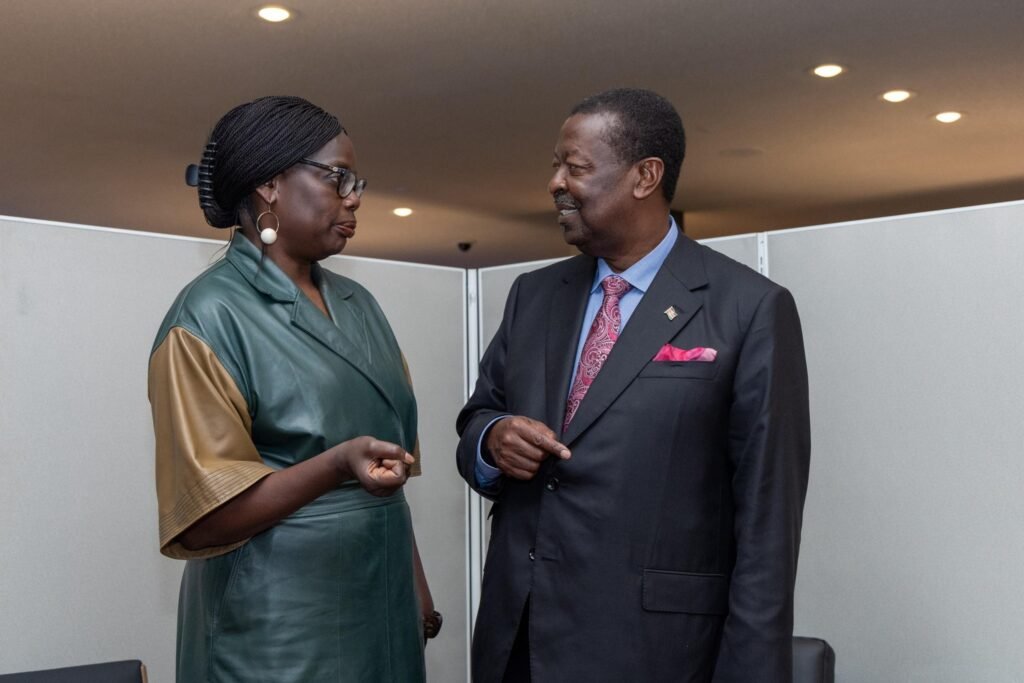
Who Is Phoebe Okowa?
Born in the misty highlands of Kericho County on 1 January 1965, Professor Phoebe Okowa grew up defying expectations. Of Luo heritage, she shattered academic barriers early on, becoming the first woman to graduate with First Class Honours in Law from the University of Nairobi in 1987—a landmark moment in Kenya’s legal education history.
Called to the Kenyan Bar in 1990, Okowa soon earned a Foreign and Commonwealth Office Scholarship, taking her brilliance abroad to Oxford University’s Wadham College. There, she completed her Bachelor of Civil Law (BCL) in 1990 and later a Doctor of Philosophy (DPhil) in 1994 under the supervision of the legendary Sir Ian Brownlie, one of the most respected figures in international law.
Today, Okowa is a Professor of Public International Law at Queen Mary University of London, where she directs graduate studies. Her career spans elite institutions including New York University and Stockholm University, where she’s held visiting fellowships. Her areas of expertise—environmental law, state responsibility, and transboundary disputes—have shaped global discourse on justice and accountability.
In 2021, she broke new ground once again as the first African woman elected to the United Nations International Law Commission (ILC), a position she has held since January 2023. Earlier, in 2016, she joined the Permanent Court of Arbitration in The Hague, solidifying her role as one of Africa’s foremost voices in international jurisprudence.
Her acclaimed book, State Responsibility for Transboundary Air Pollution (Oxford University Press, 2000), remains a seminal reference in environmental law. In 2025, she added yet another feather to her cap, being elected an Associate of the Institute of International Law in Rabat, Morocco—a rare honour reserved for the world’s top legal scholars.
The ICJ Victory: A Four-Round Diplomatic Thriller
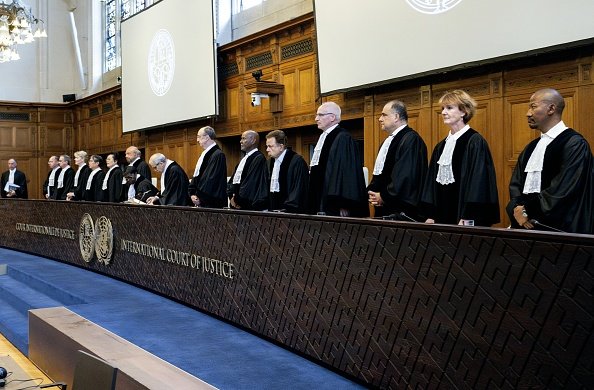
Okowa’s road to the ICJ was anything but easy. She faced formidable competitors, including Nigeria’s Olufemi Elias, Sierra Leone’s candidate, and Ghana’s nominee, in a by-election triggered by the resignation of Somali Judge Abdulqawi Ahmed Yusuf.
After four tense rounds in the UN General Assembly and three in the Security Council, Kenya’s legal star emerged victorious on 12 November 2025. She will serve on the bench until February 2027, joining a 15-member panel that now features seven women—a welcome reflection of gender diversity at the world’s top court.
Kenya’s Principal Secretary for Foreign Affairs, Dr. Korir Sing’Oei, broke the news on X (formerly Twitter), describing the win as a “demonstration of confidence in Prof. Okowa’s judicial competence and Kenya’s standing on the global stage.”
Behind the victory was a well-coordinated campaign led by Kenya’s diplomatic missions in New York and Geneva, whose efforts ensured broad international backing. Social media erupted in celebration, with messages pouring in from diplomats, legal professionals, and family members alike. Her relative @OkowaNashon proudly wrote, “We, your family, are PROUDER!”
What Kenya Stands to Gain: A Seat at the Global Table
Okowa’s election to the ICJ is more than symbolic—it’s a strategic diplomatic triumph for Kenya. Her presence gives the country a stronger voice in shaping global legal norms and resolving disputes that have far-reaching political and economic consequences.
In particular, her deep expertise in maritime boundaries and state responsibility could influence decisions in ongoing cases—such as Kenya’s dispute with Somalia over a 100,000-square-kilometre maritime zone believed to hold vast oil and gas reserves.
Beyond geopolitics, the appointment signals Kenya’s commitment to the rule of law, a principle that reassures investors and boosts confidence in the nation’s governance structures. It also strengthens Kenya’s soft power across Africa, positioning Nairobi as a centre for international diplomacy and legal excellence.
For young lawyers and scholars, Okowa’s success is a powerful source of inspiration—proof that global recognition is within reach for those who combine brilliance with perseverance.
Follow TopNews.ke for the latest updates on Kenya’s international achievements, breaking news, and global affairs.
Share your thoughts below—how do you think Justice Okowa’s appointment will shape the future of international law?


