
Deputy President, Kithure Kindiki, has challenged corporate Africa to integrate the continent’s youthful population into the workplace, arguing that harnessing their talent is essential for businesses to remain competitive and address 21st-century challenges.
Speaking at the opening of the Africa Employers Summit in Nairobi on Monday, Prof Kindiki positioned the need for a new, flexible work culture not as a concession to youth, but as a strategic imperative for the continent’s economic transformation. He stated that the public and private sectors must collaborate to create environments that enable young workers to thrive.
“Together, let us envision and create an Africa where every individual has a place to thrive, where no one is excluded, and where business stands as the most dynamic driver of social transformation and shared prosperity,” Prof Kindiki told delegates.

Demographic shift
The address underscored a growing recognition of a profound demographic and cultural shift. Africa has the youngest population in the world, with over 60 per cent of its people under the age of 25. This so-called ‘youth bulge’ presents both a monumental opportunity and a significant risk. Failure to integrate this cohort into formal, productive employment exacerbates social instability and wastes a vast resource of innovation and energy.
Prof Kindiki’s comments reflect a pressing need to address stubbornly high youth unemployment rates across the continent, which are often double the overall unemployment figures. The call for integration goes beyond mere job creation, advocating for a fundamental rethink of workplace norms to attract and retain young talent.
“Youthful workers today are asking employers for flexibility at the workplace and therefore the era of tie and suit workers could be coming to an end,” he observed. “The young people are saying that you don’t need a tie and a suit to be productive.”This push for a modern work culture, he argued, must be coupled with a stronger partnership between government and business to convert policy into tangible job opportunities. He also emphasised the necessity of holistic support systems, including mental health and wellness programmes, to ensure young employees can succeed.
“We need the private sector to augment our interventions and offer the requisite community support,” he noted.
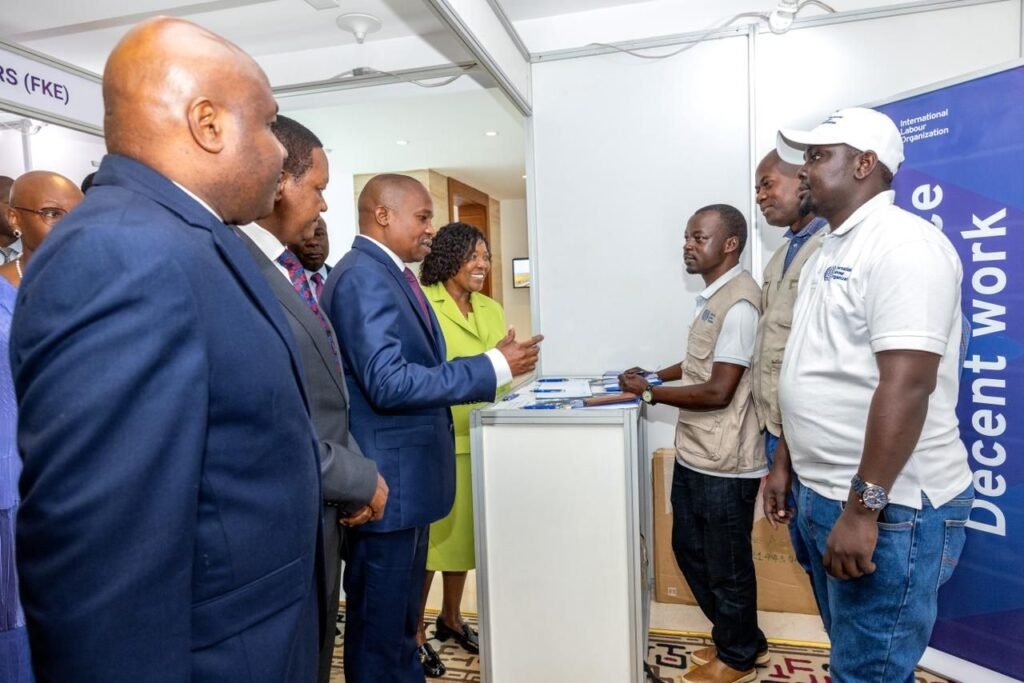
The Deputy President framed the inclusion of youth, alongside women and persons with disabilities, as a non-negotiable element for future growth. He envisions an “Africa powered by young people,” where technology and public-private partnerships define success.
“It is the Africa we must dream of and actualise in our lifetime,” Prof Kindiki stated. “It is possible to transform Africa in our time.”
The Africa Employers’ Summit 2025, taking place in Nairobi today and tomorrow, is a high-level event organized by the Federation of Kenya Employers (FKE), BUSINESSAfrica, the ILO, and the International Organisation of Employers (IOE).
The summit aims to advance social justice by uniting business leaders, policymakers, and employers’ organizations to design strategies for the future of work in Africa.


