
1. Basic Identity
Official name: County Government of Mombasa
County code: 001
County headquarters: Mombasa City
Region: Coast Region (formerly Coast Province)
Area: 229.7 square kilometres, excluding approximately 65 square kilometres of water mass, according to the 2019 Kenya Population and Housing Census.
2019 population: 1,208,333 people comprising 610,257 males, 598,046 females and 30 intersex persons, according to the Kenya National Bureau of Statistics (KNBS).
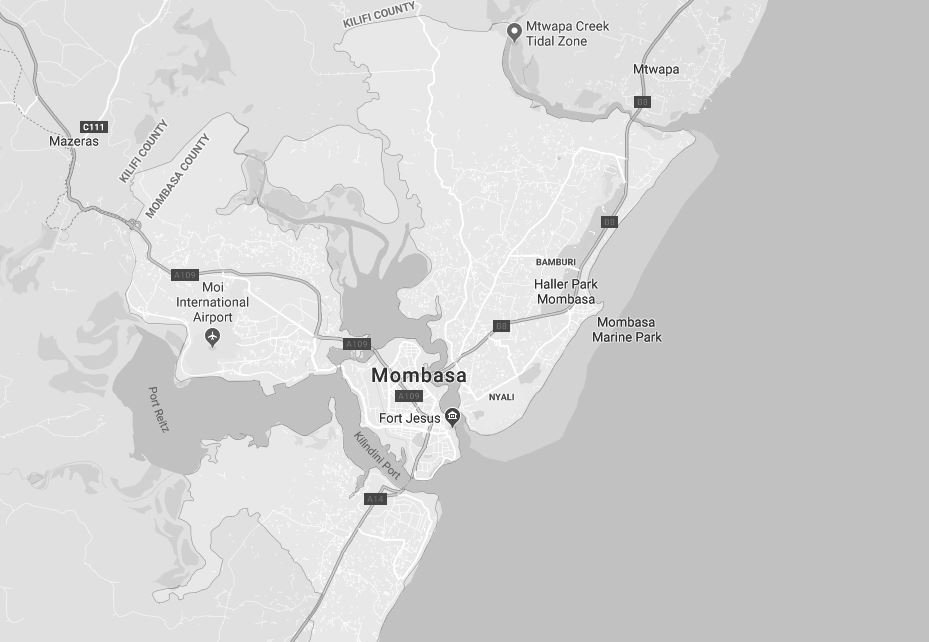
Mombasa County is located along Kenya’s south-eastern coastline and borders Kilifi County to the north and north-west and Kwale County to the south-west, while the Indian Ocean forms its eastern boundary. It is Kenya’s principal maritime county and one of the country’s most important commercial centres.
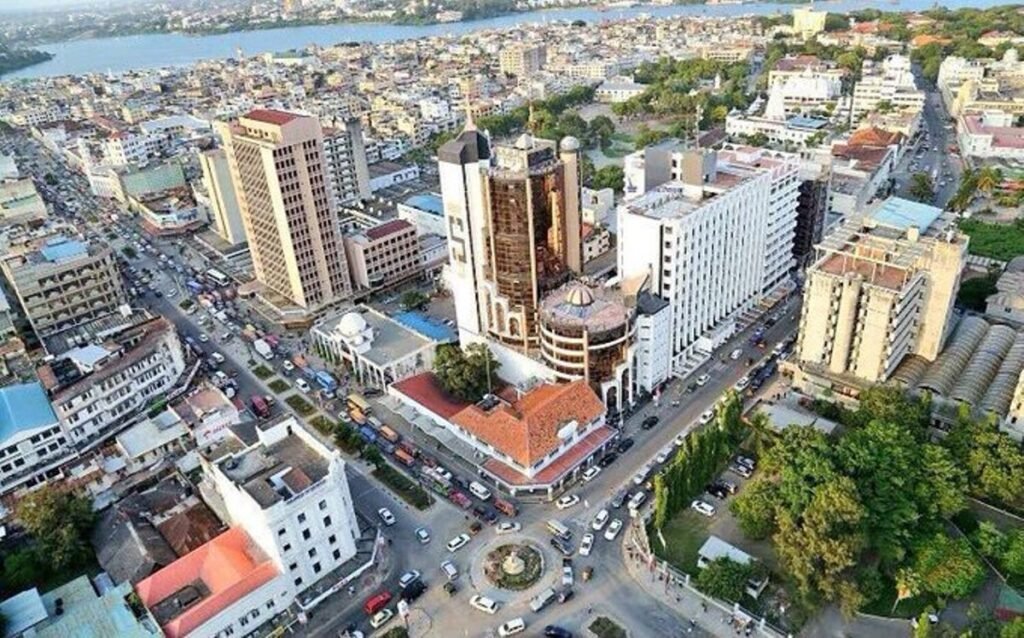
Mombasa is Kenya’s oldest city and the country’s principal seaport gateway. The county hosts the Port of Mombasa, which handles a substantial share of Kenya’s international maritime trade and serves several landlocked countries in East and Central Africa.
Mombasa’s distinctive geography combines Mombasa Island with mainland areas connected through bridges, causeways and ferry infrastructure. The Likoni Ferry provides a critical link between Mombasa Island and the South Coast, while the Nyali Bridge connects the island to the northern mainland.
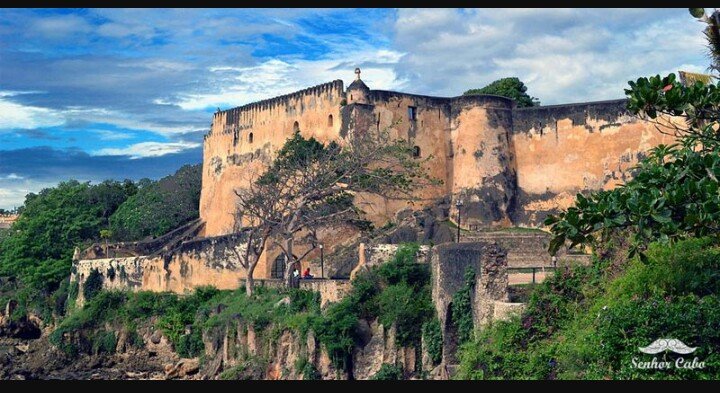
The county is internationally recognised for its historical and cultural heritage. Fort Jesus, constructed by the Portuguese in 1593, is a UNESCO World Heritage Site and remains one of Kenya’s most important historical landmarks. Mombasa Old Town is also renowned for its Swahili architecture, narrow streets and centuries-old trading history.
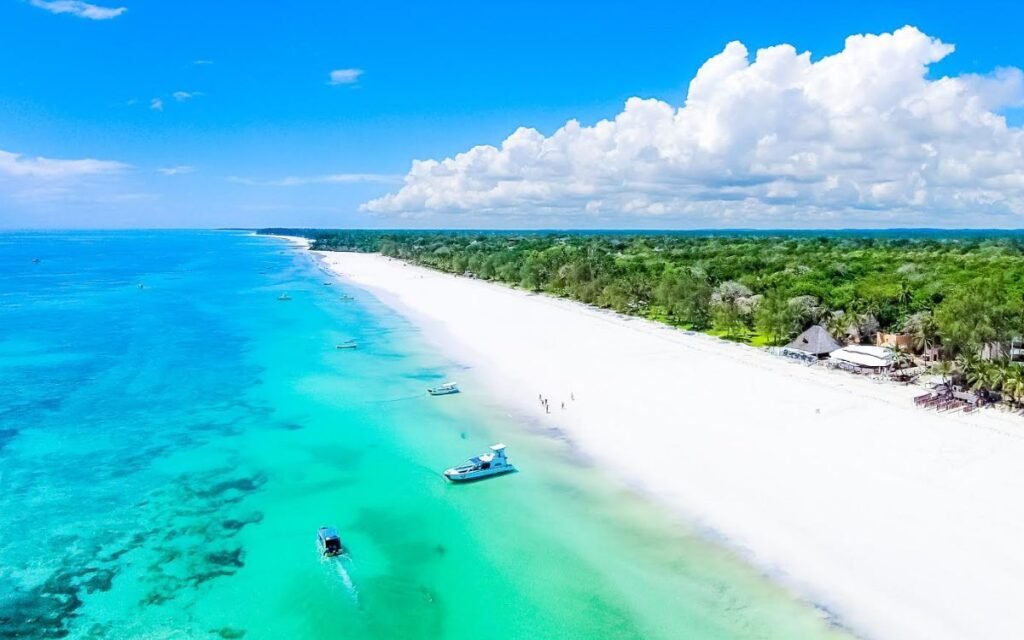
Mombasa’s identity is strongly shaped by its Swahili heritage and multicultural population, which reflects African, Arab, Asian and European influences. The county is also a major tourism destination, with its beaches, marine attractions, historical sites, hotels and resorts contributing significantly to the local economy.
Its strategic position on the Indian Ocean makes Mombasa a major centre for maritime trade, logistics, tourism, manufacturing, transport and the blue economy.
2. Political and Administrative Structure
Mombasa County is divided into 6 parliamentary constituencies and 30 electoral wards.
A. Changamwe Constituency – 5 Wards
- Port Reitz
- Kipevu
- Airport
- Changamwe
- Chaani
B. Jomvu Constituency – 3 Wards
- Jomvu Kuu
- Miritini
- Mikindani
C. Kisauni Constituency – 7 Wards
- Mjambere
- Junda
- Bamburi
- Mwakirunge
- Mtopanga
- Magogoni
- Shanzu
D. Nyali Constituency – 5 Wards
- Frere Town
- Ziwa La Ng’ombe
- Mkomani
- Kongowea
- Kadzandani
E. Mvita Constituency – 5 Wards
- Mji Wa Kale/Makadara
- Tudor
- Tononoka
- Majengo
- Ganjoni/Shimanzi
F. Likoni Constituency – 5 Wards
- Mtongwe
- Shika Adabu
- Bofu
- Likoni
- Timbwani
Total: 6 constituencies and 30 wards.
Administratively, Mombasa operates through the county government alongside national government administrative structures.
The county executive is responsible for devolved functions such as county health services, urban planning, local infrastructure, markets and other services assigned under the Constitution.
National government functions, including security and national administration, are coordinated through the County Commissioner and the national administrative structure comprising sub-counties, locations and sub-locations.
Mombasa’s administrative structure reflects its status as a densely populated metropolitan county where county and national government institutions work alongside one another to provide public services.
3. Current Political Leadership

| Position | Office Holder |
|---|---|
| Governor | Hon. Abdulswamad Shariff Nassir |
| Deputy Governor | Hon. Francis Thoya |
| Senator | Hon. Mohamed Faki Mwinyihaji |
| Woman Representative | Hon. Zamzam Mohammed |
Governor Abdulswamad Shariff Nassir assumed office following his election in the August 2022 General Election on an Orange Democratic Movement (ODM) ticket.
Before becoming governor, Nassir served as the Member of Parliament for Mvita Constituency from 2013 to 2022.
His administration has prioritised healthcare improvement, youth employment, blue economy development, digitalisation of county services, climate-change resilience, urban infrastructure and improved revenue collection.
The governor’s administration has also sought to strengthen Mombasa’s position as a regional maritime and commercial centre while expanding opportunities for young people and small businesses.
Senator Mohamed Faki Mwinyihaji represents Mombasa County in the Senate, while Zamzam Mohammed serves as the elected Woman Representative in the National Assembly.
4. Members of Parliament
| Constituency | Member of Parliament | Party |
| Changamwe | Omar Mwinyi Shimbwa | ODM |
| Jomvu | Badi Twalib | ODM |
| Kisauni | Rashid Bedzimba | ODM |
| Nyali | Mohamed Ali (Jicho Pevu) | UDA |
| Mvita | Mohamed Soud Machele | ODM |
| Likoni | Mishi Mboko | ODM |
Mombasa’s parliamentary representation demonstrates the county’s strong political association with the Orange Democratic Movement (ODM).
ODM holds five of the county’s six parliamentary seats, while Nyali remains represented by the United Democratic Alliance (UDA).
The political landscape reflects Mombasa’s long-standing importance in Coast regional politics, where issues such as port development, employment, land, tourism, infrastructure and coastal interests frequently influence electoral choices.
5. Economy and Gross County Product
Mombasa is one of Kenya’s most productive county economies and serves as the country’s principal maritime and logistics gateway.
The county’s economy is strongly linked to the Port of Mombasa, international trade, tourism, manufacturing, transport, financial services and real estate.
Mombasa’s Gross County Product
| Year | Gross County Product |
| 2019 | KSh 465.1 billion |
| 2020 | KSh 501.2 billion |
| 2021 | KSh 561.4 billion |
| 2022 | KSh 613.8 billion |
| 2023 | KSh 666.0 billion |
Source: KNBS Gross County Product series.
The 2023 estimate places Mombasa among Kenya’s largest county economies. Its economic output is particularly significant given the county’s relatively small geographical area.
Mombasa’s economy is dominated by services, trade, transport and industry rather than agriculture.
The Economic Structure
Mombasa’s economy rests on several major pillars:
- Transport, maritime logistics and warehousing
- Tourism and hospitality
- Manufacturing and industrial processing
- Wholesale and retail trade
- Real estate and construction
- Financial and business services
- Blue economy and fisheries
The Port of Mombasa remains the single most important economic asset in the county. It handles imports and exports for Kenya and provides a vital trade gateway for landlocked countries across the region.
The county is also connected to the national railway network through the Standard Gauge Railway (SGR), while road networks link the port to inland markets.
The Dongo Kundu Special Economic Zone is expected to further strengthen Mombasa’s role as an industrial, logistics and investment centre.
Tourism is another major economic pillar. The county attracts domestic and international visitors through its beaches, historical sites, marine attractions, hotels and cultural heritage.
6. Agriculture: Sustaining Mombasa’s Urban Food Economy
Although Mombasa is Kenya’s smallest county by land area and is highly urbanised, agriculture remains an important household economic activity, particularly in peri-urban areas of the mainland.
Urban and peri-urban agriculture provides food, supplementary income and employment while helping households cope with the high cost of living.
Major Agricultural Activities
- Urban horticulture
- Greenhouse vegetable farming
- Small-scale maize and cassava production
- Hydroponic farming
- Mushroom cultivation
- Coconut and cashew production
- Fruit farming
- Kitchen gardens
Vegetables such as sukuma wiki, spinach, amaranth, tomatoes and cowpeas are grown in parts of Kisauni, Likoni, Jomvu and other available peri-urban spaces.
Agricultural initiatives have increasingly incorporated climate-smart technologies, including water-efficient irrigation, greenhouse production and small-scale hydroponic systems.
Community and school-based gardens also contribute to household nutrition and food security.
Although agriculture contributes a relatively small share of Mombasa’s economy compared with logistics, tourism and manufacturing, it remains important for household livelihoods and local food supply.
7. Livestock and Fisheries
Livestock production in Mombasa is largely characterised by intensive and small-scale commercial systems because of limited agricultural land and high population density.
Farmers increasingly rely on zero-grazing, stall feeding and improved breeds to maximise production from limited space.
Major Livestock Enterprises
- Dairy cattle
- Commercial poultry farming
- Goat keeping
- Small-scale pig farming
- Beekeeping
- Rabbit farming
- Aquaculture
Commercial poultry production is particularly important, with farmers in areas such as Kisauni, Likoni and Jomvu supplying eggs and chicken meat to households, hotels, restaurants and retail outlets.
Peri-urban dairy farming is also practised in parts of Kisauni, Changamwe and Likoni, where farmers use improved breeds and intensive feeding systems.
Fisheries and the Blue Economy
Mombasa’s livestock economy is complemented by a substantial marine economy.
Fishing remains an important source of employment and food for coastal communities. Artisanal fishermen operate along the Indian Ocean coastline, while fish traders, processors and transporters form part of the wider fisheries value chain.
The county has also benefited from investments in aquaculture, marine fisheries, seaweed-related enterprises and other blue economy initiatives.
Programmes such as the Kenya Marine Fisheries and Socio-Economic Development (KEMFSED) Project have supported coastal communities through investments in fisheries infrastructure, livelihoods and sustainable marine-resource management.
The combination of agriculture, livestock and fisheries provides Mombasa households with diversified sources of food and income.
8. Key Industries
Mombasa hosts one of Kenya’s largest concentrations of industrial and maritime businesses.
Its industrial landscape ranges from manufacturing and petroleum-related activities to shipping, logistics, tourism and commercial services.
Major Industries Include
- Transport and maritime logistics
- Port operations and cargo handling
- Warehousing and freight services
- Manufacturing
- Cement and steel production
- Petroleum storage and related services
- Food and beverage processing
- Tourism and hospitality
- Wholesale and retail trade
- Financial and banking services
- Real estate and construction
- Shipping and clearing and forwarding
- Marine services
- Information and communication services
The Shimanzi, Changamwe and Jomvu industrial areas form important components of Mombasa’s industrial landscape.
They host manufacturing plants, warehouses, container freight stations, logistics companies and other businesses connected to the port economy.
Port and Maritime Economy
The Port of Mombasa is the centrepiece of the county’s industrial and commercial economy.
It serves Kenya as well as several landlocked countries in East and Central Africa, making Mombasa a critical regional trade gateway.
The port supports thousands of direct and indirect jobs in:
- Shipping
- Clearing and forwarding
- Trucking
- Warehousing
- Banking
- Insurance
- Hospitality
- Retail
- Marine services
The county’s strategic location along international shipping routes also makes it an important gateway for regional and international trade.
Tourism and Hospitality
Tourism remains another major economic pillar.
Major attractions include:
- Fort Jesus
- Mombasa Old Town
- Nyali Beach
- Bamburi Beach
- Mombasa Marine National Park
- Historical Swahili architecture
- Cultural attractions
- Coastal hotels and resorts
The combination of maritime trade, manufacturing, tourism and services gives Mombasa one of Kenya’s most diversified urban economies.

9. Population
The 2019 Kenya Population and Housing Census recorded Mombasa County’s population at 1,208,333 people.
Population Composition
| Category | Population |
| Male | 610,257 |
| Female | 598,046 |
| Intersex | 30 |
| Total | 1,208,333 |
Source: Kenya National Bureau of Statistics (KNBS), 2019 Kenya Population and Housing Census.
With an area of approximately 229.7 square kilometres, Mombasa has one of the highest population densities in Kenya.
The population is concentrated around Mombasa Island and the mainland urban areas of Changamwe, Jomvu, Kisauni, Nyali and Likoni.
Mombasa’s population is highly diverse. Its social and cultural identity has been shaped by indigenous Mijikenda and Swahili communities as well as Arab, Asian, European and other Kenyan communities that have settled in the city over several centuries.
The county also experiences significant daily population movements because of commuters, port workers, traders, students and visitors travelling between Mombasa and neighbouring counties, particularly Kilifi and Kwale.
Rapid urbanisation has created major economic opportunities but has also increased pressure on:
- Housing
- Water supply
- Sewerage systems
- Solid-waste management
- Roads and public transport
- Healthcare facilities
- Public land
- Informal settlements
Mombasa’s population density therefore remains both an economic advantage and a major urban-planning challenge.
10. Education and School Enrolment
Mombasa has one of the largest concentrations of educational institutions in the Coast region, serving learners from the county and neighbouring coastal counties.
The county has a broad network of public and private primary and secondary schools, early childhood development centres, vocational institutions and universities.
School Enrolment
Available national and county-level estimates indicate that Mombasa maintains relatively strong enrolment levels because of its urban accessibility and concentration of educational facilities.
Key indicators:
| Indicator | Estimate |
| Net Primary Enrolment | 86–90% |
| Primary-to-Secondary Transition | 75–82% |
| Secondary Enrolment | Approximately 72% |
The county government and national government have supported education through:
- Expansion of Early Childhood Development Education (ECDE)
- Construction and renovation of classrooms
- Provision of learning facilities
- County bursary programmes
- Vocational and technical training
- Support for vulnerable learners
- School infrastructure improvement
Education remains particularly important in informal settlements, where household poverty can affect school attendance, retention and transition to secondary education.
Higher Education
Mombasa is the principal higher-education and technical training hub of the Coast region.
Major institutions include:
- Technical University of Mombasa (TUM)
- University of Nairobi – Mombasa Campus
- Kenyatta University – Mombasa Campus
- Jomo Kenyatta University of Agriculture and Technology (JKUAT) – Mombasa
- Kenya Medical Training College (KMTC) – Mombasa
- Bandari Maritime Academy
- Other TVET institutions and private colleges
Bandari Maritime Academy is particularly significant because of Mombasa’s position as Kenya’s leading maritime centre.
The county also hosts institutions offering training in hospitality, tourism, business, information technology, healthcare and logistics.
11. Health Infrastructure
Mombasa is the principal healthcare and medical referral centre for the Coast region.
Its hospitals serve residents of Mombasa as well as patients from Kilifi, Kwale, Tana River, Lamu and other parts of the coastal region.
Major Referral Hospital
Coast General Teaching and Referral Hospital
Coast General Teaching and Referral Hospital is the largest public referral facility in the Coast region and provides specialised medical services to a large regional population.
Its services include:
- Emergency and trauma care
- Surgery
- Oncology
- Renal dialysis
- Paediatric care
- Maternity services
- Intensive care
- Diagnostic services
- Specialist outpatient services
The hospital also plays an important role in training medical personnel and providing referral services for patients from across coastal Kenya.
Major Public Health Facilities
- Port Reitz Sub-County Hospital
- Likoni Sub-County Hospital
- Tudor Sub-County Hospital
- Kisauni health facilities
- Jomvu health facilities
- Changamwe health facilities
Major Private and Mission Hospitals
- The Mombasa Hospital
- Aga Khan Hospital, Mombasa
- Pandya Memorial Hospital
- Premier Hospital
- Bomu Hospital
The combination of public referral facilities and private hospitals makes Mombasa an important medical centre for the wider Coast region.
Healthcare remains a major development priority because the county faces challenges associated with rapid population growth, informal settlements, non-communicable diseases, maternal and child health needs and pressure on public hospitals.
12. History of County Political Leadership
Since devolution was introduced under Kenya’s 2010 Constitution, Mombasa has maintained one of the country’s most politically prominent county governments.
The county has played an important role in Coast regional politics and has frequently been a significant political base for the Orange Democratic Movement (ODM).
Governors
1. H.E. Ali Hassan Joho (2013–2022)
Ali Hassan Joho became Mombasa’s first elected governor following the 2013 General Election, marking the beginning of the county’s devolved administration.
A former Member of Parliament for Kisauni Constituency, Joho served two consecutive terms as governor on an ODM ticket.
His administration focused on establishing the structures of the newly created county government while pursuing investments in urban infrastructure, healthcare, street lighting, tourism and public services.
During his tenure, Mombasa strengthened its profile as a major tourism and commercial centre. The county also pursued improvements in roads, drainage, healthcare facilities and other urban services.
Joho completed his constitutionally permitted two terms in office in 2022.
2. H.E. Abdulswamad Shariff Nassir (2022–Present)
Abdulswamad Shariff Nassir was elected governor of Mombasa County in the August 2022 General Election on an ODM ticket.
Before becoming governor, Nassir served as the Member of Parliament for Mvita Constituency from 2013 to 2022.
His administration has prioritised:
- Expansion of the blue economy
- Youth employment
- Healthcare improvement
- Digitalisation of county services
- Climate-change resilience
- Urban infrastructure
- Improved revenue collection
- Support for small businesses
- Integration of port-related economic opportunities
The administration has also sought to strengthen Mombasa’s position as a maritime, tourism and regional commercial hub.
Political Significance
Mombasa remains one of Kenya’s most politically influential urban counties.
The county’s politics are strongly connected to Coast regional interests, including:
- Port development
- Tourism
- Employment
- Land and housing
- Infrastructure
- Devolution
- Blue economy opportunities
- Coastal cultural identity
Since 2013, ODM has maintained significant political influence in Mombasa, although individual constituencies can remain competitive during national and county elections.
The county’s political importance extends beyond its borders because developments in Mombasa frequently affect the wider Coast region and Kenya’s national maritime and trade agenda.
14. Key Personalities Associated with Mombasa
Mombasa has produced and nurtured a remarkable range of Kenyan personalities whose influence extends across media, music, film, fashion, culinary arts, and popular culture. The county’s distinctive Swahili heritage and cosmopolitan character have helped shape a vibrant creative industry with both national and international reach.
Media and Broadcast Personalities
Lulu Hassan
Lulu Hassan is one of Kenya’s best-known Swahili television personalities. She has built a prominent career as a news anchor, actress and television producer, and is particularly recognised for her contribution to Swahili-language television programming and drama.
Rashid Abdalla
Rashid Abdalla is a prominent Kenyan broadcast journalist and Swahili news anchor. He has become a familiar face on Kenyan television and has contributed significantly to the growth and popularity of Swahili-language broadcasting.
Janet Mbugua
Janet Mbugua is a media personality, former television news anchor, author and communications professional. Born and raised in Mombasa, she has built a national profile through broadcasting, public speaking and advocacy.
Jamal Gaddafi
Jamal Gaddafi is a television presenter and entertainment personality who developed his career through Kenya’s coastal media scene. He is recognised for his work in television entertainment and his connection to the Coast’s creative industry.
Music and Performing Arts
Otile Brown
Otile Brown is a prominent Kenyan R&B singer, songwriter and guitarist who was born and raised in Mombasa. He later moved to Nairobi, where he established himself as one of Kenya’s leading contemporary music artists.
Nyota Ndogo
Nyota Ndogo, whose real name is Mwanaisha Abdalla, is a veteran Swahili musician associated strongly with Kenya’s coastal music scene. Her music blends elements of taarab, Swahili pop and contemporary African sounds, making her one of the Coast’s most recognisable musical voices.
Susumila
Susumila, whose real name is Yusuf Kombo, is a popular coastal musician known for combining contemporary African sounds with elements of taarab and bongo music. His work has contributed to the visibility of Mombasa’s modern music culture.
Jovial
Jovial is a Kenyan singer and songwriter whose musical journey has been closely connected with the coastal entertainment scene. Her Afropop and neo-soul sound has earned her recognition among Kenya’s contemporary female artists.
Film, Fashion and Culture
Sarah Hassan
Sarah Hassan is an award-winning Kenyan actress, television host and model. She has featured in several popular Kenyan television productions and films, contributing to the growth of Kenya’s film and television industry.
Brenda Wairimu
Brenda Wairimu is a Kenyan actress and model recognised for her roles in television series and films. She is among the country’s established entertainment personalities and has contributed to the development of Kenya’s screen industry.
Ali Mandhry (Chef Ali L’artiste)
Ali Mandhry is an internationally recognised chef, culinary instructor and media personality associated with Mombasa. His work has helped promote Kenyan and coastal cuisine while connecting Mombasa’s culinary heritage with international audiences.
Vera Sidika
Vera Sidika is a digital media personality, entrepreneur and public figure born in Mombasa. She has developed a substantial national profile through entrepreneurship, social media and entertainment.
Mombasa’s Creative Influence
The personalities associated with Mombasa demonstrate the county’s influence beyond its traditional identity as a port and tourism centre. From Swahili broadcasting and coastal music to television, film, fashion and culinary arts, Mombasa continues to serve as an important cultural centre in Kenya.
The county’s creative identity is closely connected to its multicultural heritage, Swahili traditions, tourism industry and youthful population. These factors continue to provide a strong foundation for emerging artists, media professionals, entrepreneurs and other creative talents.
15. Mombasa County at a Glance
Mombasa is a compact but exceptionally important county whose influence extends far beyond its geographical size.
Its economic identity rests on five major pillars:
- Port and maritime trade
- Tourism and hospitality
- Manufacturing and industry
- Transport and logistics
- Blue economy and fisheries
The county’s strategic location on the Indian Ocean, combined with the Port of Mombasa, international tourism facilities, industrial zones and extensive transport networks, makes it one of Kenya’s most important economic centres.
At the same time, rapid population growth, high population density, pressure on land and infrastructure, waste management, housing and water supply remain significant challenges.
Mombasa therefore represents a unique combination of historical heritage, maritime commerce, urban development and coastal culture, making it one of Kenya’s most strategically significant counties.
16. References
- Kenya National Bureau of Statistics (KNBS). 2019 Kenya Population and Housing Census. Nairobi: KNBS.
https://www.knbs.or.ke/ - Kenya National Bureau of Statistics (KNBS). Gross County Product Reports. Nairobi: KNBS.
https://www.knbs.or.ke/ - County Government of Mombasa. Official County Government of Mombasa Website.
https://web.mombasa.go.ke/ - County Government of Mombasa. County Integrated Development Plans (CIDPs) and Development Reports.
https://web.mombasa.go.ke/ - Commission on Revenue Allocation (CRA). County Government Revenue and Economic Data.
https://cra.go.ke/ - Council of Governors – Kenya. Maarifa Centre: Mombasa County Information.
https://maarifa.cog.go.ke/ - Independent Electoral and Boundaries Commission (IEBC). Election Results and Electoral Boundaries.
https://www.iebc.or.ke/ - Parliament of Kenya. Members of Parliament and Parliamentary Information.
https://www.parliament.go.ke/ - Senate of Kenya. Senators and County Representation.
https://www.parliament.go.ke/senate - Mombasa County Assembly. County Assembly Information and Proceedings.
https://www.mombasacountyassembly.go.ke/ - Kenya Ports Authority (KPA). Port of Mombasa and Maritime Operations.
https://www.kpa.co.ke/ - Kenya Maritime Authority (KMA). Maritime Transport and Blue Economy Information.
https://kma.go.ke/ - Kenya Tourism Board (KTB). Mombasa and Coastal Tourism Information.
https://ktb.go.ke/ - Kenya Wildlife Service (KWS). Mombasa Marine National Park and Marine Conservation Information.
https://www.kws.go.ke/ - UNESCO World Heritage Centre. Fort Jesus, Mombasa.
https://whc.unesco.org/ - Kenya Urban Roads Authority (KURA). Urban Roads and Infrastructure Information.
https://kura.go.ke/ - Kenya National Highways Authority (KeNHA). National Roads and Transport Infrastructure.
https://kenha.co.ke/ - Kenya Education Management Information System (KEMIS). Education Statistics and Institutional Information.
https://www.education.go.ke/ - Kenya Medical Training College (KMTC). Mombasa Campus and Institutional Information.
https://kmtc.ac.ke/ - Technical University of Mombasa (TUM). University and Academic Programmes Information.
https://tum.ac.ke/ - Ministry of Health, Kenya. Health Sector and County Health Information.
https://www.health.go.ke/ - Coast General Teaching and Referral Hospital. Hospital Services and Institutional Information.
https://cgtrh.go.ke/ - Kenya Climate-Smart Agriculture Project / KEMFSED. Coastal and Marine Economic Development Information.
https://kemfsed.org/mombasa/ - Oxford Business Group. The Report: Kenya – Business, Investment and Economic Analysis.
https://oxfordbusinessgroup.com/ - Mombasa County Assembly. County Development, Agriculture, Health and Budget Information.
https://www.mombasacountyassembly.go.ke/ - Citizen TV Kenya. Profiles and coverage of Kenyan media personalities.
https://citizentv.co.ke/ - Baraka FM. Mombasa and Coastal Entertainment and Culture Coverage.
https://barakafm.co.ke/ - The Kenya Times. Kenyan political, media and entertainment profiles.
https://thekenyatimes.com/ - HiVISAASA. Profiles of Kenyan celebrities and entertainment personalities.
https://hivisasa.com/ - Pantheon World. Mombasa-related public figure profiles and biographical information.
https://pantheon.world/profile/place/mombasa - Famous Birthdays. Profiles of personalities associated with Mombasa.
https://www.famousbirthdays.com/city/mombasa-kenya.html
Wikipedia. Mombasa County and Mombasa City.
https://en.wikipedia.org/wiki/Mombasa_County
https://en.wikipedia.org/wiki/Mombasa
UNESCO World Heritage Centre. Fort Jesus, Mombasa.
https://whc.unesco.org/en/list/1295/
National Museums of Kenya (NMK). Fort Jesus, Old Town Mombasa and Coastal Heritage.
https://museums.or.ke/
Encyclopaedia Britannica. Mombasa – History, Geography and Culture.
https://www.britannica.com/place/Mombasa


