
THARAKA NITHI, KENYA – It was a day of celebration, culture, and a glimmer of hope as Cabinet Secretary for Tourism and Wildlife, Rebecca Miano, made a triumphant appearance at the Ura Gate Cultural Festival, bringing with her a promise fulfilled for countless families.
In a powerful address that electrified the crowd, CS Miano announced a landmark payout of Sh37 million to families in Meru and Tharaka-Nithi, whose lives have been tragically impacted by wildlife incidents. This historic compensation is a testament to the government’s commitment to not only protect Kenya’s magnificent fauna but also its people.
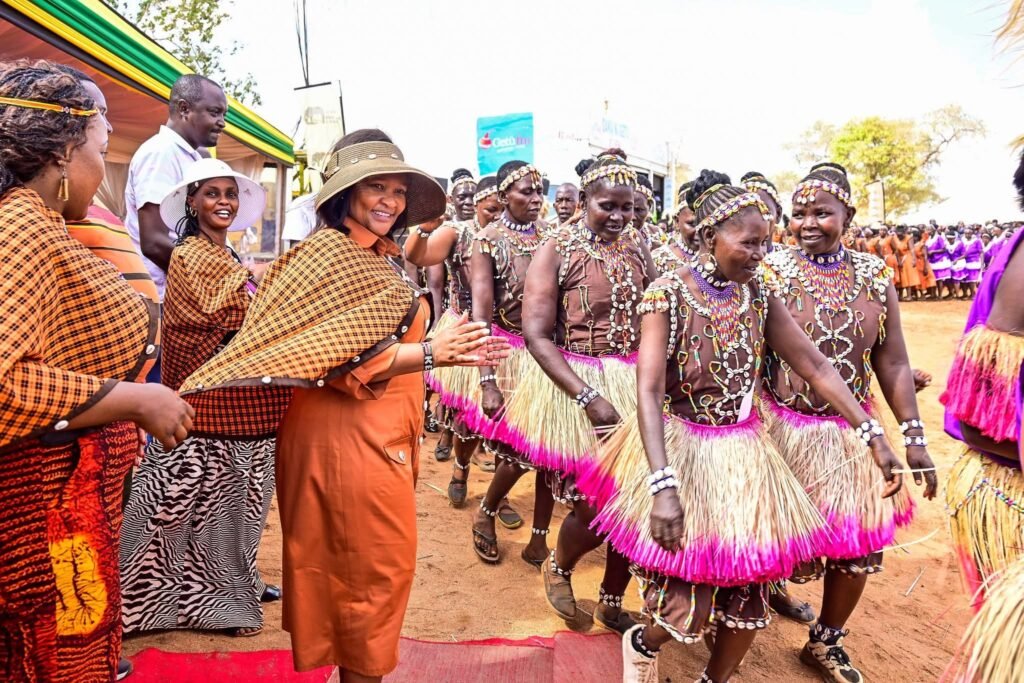
The atmosphere was one of joyous defiance as communities from Tharaka, Chuka, Mwimbi, and beyond came together at the eastern gateway of the majestic Meru National Park. Dancers in vibrant traditional attire swayed to the rhythmic beats, their movements a living testament to a heritage that is as rich and untamed as the land itself.
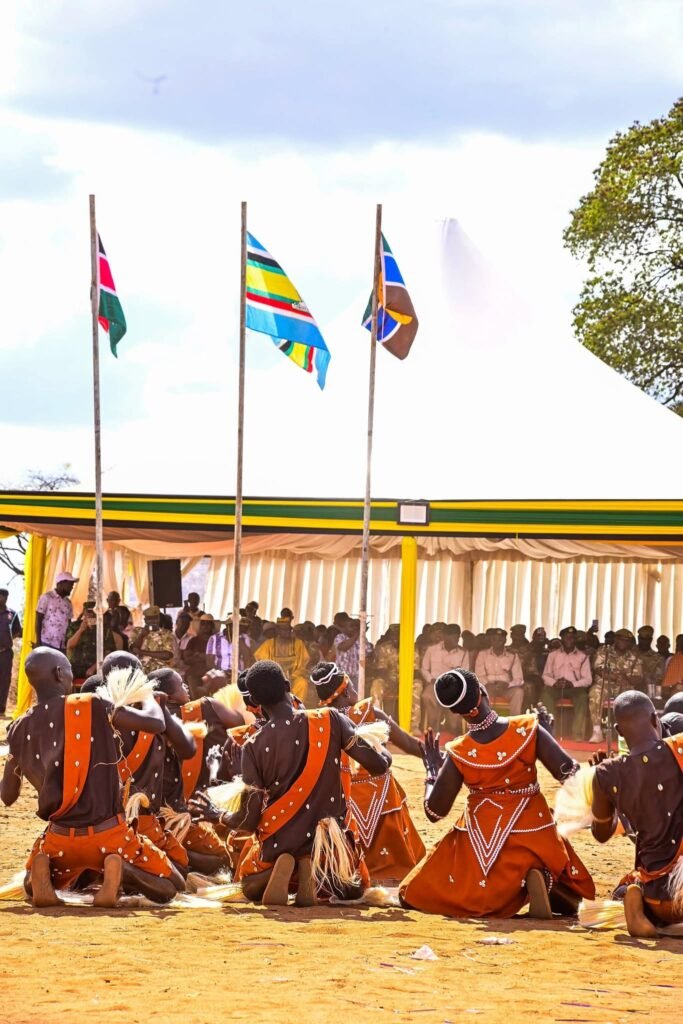
CS Miano, a beacon of change in her new role, lauded the festival for its dual purpose: celebrating culture and championing conservation. She declared that the event, now a cornerstone of Kenya’s cultural calendar, is a potent tool for economic empowerment, attracting tourists and boosting local livelihoods through handicrafts, agrotourism, and homestays.Her words resonated deeply with the crowd, who have long seen the festival as more than just an event, but a symbol of their resilience.
“Embracing Culture as a Tool for Wildlife Conservation & Socio-Economic Development” was this year’s theme, a fitting motto for a day that saw the delicate balance between man and beast brought into sharp focus.As the sun set over the picturesque landscape, casting a golden hue over the festival grounds, CS Miano’s message was clear: conservation and community can, and will, thrive together.

The Sh37 million payout is more than just a financial transaction; it’s a promise to a community that they are not forgotten, and a powerful symbol of a new era for Kenya’s wild east.
The government has moved to ease the suffering of families affected by human–wildlife conflict, launching a compensation programme aimed at clearing thousands of long-pending claims. For years, communities living near game reserves and migratory corridors have borne the brunt of attacks from elephants, lions and crocodiles, with many left nursing injuries, burying loved ones, or counting losses in destroyed crops and livestock.
President William Ruto said the new initiative was about justice long delayed. “For too long, Kenyans who have paid the highest price for living alongside our wildlife have been ignored. This programme will ensure they are compensated fairly and promptly,” he said at a recent event.
Among those already compensated are families in Meru, Laikipia, Taita Taveta and Narok, with payments ranging from medical expenses to death claims. In total, the State has cleared more than 4,000 cases in the last year.
Deputy President Kithure Kindiki said the government was working through a significant backlog. “We inherited files gathering dust for more than a decade. We are determined to clear all pending cases and to make the process transparent so that future victims are not subjected to the same delays,” he assured.


