
President William Ruto’s determination to attend to the promises he made to Kenyans during elections is the reason why he wants the Judiciary to examine the place of manifestos in the country’s progress.

Dogged by unending court orders blocking some of his key projects, programs and plans that are in his manifesto, the president has been at pain to see his ambitions slowed down by the rule of law.
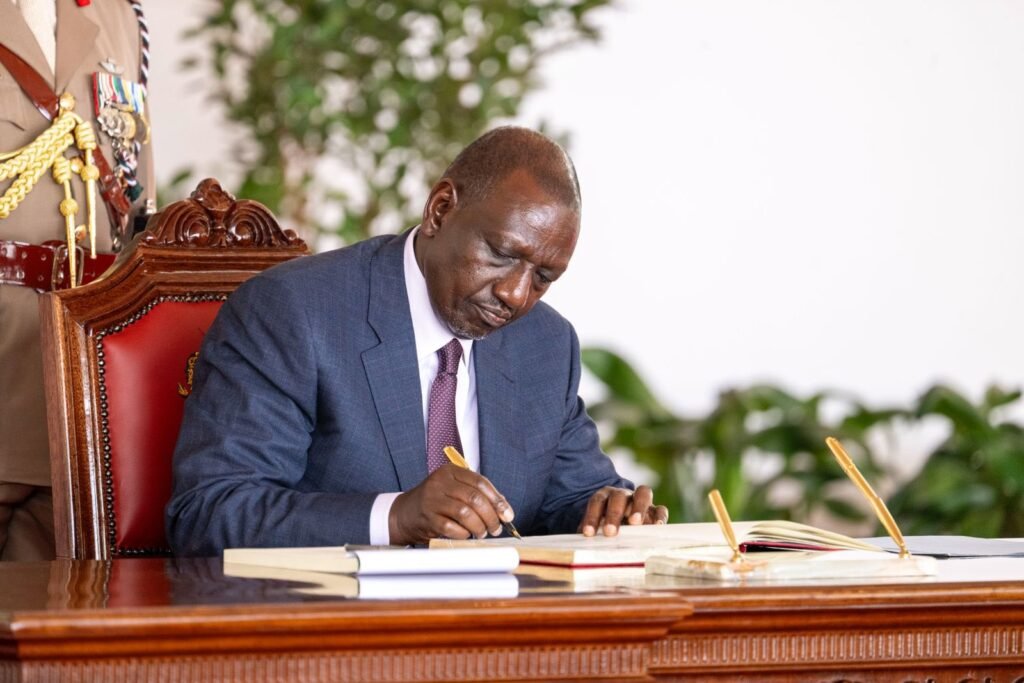
Speaking on Wednesday, January 28, 2026, at State House, Nairobi, he scoffed at the judiciary over rulings that have halted or overturned key government policies, arguing that the decisions undermine the will of voters expressed in the 2022 General Election.
The Head of State has cast the decision as an effort to preserve programmes that mirror the electorate’s priorities.
During the swearing-in ceremony of newly appointed Court of Appeal judges, Ruto warned that some rulings risk slowing down his administration’s development agenda.
“I have been candid about this reality and, on several occasions, questioned judicial decisions that appear to hinder critical public policy. Some rulings seem to cross into the realms of judicial overreach, or even, as some say, tyranny,” Ruto said.
Several key projects under President Ruto’s administration have been blocked or suspended by the courts, focusing heavily on his affordable housing agenda, privatization efforts, and administrative appointments.
In the Affordable Housing Projects front, the High Court previously blocked major projects, including the Ksh 25 billion Lang’ata project and the Bungoma housing project, due to lack of public participation, environmental concerns, and disputes over land usage. The initial housing levy was also declared illegal.
In the privatization deals, the court ordered for a halt of planned privatization of 11 state-owned corporations, including the Kenyatta International Convention Center (KICC) and key port facilities, citing a lack of public participation.
The court has previously acted on the president’s administrative actions as well. The court had blocked the construction of a Ksh 1.2 billion church at State House, stopped the appointment of Chief Administrative Secretaries (CAS), and invalidated the appointment of 21 advisors.
Other Suspensions include the suspension of the proposed Social Health Insurance Fund and a task force to audit public debt were also previously stalled by court orders.
These rulings highlight a recurring, significant conflict between the executive branch and the judiciary regarding the legal process of implementing government policy.


