
Kenya’s Opposition remains united against President William Ruto’s government but beneath the common course are internal wrangles over leadership, strategy, and identity. And while they remain firm on the cost of living, taxation and governance concerns, they are deeply fragmented on what they stand for, who their leader should be and their plan to confront the State.

This lack of cohesion has not just weakened the Opposition’s ability to challenge Ruto but also made it nearly difficult to inspire the young generation (Gen Z), many who remain skeptical of traditional political formations dominated by leaders aged 50-70s.
At the heart of the confusion is the absence of clear ideological anchor- the Opposition politics have largely been defined by slogans such as “wantam” rather than coherent alternative vision for governance and economic reforms expected from a typical structured political movement.
A fortnight ago, former Deputy President Rigathi Gachagua publicly claimed he had an agreement with Wiper leader Kalonzo Musyoka that Wiper would cede major Nairobi elective seats to Gachagua’s Democracy for Citizens Party (DCP), which Kalonzo dismissed as government propaganda aimed at dividing the United Opposition.
“Stop this propaganda that Wiper has left all the seats in Nairobi for DCP. They have to try everything to create tensions between us,” Kalonzo said following an outburst over Gachagua’s remarks.
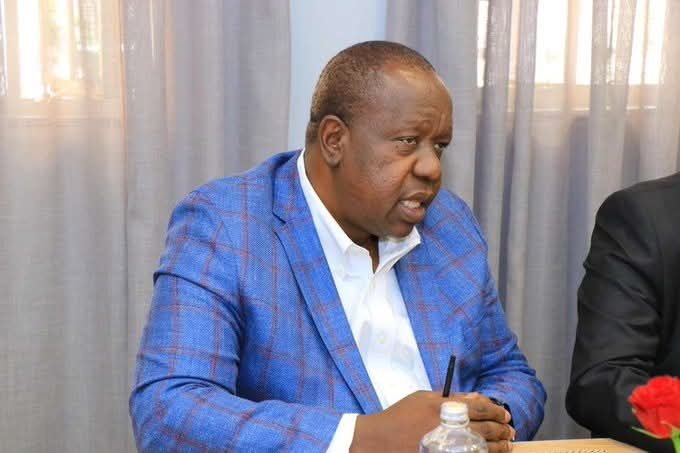
The frictions also played out in early October when Gachagua differed with Jubilee deputy Party leader Fred Matiang’i on selection strategy for the United Opposition’s Presidential flagbearer with the DCP leader stressing that “Presidents are made in the field not boardrooms”.
Matiang’i would later after hundreds of youths in Nakuru County, announce a nationwide meet the people tour across the villages in Kenya.
Jubilee Party Secretary General Jeremiah Kioni has repeatedly insisted that the United Opposition must learn from mistakes made by Azimio coalition in the run up to 2022 general elections, if they are to form the next government.
“Coming together is not enough without clear structures, strategy and grassroot organisation,” Kioni is quoted saying in the past.
The cracks are so serious that former President Uhuru Kenyatta last month, at a Jubilee party gathering in Murang’a County, publicly cautioned his party officials including Kioni against disparaging remarks about Gachagua, stressing political tolerance and respect amid disagreements.
“Let us stop the insults. Even if you don’t want to hear me or don’t agree with me, there is no need to insult me- simply listen and form your own opinions. Insults will not take us anywhere,” he said.
Political analyst Daniel Migai says the Opposition must quickly work on its messaging, saying poor coordination was making the outfit look internally fractured.
“If construed reckless and self-seeking by Kenyans, Gachagua’s statements could work against the Opposition’s aim of ejecting President Ruto from office,” he cautioned.
Gachagua’s remarks that leadership should be negotiated on the basis of what each community brings to the table has reinforced perceptions that he views power through an ethnic lens, not ideology or policy, has made him struggle to shed off the ‘tribalist’ tag.
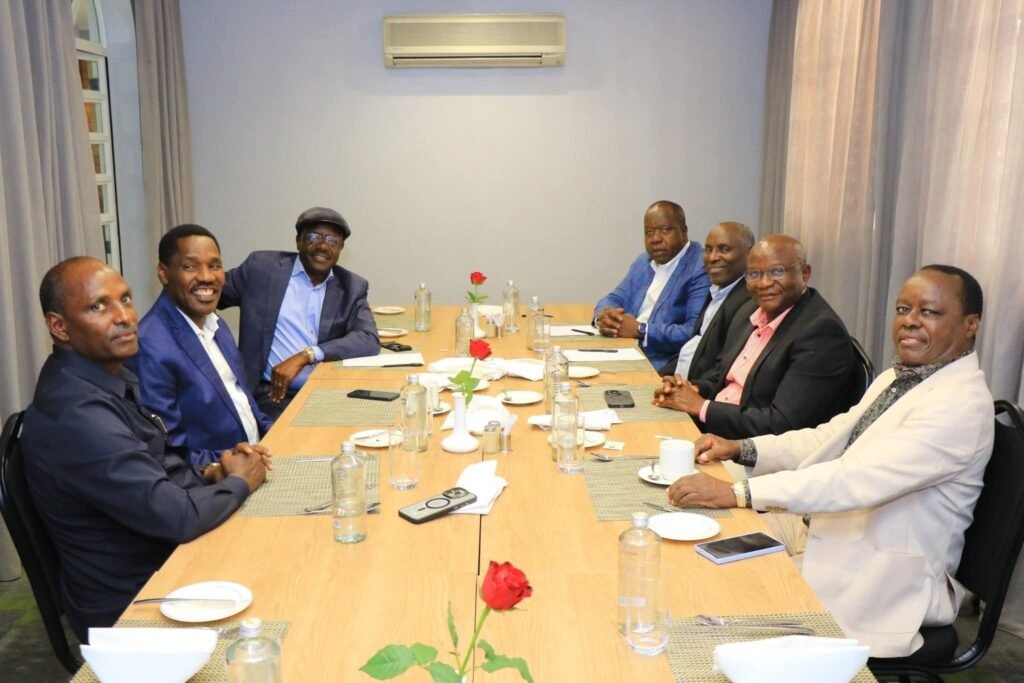
Currently, the Opposition is seemingly divided in two factions, one seemingly led by Gachagua and Kalonzo and another by Matiang’i which People’s Liberation Party leader Martha Karua seems comfortable in.
The first group that has announced that the co-principals will each galvanise their regional voting blocs before coming together and agreeing on and announcing their joint candidate in a year’s time also has Wamalwa, former CSs Justin Muturi and Mithika Linturi.
Matiang’i camp that has been repeatedly been accused on engaging in boardroom meetings has former Meru Governor Peter Munya, ex-Treasury CS Ukur Yattani and former Embu Senator Lenny Kivuti.
The former Interior CS Matiang’i is seen as a potential presidential candidate for the opposition, mainly because some see him as a no-nonsense guy who could fix Kenya’s institutions.
Still, some wonder if he can marshal millions of Kenyans on his side, particularly young folks, since he doesn’t seem to have much experience connecting with regular people or doing the usual political rallying.
Then there’s Kalonzo, a long-time player in the opposition, who’s trying to show he’s a reliable choice. Some say his moderate style might not be enough to get young voters excited towards voting for him.

Gachagua, following his impeachment a year ago, has repositioned himself as a fierce government critic with his rhetoric of betrayal and exclusion having largely struck a chord with sections of the electorate.
Still, some opposition leaders have suspcicions about him. They wonder if he really believes in what he’s doing or just wants to revenge at his former boss.
DAP-K party leader Eugene Wamalwa and Trans Nzoia Governor George Natembeya are big shots in Western Kenya- their power is mostly local and doesn’t spread across the country that much.
Maybe the biggest problem for the opposition is that they can’t seem to inspire young Kenyans. Many young people see them as just reactionary and quick to fuel public anger, but slow to explain how they will fix things like unemployment among the youth, education, and the economy.
Young people are getting more involved in politics through issue-based online activism, leaving opposition leaders struggling to remain relevant in a political world that demands honesty and clear alternative plans.
Perhaps aware of the need to incorporate figures who could help marshal the huge youth votes, Gachagua and Kalonzo have in the recent past offered an olive branch to the Orange Democratic Movement, that has entered into a broad-based agreement with Kenya Kwanza regime.

The leaders have in particular, reached out to ODM Secretary-General and Nairobi Senator Edwin Sifuna who has emerged as one of the most articulate Senators of Ruto’s administration, though his confrontational style has at times contrasted his party’s position.
The opposition is also watching Embakasi East MP Babu Owino, known for his mobilization ability, especially young people who are agitating for a younger leadership post 2027.
These two young MPs are part of an ODM group that occasionally goes against the party that they rode to power on. Siaya Governor James Orengo is also part of this, and he’s been critical of the ODM-UDA deal.
Orengo recently got a backlash from party leadership after saying Ruto needed ODM and not the other way round, rejecting calls that the two-decade-old party must align with the current regime.
He said the broad-based agreement had eroded ODM identity and betrayed the party’s legacy of struggle and autonomy.
Even with their differences, some critics think having many voices helps them be flexible, though others warn that if they don’t share a vision and lack strong leadership, they might not be able to strongly challenge Ruto.
As Ruto consolidates more power, the opposition is at a critical point. They need to choose whether to stay as a group that just complains or become a movement with solid principles, a clear plan, and appeal for all generations.
Until they sort out their issues, Kenya’s opposition might keep agreeing on what it opposes.


