
More than three years into office, President William Ruto’s administration says it has delivered up to 80 per cent of the United Democratic Alliance (UDA) manifesto, citing measurable progress in economic stabilisation, agriculture, housing, jobs, healthcare, education and digital government.
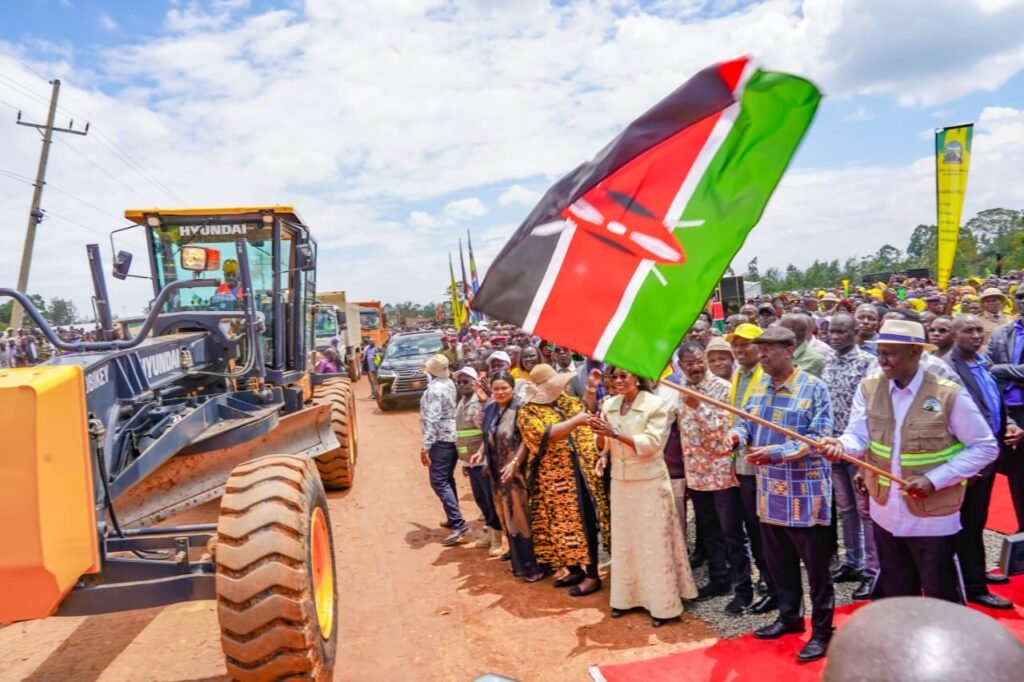
Addressing the UDA National Governing Council in January 2026, President Ruto said the administration had remained focused on implementation rather than rhetoric. “The people of Kenya entrusted us with a vision, and we have delivered page by page, chapter by chapter,” he said.
Economic Stabilisation and Fiscal Recovery
Kenya’s macroeconomic indicators show marked improvement since the UDA government took office in September 2022.
Inflation declined from a high of 9.6 per cent in September 2022 to about 3.5 per cent by late 2025, easing pressure on food prices, fuel and household spending. Over the same period, the Kenya shilling stabilised and appreciated from a low of about KSh162 to the US dollar to an average of KSh129–132, supported by improved foreign exchange inflows and tighter fiscal management.
Government revenue collection rose from KSh1.9 trillion in 2022 to approximately KSh2.7 trillion in 2025, representing a 42 per cent increase. Foreign exchange reserves reached a record $9.5 billion, equivalent to about 4.8 months of import cover.
Public debt stood at about KSh10.93 trillion by late 2025, with the debt-to-GDP ratio declining partly due to the appreciation of the shilling.
President Ruto has described the turnaround as the foundation for long-term growth. “We made difficult but necessary decisions to stabilise the economy, and today the indicators are speaking for themselves,” he said.
Agriculture and Food Security Transformation
Agriculture has emerged as one of the strongest pillars of the UDA scorecard.
Fertilizer prices were reduced from about KSh7,500 per 50-kilogram bag to KSh2,500, benefiting more than 6.45 million farmers nationwide. Since 2022, over 21 million bags of subsidised fertilizer have been distributed, saving farmers an estimated KSh105 billion in input costs.
Maize production increased from about 44 million 50-kilogram bags in 2022 to 67 million bags in 2024, a 38.9 per cent increase. The higher output contributed to a drop in the price of a 2kg packet of maize flour from highs of about KSh230 to around KSh100 in many markets.
In the dairy sector, milk production rose from 4.6 billion litres to 5.2 billion litres after the price of sexed semen was reduced from KSh8,000 to KSh1,400, improving productivity for smallholder farmers.
“The fertilizer subsidy enabled the country to feed itself,” Deputy President Kithure Kindiki said in January 2026, adding that food security remains central to the bottom-up agenda.
Jobs, Affordable Housing and MSMEs
The Affordable Housing Programme has become a major engine of job creation and investment.
By late 2025, between 230,000 and 320,000 housing units were completed or under construction across the country. The programme has created more than 320,000 direct and indirect jobs in construction, manufacturing, transport and related supply chains.
The housing sector received a budget allocation of KSh133.6 billion in the latest financial cycle, underscoring its role in employment creation.
On MSME financing, the Hustler Fund disbursed over KSh80 billion to more than 26 million Kenyans by late 2025. The fund also mobilised over KSh5 billion in mandatory and voluntary savings, expanding access to credit for informal traders and small businesses.
“Hustler Fund has become one of the most transformative instruments of empowerment in our nation’s history,” President Ruto said during its anniversary in December 2025.
Education and Healthcare Expansion
In education, the government recruited 76,000 teachers, the largest single hiring drive since independence, significantly reducing teacher shortages in public schools. The education sector received over KSh700 billion in the 2025 budget.
In healthcare, the Social Health Authority (SHA) replaced NHIF and expanded registration from about 8 million members to over 25 million Kenyans, broadening access to health insurance coverage nationwide.
“No Kenyan should be denied healthcare because of lack of money,” President Ruto said while outlining the reforms.
Digital Government and Infrastructure Delivery
Digital transformation has accelerated under the UDA administration. Government services available on the e-Citizen platform increased from about 350 in 2022 to 20,985 by 2025, improving efficiency, transparency and service access.

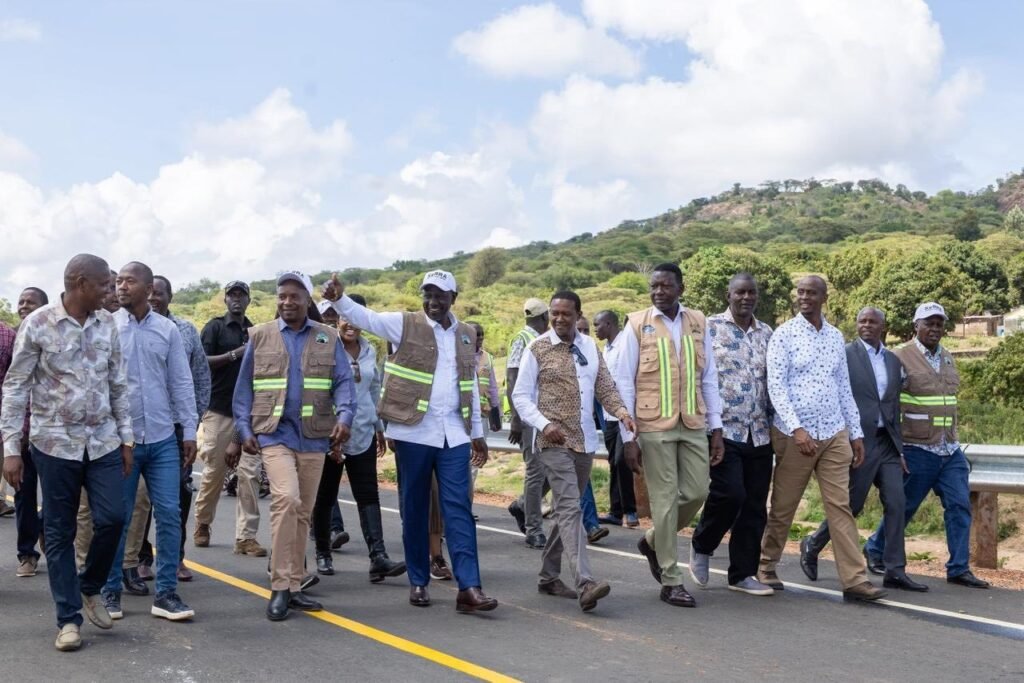
In infrastructure, about 6,000 kilometres of previously stalled road projects were revived, with KSh175 billion mobilised to complete them. Preparations are also underway for the extension of the Standard Gauge Railway from Naivasha to Kisumu, with construction scheduled to begin in January 2026.
Prime Cabinet Secretary Musalia Mudavadi has said the reforms are positioning Kenya for global competitiveness. “A country’s growth and revenue base will grow based on the size and quality of its private sector,” he said, calling infrastructure and fiscal discipline key enablers.
Bottom Line
President Ruto’s UDA scorecard reflects measurable progress backed by data across economic stabilisation, agriculture, housing, job creation, education, healthcare and digital government. With over KSh80 billion disbursed through MSME financing, KSh105 billion saved by farmers on fertilizer, hundreds of thousands of jobs created and millions more Kenyans accessing health insurance and digital services, the administration says the bottom-up agenda is translating policy into impact.

