



For years, China’s economic footprint in Kenya was most visible in big infrastructure projects — railways, roads and other government-backed developments. But a different kind of Chinese engagement is now taking shape.
Increasingly, Chinese companies are looking beyond construction contracts and exports. They are exploring Kenya as a place to establish factories, technology infrastructure, processing plants and regional headquarters that can serve markets far beyond the country’s borders.
The interest from telecommunications infrastructure company Guodong Network Communication Group is one example of this shift. But the bigger story is not about one company. It is about why Kenya is becoming an attractive launchpad for businesses seeking a foothold in Africa.
From building infrastructure to building businesses
The earlier phase of Kenya-China economic relations was largely defined by major infrastructure financed or supported through Chinese institutions and contractors.
The emerging model is different.
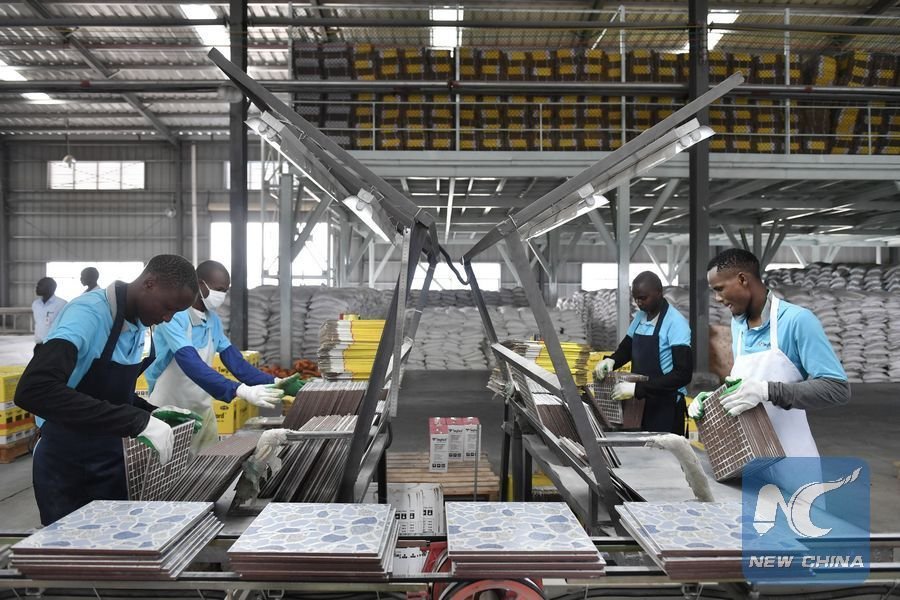
Private companies are increasingly looking for commercial opportunities in manufacturing, agriculture, technology, logistics, hospitality and digital infrastructure. Instead of simply constructing a project and leaving, some investors are exploring opportunities to operate businesses within Kenya and use the country as a base for reaching other African markets.
This shift is reflected in investment agreements signed during President William Ruto’s visit to China in 2025, which covered sectors ranging from steel and textiles to agriculture and hospitality.
The projects point to a changing question for Chinese businesses: rather than asking how to export more products into Africa, some are beginning to consider whether it makes more sense to manufacture, process or operate from within the continent.
Kenya’s biggest selling point is not just its population
Kenya’s domestic market matters, but its larger attraction lies beyond its borders.
With access to the Indian Ocean through the Port of Mombasa and commercial links across East and Central Africa, Kenya offers investors a strategic location from which they can target multiple markets.
A company establishing operations in Kenya is not necessarily looking only at Kenyan consumers. It can potentially use the country as a gateway to markets across the East African Community and beyond.
That regional advantage becomes even more important as African countries push for greater trade integration through frameworks such as the African Continental Free Trade Area.
For manufacturers and technology companies, Kenya offers the possibility of being physically closer to African customers instead of serving every market from thousands of kilometres away.
Industrial zones are changing the investment equation
Kenya is also betting heavily on Special Economic Zones and industrial parks to attract foreign investors.
These zones are designed to bring infrastructure, production facilities and business incentives together in one location. For companies considering manufacturing or processing operations, that can reduce some of the challenges involved in starting from scratch.
Projects such as the Dongo Kundu and Naivasha Special Economic Zones are part of a wider effort to position Kenya as an industrial base for sectors including manufacturing, agro-processing, textiles, pharmaceuticals and technology.
For Chinese companies that already operate within large industrial clusters at home, the development of similar ecosystems in Kenya could make expansion into Africa easier.
The strategy is simple: create an environment where companies can set up, produce and distribute from one regional location.
The digital economy is opening a new frontier
The interest in Kenya is not limited to factories and industrial parks.
Digital infrastructure is becoming another major investment opportunity.
Kenya has one of Africa’s more developed digital economies, but the expansion of fibre networks, telecommunications infrastructure, data centres and cloud services still requires significant investment.
That is where companies such as Guodong could find an opening.
The company has explored opportunities linked to Kenya’s telecommunications infrastructure and digital economy, at a time when the government is pursuing wider broadband connectivity and digital transformation.
For infrastructure companies, this creates a business opportunity that can grow over many years.
Instead of financing a single government project, investors can potentially build infrastructure that generates long-term revenue through leasing, data services and other commercial operations.
Kenya offers a market — and a platform
Chinese businesses are also responding to growing demand for products and services across Kenya and the wider region.
From construction materials and electronics to telecommunications and agricultural processing, the region presents opportunities for companies willing to establish a local presence.
Producing closer to the market can also offer advantages.
Local operations can potentially reduce transport costs, shorten supply chains and allow companies to respond more quickly to customers. They can also create opportunities for partnerships with Kenyan businesses and suppliers.
For companies with ambitions beyond Kenya, the country can therefore serve two purposes at once: a consumer market in its own right and a platform for regional expansion.
A changing model of Chinese investment
Perhaps the most significant development is the changing nature of Chinese capital entering Africa.
For much of the past two decades, China’s role in Kenya was closely associated with large infrastructure projects supported through government-to-government financing arrangements.
Today, commercial investment is becoming a more visible part of the relationship.
Private companies are increasingly looking at projects where they can invest capital, operate businesses and generate returns directly from the market.
This approach spreads investment across different sectors instead of concentrating it mainly in major public infrastructure.
Factories, telecommunications networks, agricultural processing plants and technology businesses may not attract the same attention as a new railway. But collectively, they could have a significant impact on employment, production and Kenya’s position in the regional economy.
The bigger question for Kenya
The growing interest from Chinese companies presents an opportunity, but it also raises important questions.
Kenya will need to ensure that foreign investment translates into meaningful local benefits, including jobs, skills transfer, local supply chains and increased production.
The real measure of success will not simply be the value of investment announcements.
It will be whether these companies build lasting businesses, create employment and help strengthen Kenya’s position as an industrial and technology hub.
For now, however, the direction is becoming clearer.
Kenya is increasingly positioning itself not just as a destination for foreign investment, but as a base from which global companies can reach the rest of Africa.
And for Chinese companies looking for their next phase of growth on the continent, that may be the country’s biggest advantage.


