

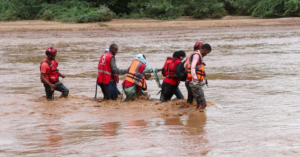

Farmers in Budalangi are cautiously returning to fields that were once considered too risky to cultivate as newly constructed dykes along the River Nzoia offer protection against flooding.
The development comes as authorities warn of the possible effects of the looming El Niño rains, prompting communities in flood-prone areas to prepare for increased water levels.
In parts of Budalangi, farmers have already begun preparing their land for planting, a significant change from previous years when the onset of heavy rains was associated with widespread flooding and displacement.
The improved situation has been attributed partly to the construction and rehabilitation of secondary dykes along the River Nzoia, which have helped protect farmland that previously remained submerged during periods of heavy flooding.
Farmers return to reclaimed fields
For farmer Kevin Okumu, the changing landscape has brought renewed hope.
Fields that were submerged by floodwaters three years ago are now green and ready for cultivation. Okumu has returned to farming alongside his sons, planting maize and beans on land that residents once feared had been permanently lost.
“Vile walisema El Niño inakuja na hapa ni sandy soil meaning maji haikai kwa muda sasa nikaweka mahindi na mharagwe,” Okumu said.
For decades, communities living along the lower reaches of the River Nzoia have faced repeated flooding as the river overflows and water from Lake Victoria moves into nearby settlements.
The floods have destroyed homes, farms and livelihoods, leaving some residents displaced for years.
The situation began to change in 2025 when the government launched construction of secondary dykes designed to strengthen flood protection in the region.
The completed sections have enabled some residents to reclaim agricultural land and resume farming.
Godfrey Wanjala, a resident of Maumau, said Budalangi had historically been an important food-producing area when flooding was controlled.
“Mwaka 2008 kulikuwa na dry season hakukua na mafuriko… watu walikuwa wanakuja hapa kubeba chakula kumaanisha hapa ukicontrol tunaweza kuwa na chakula nyingi inaweza lisha ata taifa,” Wanjala said.
Some families remain vulnerable
Despite the progress, not all residents have benefited from the flood-control measures.
For 81-year-old Josephine Ouma of Bukala village, predictions of more rain bring back painful memories of the 2020 floods.
That year, water from Lake Victoria’s backflow swept into the village, destroying homes and large portions of farmland.
Ouma lost her home and land and remains among residents who fear another round of flooding could undo the little stability they have regained.
“Walisema ati El Niño… hii mvua hii imenyesha siku moja hii nyumba inafanya namna hii kama El Niño imefika sisi tutatenda wapi juu maji inatoka mpaka Kitale inakuja hapa inatubeba,” she said.
Ouma is among 213 families still living in makeshift settlements on land provided by well-wishers after previous floods displaced them.
For these households, returning home remains difficult because many of their original homes and farms are still exposed to flooding.
Residents call for more dykes
Residents say the protection provided by the completed dykes shows that more can be done to safeguard vulnerable communities.
They are calling for the construction of additional dykes to protect homes and farmland, as well as the desilting and opening up of blocked streams and waterways.
Wanjala said some waterways in the Yala Swamp area had remained blocked for decades, making it difficult for floodwater to drain away.
“Hizo mito ziko Yala Swamp zinafaa zifunguliwe maana kuna nyingi zimekaa karibu miaka 40 hazijawai funguliwa na ndio maana maji ikikuja na haipati njia inafika kwa maboma ya watu,” he said.
Residents argue that clearing the waterways would improve drainage and reduce the amount of water reaching homes and farms during heavy rains.
El Niño brings mixed emotions
The looming El Niño rains have therefore created mixed reactions in Budalangi.
For farmers such as Okumu, the rains offer an opportunity to plant and revive agricultural production on land that has been reclaimed from flooding.
For displaced families such as Ouma’s, however, the prospect of increased rainfall brings memories of destroyed homes, lost farmland and years of displacement.
River Nzoia continues to flow through Budalangi towards Lake Victoria, with the completed sections of the dyke system providing some protection to communities along its banks.
As farmers return to the fields, residents are hoping that additional flood-control measures will be implemented before the rains intensify.
For Budalangi, the challenge remains finding a balance between the water that sustains agriculture and the floods that can destroy homes and livelihoods.


