
President William Ruto’s four-day development tour of Nyanza has placed the region’s evolving political alliances under renewed scrutiny, after large crowds turned out during his engagements in Kisumu.
Ruto began the tour in Kisumu on Sunday, September 13, visiting development projects and attending a church service at the Voice of Salvation and Healing Church.
He was accompanied by senior political figures, including Treasury Cabinet Secretary John Mbadi, Energy Cabinet Secretary Opiyo Wandayi, Kisumu Governor Anyang’ Nyong’o and Homa Bay Governor Gladys Wanga.
The tour is taking place against the backdrop of preparations for the 2027 General Election and continued cooperation between the Kenya Kwanza administration and sections of the Orange Democratic Movement.
Large crowds attract political attention
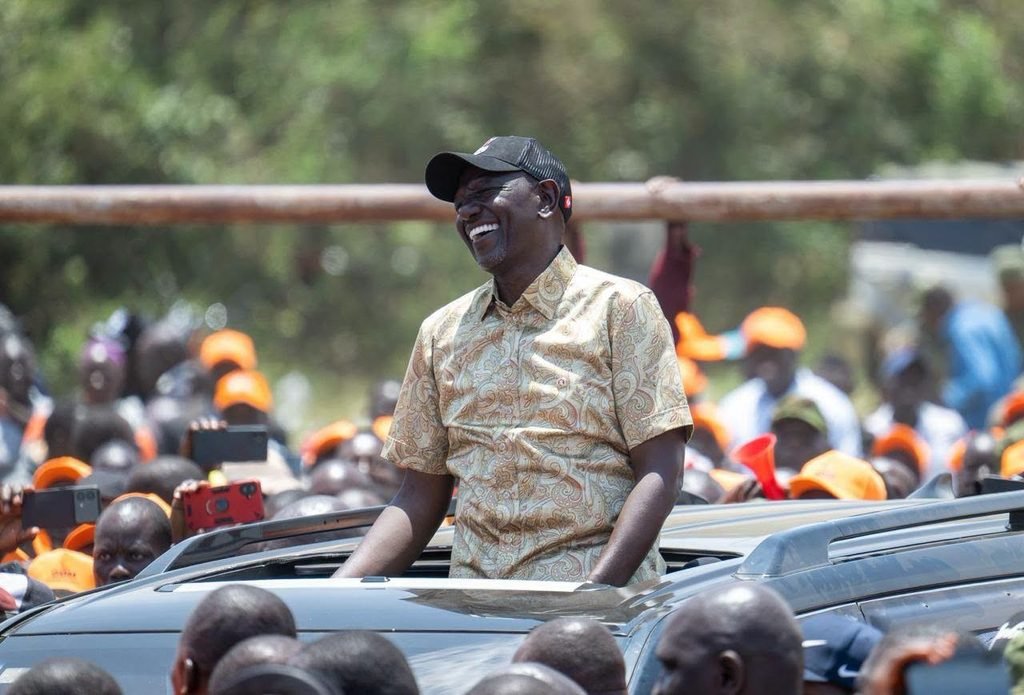
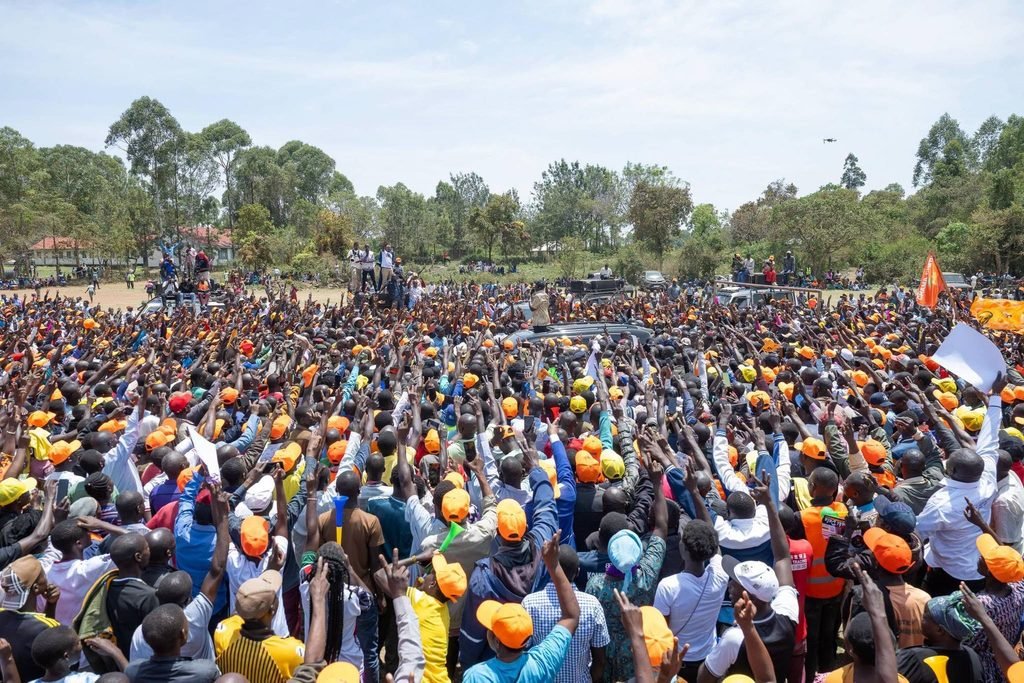
Images from Kisumu showed residents lining roads and attending Ruto’s public engagements, prompting debate over what the turnout could mean politically.
However, attendance at a presidential event does not by itself establish a change in voting intentions.
Presidential visits attract different groups, including residents interested in development projects, beneficiaries, local leaders, public officials, religious communities and people simply seeking to see the Head of State.
The Kisumu programme also included several major infrastructure projects, giving residents reasons to attend events beyond political mobilisation.
Ruto inspected or launched projects involving roads, water and sanitation, airport infrastructure and policing during the Kisumu leg of the tour.
Development projects at the centre
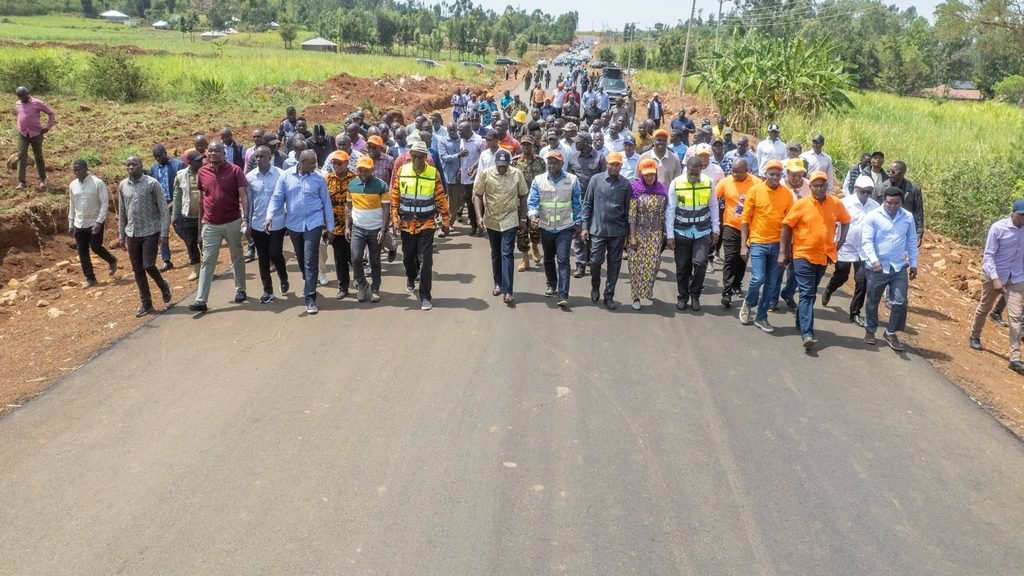
Among the projects highlighted during the tour was the Rabuor-Chiga road in Nyando Constituency.
The President also visited the Mamboleo-Miwani-Chemelil-Muhoroni-Kipsitet highway and commissioned the Lake Victoria Water and Sanitation Project.
The programme further included the Kisumu West Sub-County Police Headquarters and the newly constructed control tower at Kisumu International Airport. Citizen Digital reported that the airport tower project was valued at about Sh314 million, while the Lake Victoria water project was jointly funded by the Kenyan government and the European Union.
The government has framed the wider Nyanza tour around inspection, commissioning and launch of infrastructure projects across Kisumu, Siaya, Migori and Homa Bay.
ODM figures in Ruto’s delegation
The presence of senior ODM-linked figures has added another layer to the tour.
Mbadi and Wandayi now serve in Ruto’s Cabinet, while Wanga, who is also ODM national chairperson, participated in the Kisumu engagements.
The involvement of these leaders reflects the more complex relationship between ODM politicians and the national government, compared with the sharper political divisions that characterised previous election cycles.
The arrangement does not necessarily mean that all ODM supporters have changed their political preferences. Local and national political choices can also differ, particularly where development projects and constituency interests are involved.
Linda Mwananchi holds its own mobilisation
Ruto’s Nyanza tour also coincided with a major mobilisation by the Linda Mwananchi movement in Nairobi.
On Sunday, Nairobi Senator Edwin Sifuna led the movement through several parts of the capital before addressing supporters at Jacaranda Grounds. The procession passed through areas including Marikiti, Gikomba and Burma markets before reaching the rally venue.
The event brought together several opposition figures, including Siaya Governor James Orengo and Embakasi East MP Babu Owino.
The simultaneous political activity in Nairobi and Nyanza illustrated the competing efforts by the government and opposition-aligned politicians to build public support ahead of 2027.
What the Kisumu reception can and cannot show
The Kisumu crowds provide evidence of significant public participation in Ruto’s engagements, but they cannot alone determine whether the region’s electorate has changed its political preferences.
The more important indicators will emerge from sustained political activity, local elections, opinion polling, party structures and the performance of government projects over time.
Ruto’s remaining Nyanza engagements in Siaya, Migori and Homa Bay will therefore attract further attention.
The tour is scheduled to include inspections and commissioning of projects in the three counties, including roads, markets, water-related infrastructure and other government developments.
For the government, the visits provide an opportunity to demonstrate its development agenda in a region that has historically been a strong base for opposition politics.
For opposition leaders, the events provide an opportunity to assess whether their own mobilisation efforts can maintain support amid changing political alliances.
Ultimately, the significance of the Kisumu crowds will depend not simply on their size, but on whether the political engagement witnessed during the tour translates into sustained support beyond presidential visits and development launches.


