
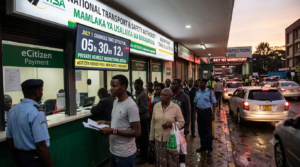

When you board a matatu or bus, you can see its seats, windows and bodywork. What you cannot easily judge is whether that body was built to the required technical standards, or whether the person checking it was independent of the businesses involved.
That question sits behind the National Transport and Safety Authority (Amendment) Bill, 2026, sponsored by Meru Senator Kathuri Murungi. It proposes a framework for regulating specialists who assess public-service vehicle bodies.
The Senate’s Bills Tracker, updated on October 9, records that the proposal received its First Reading on September 15 and was referred to the Roads, Transportation and Housing Committee. It is due for Second Reading on October 15, 2026, according to that tracker. It remains a proposed law.
What exactly would these specialists check?
The Bill calls them conformity assessors: people with specialised skills who use NTSA’s criteria to verify whether standards or technical specifications have been applied in the design, manufacture and installation of a PSV body.

This concerns the construction of the body carrying passengers. It should not be confused with a guarantee covering every aspect of a journey, from the driver’s conduct to the vehicle’s maintenance.
Why independence matters
The Bill’s explanatory memorandum says assessments have been conducted through the Kenya Association of Bus Manufacturers, whose membership includes PSV owners. The sponsor identifies this arrangement as creating a conflict of interest.
The proposed remedy is separation. Before licensing an assessor, NTSA would have to establish that the assessor does not undertake specified activities involving the items inspected, including design, manufacture, supply, installation, purchase, ownership or maintenance. The assessor must also not be linked to a person undertaking those activities.
The principle is straightforward: a commercial interest in the item being inspected should not compromise the assessment.
What NTSA would have to do
The Bill would expressly empower NTSA to register and license assessors, with licences valid for three years.
It would also require the authority to prescribe assessment criteria, designate assessors every three years and conduct periodic audits. Assessors would submit technical reports to NTSA after completing assessments.
The three-year period concerns assessors’ licences and designation. It does not establish a three-year inspection interval for every matatu.
Would passengers be able to check a matatu on their phones?
That possibility has entered the discussion, but it is important to distinguish a suggested service from a requirement in the Bill.
Recent reporting describes a stakeholder proposal allowing passengers to enter or scan a vehicle’s registration number through an app, website, USSD or SMS service to check its assessment status. The published Bill does not expressly require NTSA to create such a platform.
Passengers should therefore not assume that a new checking service is already available because of this proposal.
What would make the reform useful?
Licensing creates an accountability framework. Its practical value would depend on how thoroughly assessments are conducted, how effectively NTSA audits assessors and what happens when deficiencies are identified.
For commuters, the important question is whether the certification process can be trusted. For Parliament, the task is to ensure that independence exists in practice as well as on paper.
As the Bill approaches its scheduled Second Reading, that is the issue worth watching: who certifies the body carrying passengers, and how are they held accountable?


