
The Kenya Red Cross has initiated efforts to cushion more than 2 million Kenyans facing acute food insecurity due to the ongoing drought.
Reports show majority of those affected are in the Arid and Semi-Arid counties of Marsabit, Samburu, Wajir, Garissa and Mandera where families can hardly afford a meal a day and water sources have dried up, forcing families to work longer distances in search of the commodity.
The humanitarian organisation has already rolled out food distribution in Marsabit, Garissa, Samburu, Tana River and Taita Taveta counties, benefiting 17, 778 households and 5000 more in Wajir, Mandera and Turkana through cash assistance program.
“Water shortages, rising malnutrition and long treks to remaining water sources are putting immense strain on families across the affected counties,” Kenya Red Cross shared on X account.
Milk production in the predominantly pastoralist communities has drastically reduced due to drying of water sources and depletion of pastures, affecting families’ nutrition status and exposing children to risk of acute malnutrition.
“We are responding with relief support, cash assistance and coordinating early action measures but more support is needed as the conditions could evolve”.
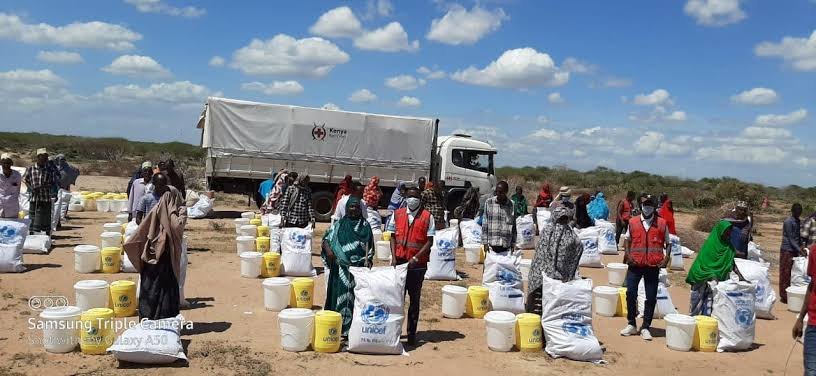
The food crisis is expected to worsen in the coming months following a recent forecast that shows the country will experience depressed and poorly distributed rainfall throughout December.
The Kenya Meteorological department predicts that most parts of the country will receive near-average to below-average rainfall with Northern Kenya expected to experience highly depressed rainfall.
The forecast points to a difficult period for food production coming against the backdrop of unusually dry conditions in November.
The depressed rains and the warmer-than-usual temperatures across the country, the weatherman warns, will weaken livestock productivity, threatening livelihoods for millions of Kenyans in Arid and Semi-Arid region.
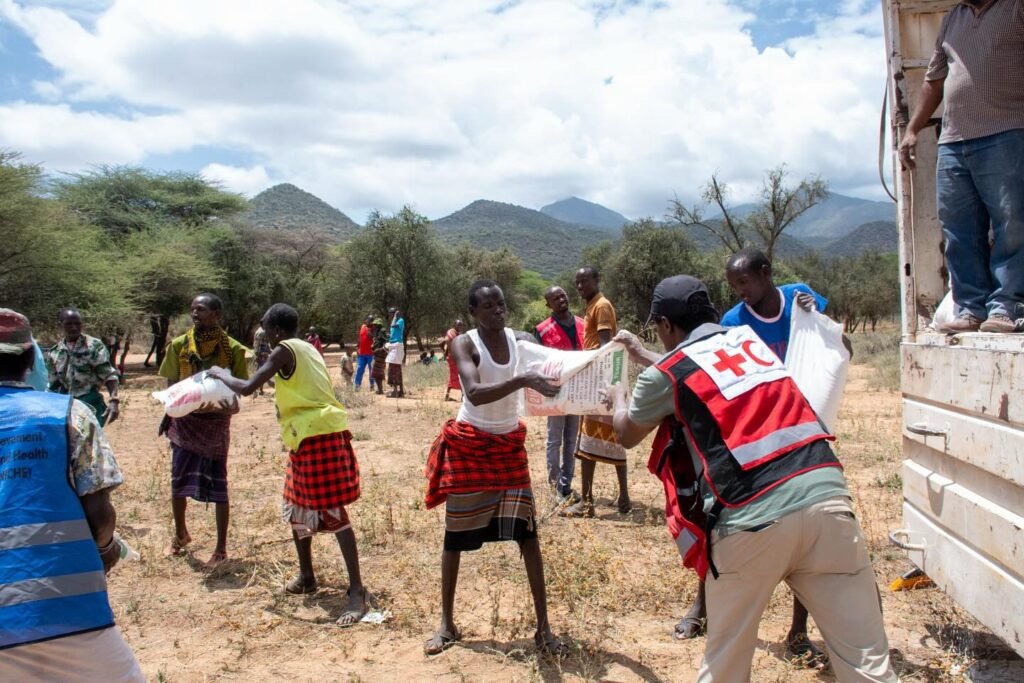
Northern Kenya will experience depressed rainfall, limiting pasture degeneration and water availability, thereby exposing local communities to resource-based conflicts.
“Pastoralist communities should store fodder and maintain the remaining watering points and adopt water saving measures as the prolonged drought persists,” KMD advised.
The forecast shows that the central, eastern, and coastal areas that depend on short rains for growing beans, maize, and veggies are going to get hit hard.Farmers in Kitui, Machakos, Makueni, and Taita Taveta counties in the Southeast are probably going to have bad harvests, which will make their already low food supplies even worse because November was dry.
Counties have been asked to have their warning systems up and running, mobilize relief supplies, and promote climate-smart agriculture.


