
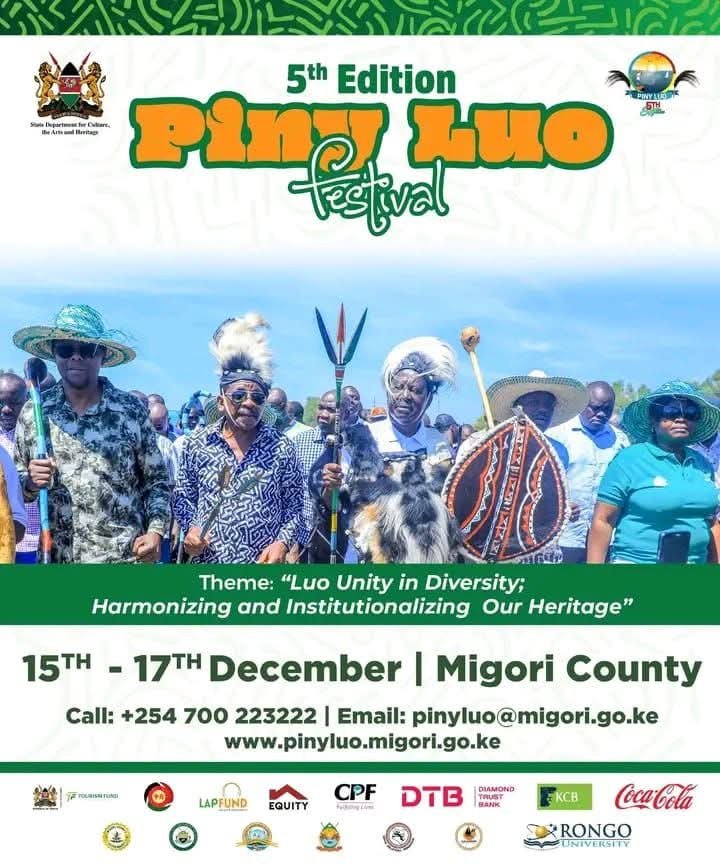
Piny Luo officially opened yesterday, marking the start of a cultural festival that has grown into one of Nyanza’s most consequential political gatherings.
The event, which draws thousands from across Luo sub-clans and the diaspora, has this week attracted national attention following the expected attendance of President William Ruto, underscoring how far Piny Luo has travelled from a cultural showcase to a strategic political arena.
Alongside Ruto’s presence, the enduring influence of former prime minister Raila Odinga continues to shape the festival’s meaning and direction in regional politics.
SYMBOLIC VALUE
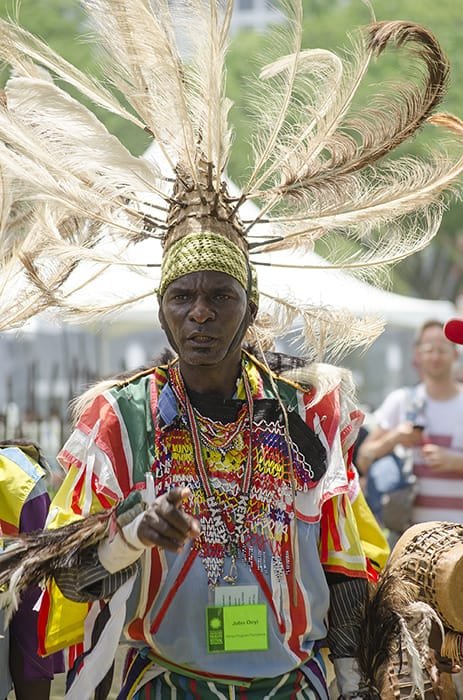
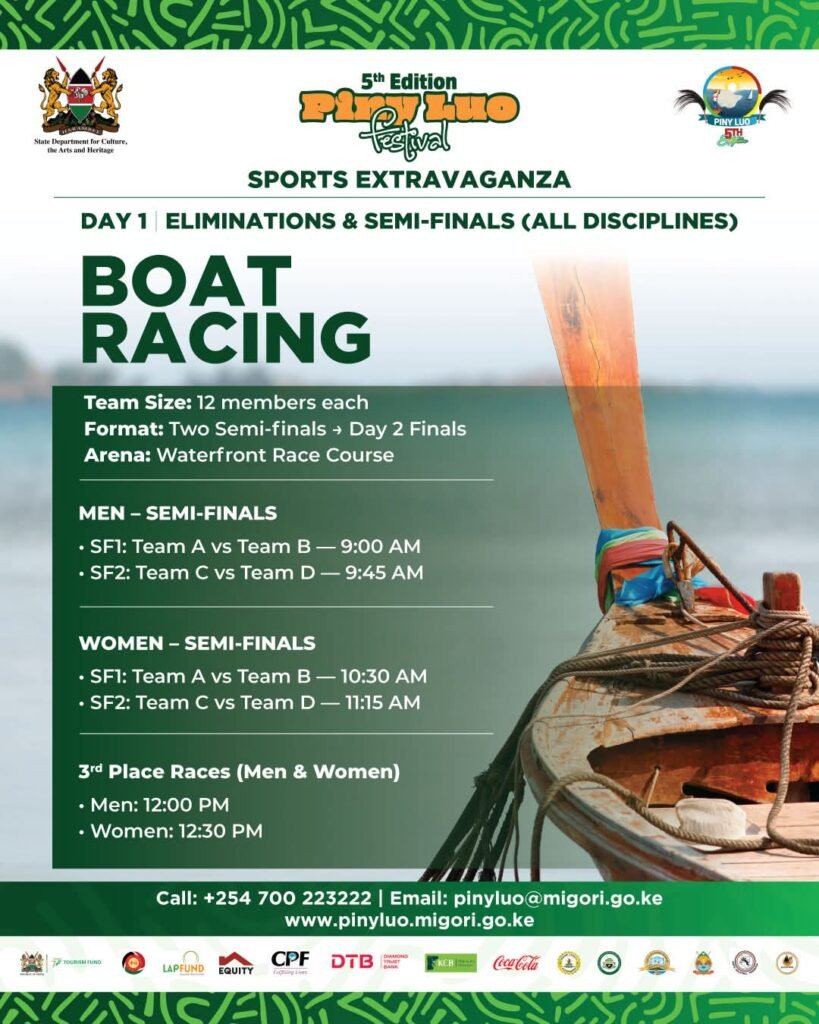
Literally translated as “the Land of the Luos,” Piny Luo brings together communities from Siaya, Kisumu, Homa Bay and Migori counties. It is structured as a multi-day programme combining traditional music and dance, exhibitions of artefacts and cuisine, academic and youth forums, sports, and interdenominational prayers.
The festival is typically held around the end-of-year period, with hosting rotating among counties. Venues have included Migwena Cultural Grounds in Bondo, Rongo University, Sony Green Stadium and heritage landmarks such as Thimlich Ohinga and Senye Beach — spaces chosen for their symbolic value and capacity to convene large, diverse audiences.
COMMUNAL CONSESUS
Beyond culture, Piny Luo now occupies a critical place in Nyanza’s political ecosystem. It offers a rare, socially legitimate forum where elders, clergy, youth leaders, professionals and politicians meet on equal footing.
In a region where political authority is closely tied to communal consensus, the festival serves as a barometer of public mood and a platform for leaders to demonstrate alignment with community priorities.
POLITICAL IMPRINT
Raila Odinga’s role has been central to this evolution. As the most influential political figure to emerge from Nyanza, his early patronage and continued association gave Piny Luo political gravitas. His speeches and symbolic presence have often framed the festival as a space for unity, resistance, negotiation and strategic thinking. Even when Odinga is not physically present, his ideas and political legacy permeate discussions, shaping expectations of leadership and regional cohesion.
At the same time, Piny Luo has become a site of active political mobilisation. Youth and women’s forums double as networking spaces; cultural gatherings provide cover for alliance-building and informal endorsements; and visiting national leaders use the platform to court goodwill and recalibrate their messaging. President Ruto’s attendance this week reflects the festival’s growing national relevance and its role as a gateway to Nyanza’s electorate.
IDENTITY AND POWER
Organised by a coalition of cultural custodians, county governments, local institutions and political patrons, Piny Luo now sits at the intersection of identity and power. It remains a cultural celebration at heart, but one that increasingly functions as Nyanza’s unofficial political parliament — a place where direction is tested, alliances are read, and the future is quietly negotiated.


