
The Nairobi County Government has endorsed continued implementation of the Nairobi River Regeneration Programme a sweeping environmental and urban renewal initiative aimed at transforming the city’s rivers from dumping grounds into vibrant community assets.
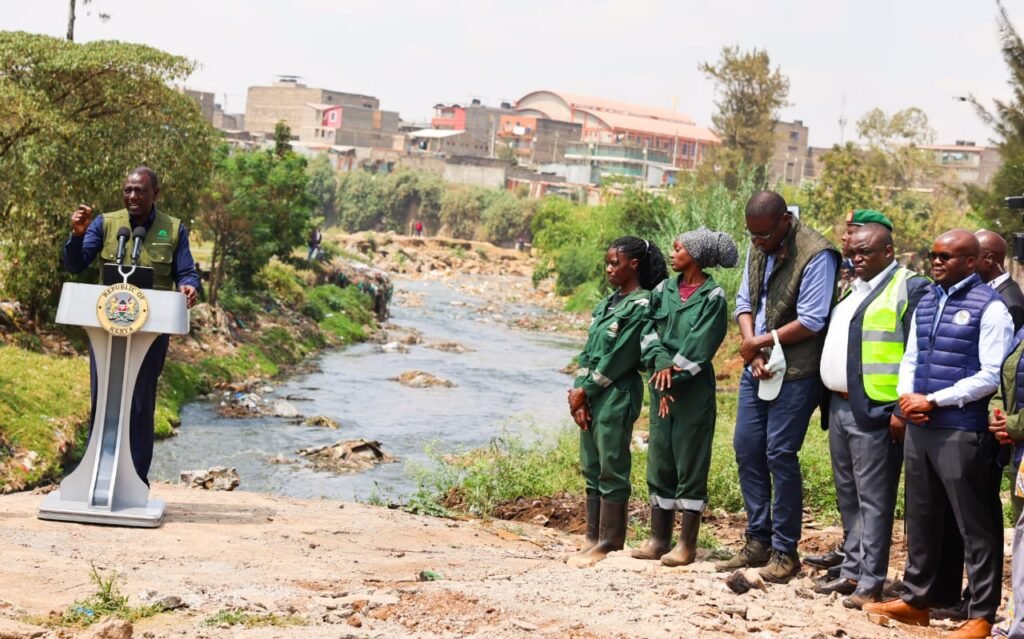
During a cabinet meeting chaired by Governor Johnson Sakaja, the cabinet highlighted major infrastructure milestones already achieved under the Sh50-billion programme launched in 2025.
“This regeneration is about people as much as it is about the environment safer homes, better markets and decent livelihoods for our communities.” Sakaja stated.
These include construction of a 60-kilometre trunk sewer line the first large-scale sewer upgrade in decades’ stabilization of riverbanks, expansion of storm-water drainage systems, and remediation works at the Dandora dumpsite to curb pollution and restore the surrounding environment. saying the project remains on course for its January 2027 completion target.
Beyond engineering works, the programme is reshaping the social and economic landscape along the river corridor.
Plans are underway to develop green riverfront parks, pedestrian walkways and cycling lanes, as well as modern markets expected to host up to 20,000 informal traders.
Affordable housing projects and flood-mitigation wetlands are also part of the blueprint, while more than 40,000 jobs have already been created for youth engaged in cleanup and construction efforts.
“A clean river is not a luxury it is a lifeline for public health, jobs and the dignity of our city. We are turning the Nairobi River from a symbol of neglect into a backbone of green growth and opportunity.” He continued
The Cabinet further resolved to intensify public participation within the designated Special Planning Area that spans a 60-metre riparian corridor. County departments have been directed to fast-track approvals for riverbank projects, strengthen enforcement against illegal structures and pollution, and provide transition support including alternative trading spaces and job training for residents and traders affected by redevelopment plans.
Sakaja emphasized that the Special Planning Area is intended as a structured development tool rather than an eviction order, with relocation decisions to be guided by social and environmental impact assessments and commitments to dignified, nearby housing options.
Early signs of progress are already visible in several stretches of the river, where residents report reduced foul odours, fewer pests and the gradual return of birdlife.
Once complete, the regeneration programme is expected to deliver cleaner waterways, safer public spaces, improved flood control and renewed economic opportunities signaling what City Hall describes as a turning point in Nairobi’s environmental and urban future.
In March last year, Ruto launched the Nairobi River Regeneration and Engineering Works Programme to be implemented at a cost of KSh50 billion.
The project has created 40,000 jobs up from the current 22,000 working under the Climate Works Mtaani Initiative, besides the construction of a 60km sewer line and 50,000 affordable houses in the reclaimed areas.
The Nairobi Rivers Commission and ministries of Housing, Environment and Defence will jointly implement the project.
During the launch, President Ruto pointed out that the government would ensure that the City of Nairobi remains clean and safe for the residents and visitors.
He described the project as a life-changing initiative that will ensure dignified living, sustainable transport and economic empowerment for thousands of residents.
The President said Kenya is not going to change if the right decisions are not made.
“I want to assure Kenyans that in the next 24 months, we are going to see a difference in Nairobi River,” the President said.
The President said the Nairobi Rivers Regeneration Project integrates affordable housing, modern markets, and enhanced infrastructure, transforming it into a livable and economically vibrant city.
Extending to Kiambu, Machakos, Kajiado, and Murang’a, the project entails river rehabilitation, flood mitigation, waste management and sewer lines, improving public health and urban resilience.
President Ruto urged Kenyans to support his call for national unity, saying it was for the prosperity of the country.


